
Last updated November 15, 2026
 Wrought iron
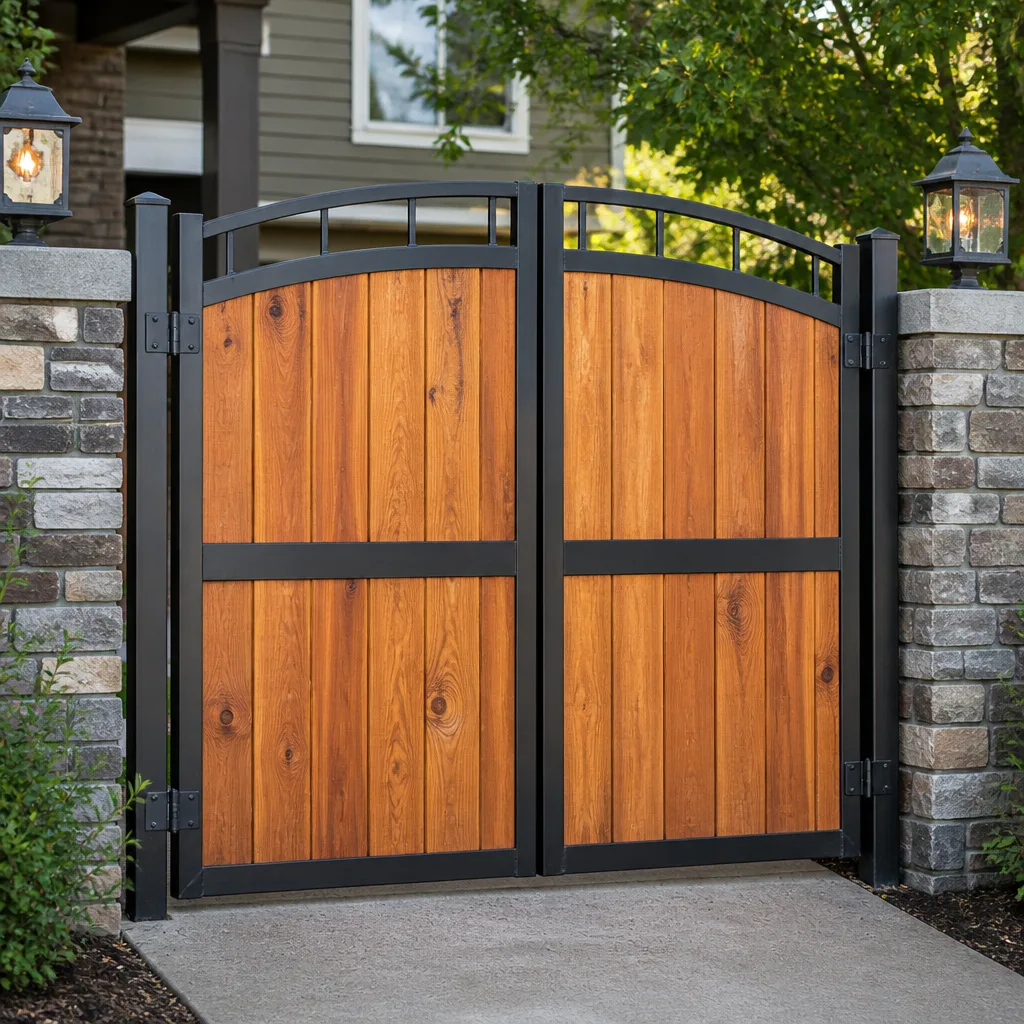 Wood & steel frame
 Farm & ranch
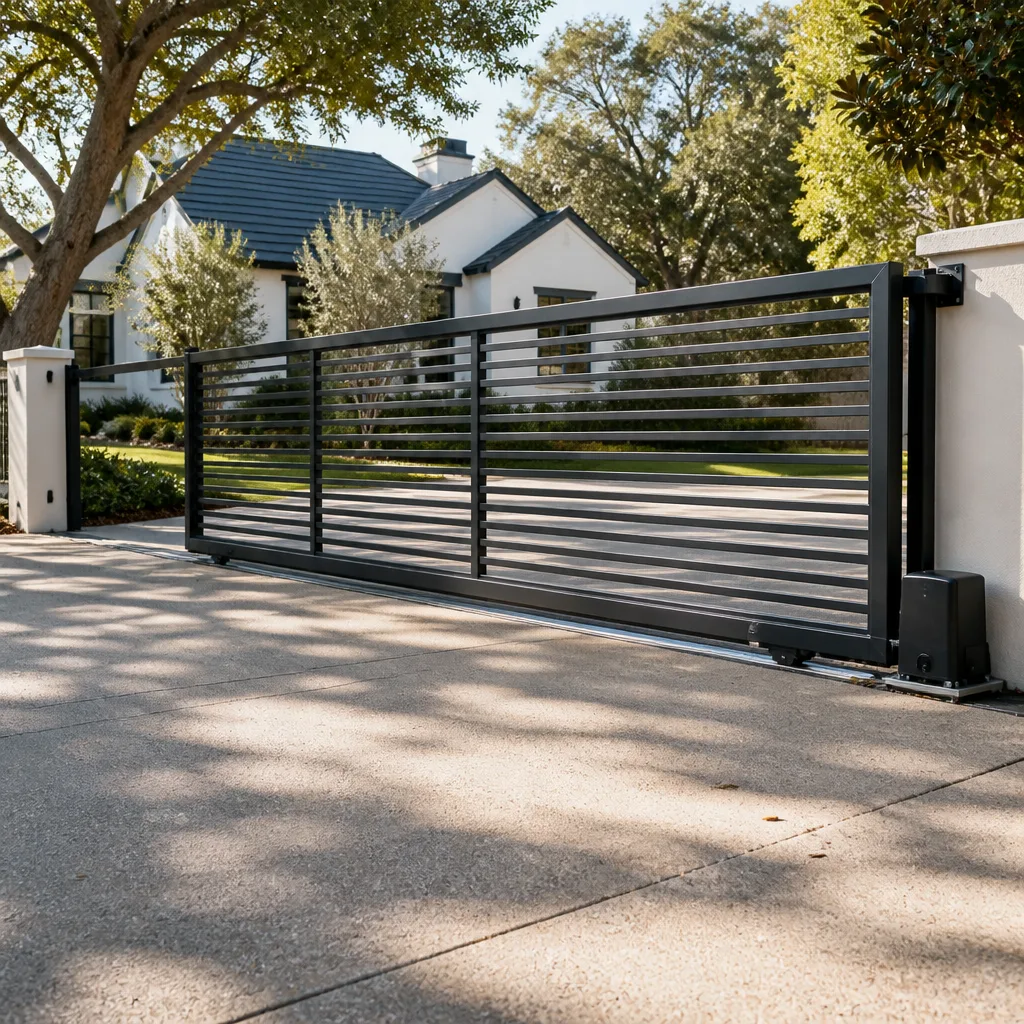 Sliding driveway gates
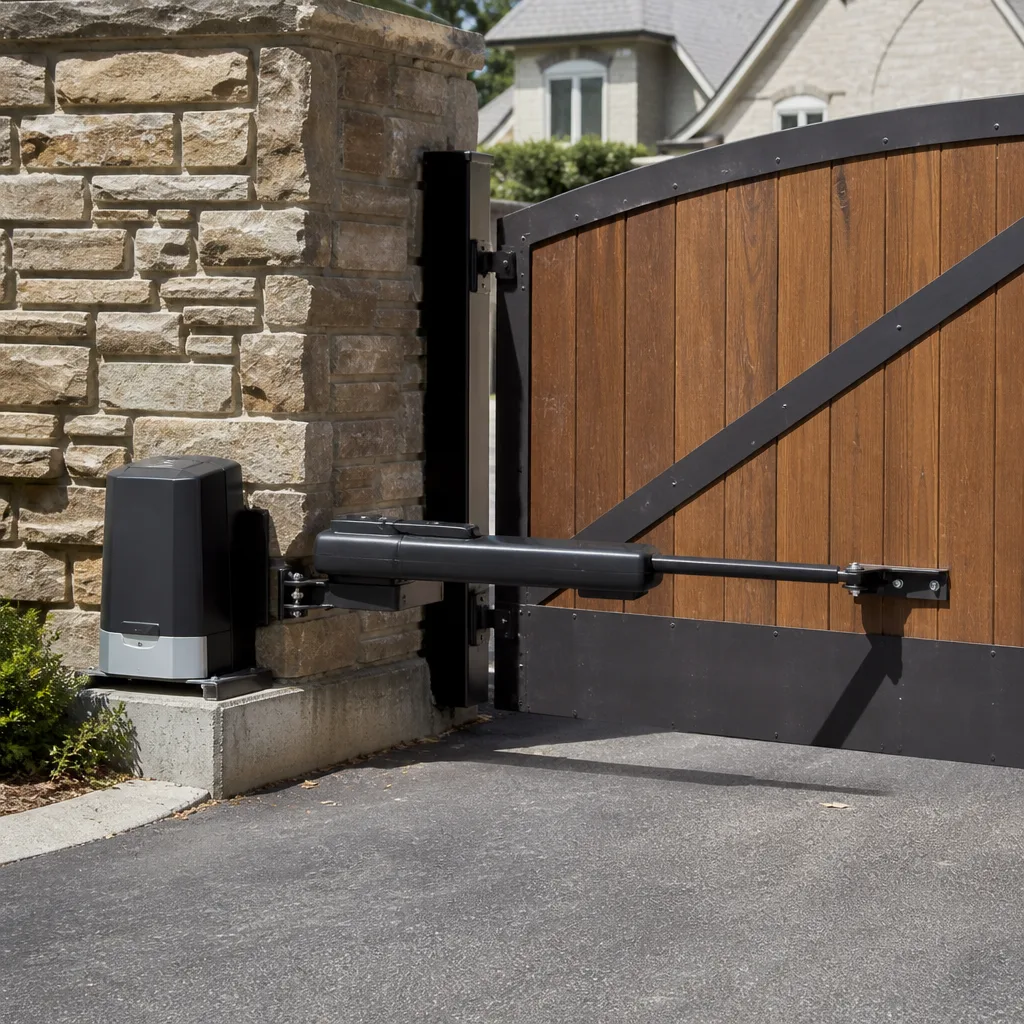 LiftMaster operators
Free on-site gate assessment - hinges, posts, and your LiftMaster or Nice gate operator checked before anything is quoted
The assessment is free and the quote is the invoice.
Get your free estimateGate Repair Maintenance Checklist for Syracuse Homeowners
Most gate maintenance checklists tell you to lubricate your hinges once a year and call it done. Do that here in the wrong month and the lubricant washes out with the fall rain, leaving bare metal to face the worst freeze cycle of the season. A gate in Syracuse doesn’t fail because it was ignored for a decade. It fails because it was serviced on a mild-weather schedule that has nothing to do with how Central New York actually treats steel, wood, and circuit boards. What follows is a checklist ordered by season and ranked by how likely each failure is, not alphabetized for tidiness. You’ll get real tolerances to measure, a triage system for what’s urgent, and the electric gate checks most homeowners skip entirely.
Quick Answer
A gate maintenance checklist for Syracuse should be sequenced around the freeze-thaw cycle: inspect posts and hardware after the ground thaws in spring, keep hinges and latches lubricated with a cold-rated product before the first hard freeze, and test the opener’s control board, sensors, and safety edges every season. Rank jobs by whether a failure would drop the gate or merely annoy you, and do the drop-risk items first.
Styles & brands we work with
- Wrought iron
- Wood & steel frame
- Farm & ranch
- Sliding driveway gates
- LiftMaster operators
Table of Contents
- Why a Seasonal Sequence Beats an Annual Checklist
- The Spring Post-Frost-Heave Inspection
- What to Measure: Sag, Play, and Square
- Choosing Lubricants for Syracuse Winters vs. Summers
- Electric Opener Checks Most Homeowners Skip
- The Do-Now vs. Do-Before-Winter Triage System
- What Changes on a Commercial Gate
- Common Mistakes to Avoid
- When to Call a Professional
- Frequently Asked Questions
Why a Seasonal Sequence Beats an Annual Checklist
Syracuse gates live through two very different operating environments each year. From late spring through early fall, the ground is soft, the wood swells with humidity, and metal expands slightly in the warmth. Then the ground freezes, moisture in every joint turns to ice, and the gate’s whole geometry shifts by a fraction of an inch. Those two phases stress completely different parts of the assembly, so a checklist that treats the year as one uniform block of time will always be working on the wrong component.
Think about what a hinge actually does across a year. In July it’s pivoting on a film of warm lubricant. In February that same hinge is fighting ice in the pin gap and metal that has contracted and tightened the clearance. If the only maintenance the gate ever gets happens in summer, the hardware enters the freeze season with whatever film is left after months of rain and grit. That’s how you end up with a gate that groans, sticks halfway, and eventually wears a hinge pin oval.
The seasonal logic is simple:
- Spring: inspect everything the frost moved and the winter froze.
- Summer: correct alignment, repair wear, and re-set hardware while conditions are stable.
- Early fall: lubricate with a cold-rated product and tighten everything before the ground locks up.
- Winter: observe, don’t adjust. Cold metal is brittle and clearances are misleading.
This is the same logic we apply when we handle gate repair across Syracuse. The failure we see most often isn’t a single broken part. It’s a gate that was adjusted in warm weather and then fought the cold all winter without anyone noticing the drift until it stopped latching. A seasonal sequence catches that drift in September, when it’s cheap to fix.
The Spring Post-Frost-Heave Inspection
Spring is the most important maintenance window of the year in Central New York, and it’s the one most homeowners miss. When the ground thaws, the soil under and around a gate post settles unevenly. A post that was true in November can lean a half inch by April, and that lean comes straight off your gate’s clearance and latch alignment. The inspection checklist below should be done as soon as the frost is fully out of the ground, typically once the soil stays soft through the night.
- Walk the full swing (or slide) with the gate hand-operated. If it’s an automatic gate, put it in manual first. Note any point where it binds, drags, or needs a push to finish travel.
- Check each post for lean with a level. A plumb post should show no visible bubble offset in either plane. Any movement at all from last season’s reading is worth writing down.
- Look at the base of each post. Cracking concrete collars, soil that has pulled away, or a visible gap on one side signals the heave has moved the footing.
- Open and close the latch several times. A latch that has to be lifted or forced means the gate has dropped relative to the post, usually from post movement, not latch wear.
- Inspect the driveway and gate pad for heaved sections. A gate that suddenly drags on concrete in spring is telling you the slab or the footing moved, and neither is fixed with a wrench.
- Photograph everything. Spring readings become your baseline. Comparing October to April tells you more than any single inspection.
If a post has moved, don’t tighten hardware or shim the hinges to chase it. Correcting a heave at the hinge is how a small footing issue becomes a bent frame. A post that has clearly shifted needs to be looked at by someone who understands footings and gate geometry, which is exactly the kind of thing we diagnose on a first visit.
What to Measure: Sag, Play, and Square
“Check for wear” is useless advice. Wear is a number. Below are the tolerances we use when assessing a residential gate, and what each reading tells you.
- Swing gate sag: measure the clearance between the gate frame and the ground at both the hinge end and the latch end. A difference of more than about a quarter inch between the two ends means the gate has dropped and the hinge or post is the cause.
- Hinge play: with the gate closed, try to lift the free end vertically. Anything more than a few millimeters of movement at the hinge indicates a worn pin or enlarged bushing that needs attention before it binds.
- Latch alignment: the latch’s center pin should enter the strike plate without touching the sides. If it’s rubbing one side consistently, the gate is out of square.
- Frame square (swing gates): measure the two diagonals of the gate frame. They should match to within a small margin. A frame out of square by more than a fraction of an inch is usually a hung-gate problem, not a broken gate.
- Slide gate track straightness: roll the gate slowly and watch the gap between the wheels and the track. Any lift or wobble at a specific point is a track or wheel issue, not a motor issue.
For electric gates, add the safety-edge test to the measurement list. With the gate in motion, press the safety edge along its length. It should reverse the gate immediately and reliably on every part of the edge, not just the middle. A safety edge that only triggers at the center is often the earliest sign of a failing control board input, which we cover in more detail on the electric gate repair page.
Write your readings down. A quarter-inch of sag once is normal. A quarter-inch every season is a hinge or footing problem, and regular readers catch it early.
Choosing Lubricants for Syracuse Winters vs. Summers
Here’s where most “lubricate your hinges” advice falls apart. Petroleum-based spray lubricants are fine for warm weather. Put one on a hinge in October and it thins out with each freeze-thaw and washes off with the first sleet. By January the pin is running on bare metal, and every swing grinds the bushing a little further. The right cold-weather lubricant stays put through a freeze, doesn’t gum up at sub-zero, and doesn’t collect grit.
What we recommend for a Syracuse gate hardware schedule:
- Before winter (early fall): apply a cold-rated grease to hinge pins, latch mechanisms, and the contact surfaces on slide track wheels. Look for a product that stays soft in cold temperatures and is rated for outdoor use.
- Before summer (late spring): a lighter lubricant is acceptable on the same points since warm weather keeps it fluid, but clean off any grit first. Grit in a summer lubricant becomes grinding paste.
- Never: use anything not intended for outdoor metal. Household oils attract dust and disappear with rain.
- Always: wipe the old lubricant off before applying new. Stacking fresh grease on dirty grease does nothing useful.
- Keep the tracks clean. A slide gate track should be swept clear of grit and ice melt residue. Lubricating a dirty track just glues the grit in place.
If you’re not sure what’s currently on your gate, the safe approach is to clean the hardware down before you add anything. Mineral-spirit on a rag is enough to strip old lubricant. Then apply one product consistently so you know what’s protecting the metal. The people who keep a gate running on brand-name openers like BFT or Viking tend to notice that cold-weather lubrication makes the biggest difference to how hard the motor has to work, not just to how the hinges feel.
Electric Opener Checks Most Homeowners Skip
Electric gate repair is its own discipline, and the reason is straightforward: the motor is the part everyone notices, but the failure is almost always upstream of it. The control board, the sensors, the safety edges, and the wiring are where most intermittent faults live. A gate that opens “sometimes” is usually a sensor or board problem, not a failing motor. A generalist will swap the motor and find the gate still misbehaving; a tech who reads the board’s fault codes narrows it down on the first visit.
What to check each season on the electric side:
- Exercise the opener through a full cycle at a normal pace. Slow travel, a pause, or a stutter points at the board or the motor’s start capacitor.
- Test each safety device individually. Photo-eye beams, safety edges, and loop detectors should each stop or reverse the gate within the manufacturer’s spec. Testing them together only tells you “something” works.
- Look inside the control enclosure for water intrusion. Snowmelt and rain gravity is a common way these get wet through a door that was left open. Corrosion on the terminals is a warning sign.
- Check for loose terminal screws. Seasonal expanding and contracting is enough to back off a terminal screw over a year. With power isolated from the operator first, everything visible should be finger-tight.
- Verify the obstacle-reversal cycle count or diagnostics. Most modern boards keep a record of safety-triggered reversals. A sudden spike in reversals without anyone near the gate is a sensor issue.
- Confirm the manual release works. Every automatic gate must have a working manual release in case of power loss. Test it before winter, not during an outage.
If you’re not comfortable inside a control enclosure, that’s fine. The dangerous parts are the wiring and the power, and they’re not a homeowner job. Call in a technician who works on your brand. We diagnose LiftMaster, Linear, Ghost Controls, and the other systems we see regularly before we touch anything, because the failure patterns differ per brand and per board revision. You can read more about the systems we cover on our Syracuse Gate Repair page.
The Do-Now vs. Do-Before-Winter Triage System
Every item on a gate checklist is not equally important. Ranking them is the difference between a gate that keeps working and a gate that fails at a bad moment. Use this simple triage before you start on any repair.
Do now (risk of injury or a dropped gate):
- Any safety device that doesn’t stop or reverse the gate reliably.
- A hinge with visible play or a post that has moved out of plumb enough to threaten the frame.
- Any exposure of live wiring or a damaged control enclosure.
- A gate whose manual release won’t free it.
Do before winter (prevents winter lockup or acceleration of wear):
- Cold-weather lubricant on hinges, latches, and slide track wheels.
- Post-frost inspection of any point you flagged in spring that you haven’t fixed yet.
- Battery backup check on the opener, if fitted.
- Re-test of all safety devices with the gate fully assembled in its normal position.
Do when convenient (housekeeping):
- Touch-up paint on rust spots. Better in summer, when the metal is dry.
- Hardware tightening and a general wipe-down.
- Trimming vegetation away from the swing path, which also keeps snow from piling against the gate.
Notice what’s not on the “when convenient” list. Sag, hinge play, and safety devices all live in the do-now category because they fail silently and expensively. If you can only afford time for one thing, spend it on those.
What Changes on a Commercial Gate
A commercial gate in Syracuse demands more frequent inspection because the cycle count is much higher. A residential gate might open thirty times a day. A commercial gate at a lot entrance runs into the thousands, which means every wear item progresses faster and every tolerance tightens. The same seasonal logic applies, but the interval shrinks.
Add these items to a commercial schedule:
- Log every fault. A daily or shift-level record of opens, stops, and reversals gives a technician a data trail that pinpoints a failing component before it stops a gate entirely.
- Inspect loop detectors and card readers. Access hardware that’s grounded incorrectly or exposed to water is a common source of intermittent “ghost” opens on commercial gates, especially with DoorKing controllers.
- Wheel and track condition. On high-traffic slide gates, wheel wear should be measured, not eyeballed. Replace wheels in matched sets.
- Wiring protection. Anything run underground or through the gate frame should be checked for chafing and rodent damage before winter, when it’s hard to notice a fault.
- Recommend a professional inspection at least twice a year for any gate with a mechanical or electrical failure that would block access.
Brand-specific knowledge matters here because commercial-grade controllers have firmware behaviors and fault codes that differ from residential systems. Reading the board’s own diagnostic correctly beats trial-and-error every time.
Common Mistakes to Avoid
- Lubricating in winter. Applying a summer lubricant in cold weather just collects grit and freezes in the pin gap. Apply the cold-rated product in early fall, before the first hard freeze.
- Adjusting hinges to chase post heave. Shimming or loosening a hinge to correct a leaning gate masks a footing problem that will get worse. Fix the post, not the hinge.
- Swapping the motor when the board is at fault. A slow or intermittent gate is usually a board, sensor, or wiring issue. Verify the fault before replacing anything expensive.
- Skipping the safety edge test. The one part of an automatic gate a homeowner cannot afford to neglect is the safety edge and photo-eye. Test each device separately, not as a group.
- Measuring sag once and forgetting it. A single reading tells you almost nothing. Seasonal readings compared over time reveal the pattern.
- Running a slide gate on a dirty track. Grit and ice-melt residue become grinding paste under the wheels. Sweep the track before you lubricate anything.
- Ignoring a manual release. The release is the only way to free an automatic gate during a power outage. If it’s stiff or seized, fix it before winter, not after the first storm.
When to Call a Professional
Some checks are within a homeowner’s reach. Others need a trained technician for the same reason you don’t hand-enter a live control panel. Call a professional when the gate remains visibly out of plumb after the spring inspection, when a hinge pin has measurable play you can’t remove with tightening, when a safety device doesn’t reliably reverse, when the control enclosure shows water damage or exposed wiring, or when the manual release won’t operate. Also call if you’re working on any gate that runs on mains power and the fault doesn’t resolve after a clean reset, because opening that enclosure is a wiring and power job, not a homeowner job.
In our experience, the small percentage of gate problems that look mysterious are almost always one of two things: a footing that has moved, or a board that has drifted from spec. Both are diagnosable, and both are cheaper to fix in fall than in a January freeze. Syracuse Gate Repair offers free estimates in Syracuse, and we work across the systems that cause the most trouble in this climate. Call (844) 761-3861.
Frequently Asked Questions
Twice a year is the practical minimum for a residential gate in Central New York: once in spring after the ground thaws, and once in early fall before the first freeze. Commercial gates should be inspected more often because cycle counts are much higher, and any gate with a safety device should have that device tested every season.
Yes, for the hinges, latch, and slide track wheels. Use a cold-rated product in early fall so it survives the winter, clean old lubricant off first, and stay away from the opener’s internal mechanisms. Anything inside the control enclosure involves exposed wiring and should go to a technician.
Because the ground under and around a gate post settles unevenly as the frost leaves, which shifts the post and pulls the gate out of alignment. You’ll typically see it as a latch that has to be lifted or a gate that drags on the driveway. The fix is at the post and footing, not at the hinge.
Usually not. Intermittent operation is most often a control board, sensor, safety edge, or wiring fault, and swapping the motor before diagnosing the board is where generalists lose the most time. A brand-specific diagnostic reads the board’s own fault codes and finds the real cause first. Our technicians have up to 8 years of experience working from known failure patterns on LiftMaster, Linear, Ghost Controls, and the other brands we service.
It depends on what’s actually failing. If the same component goes twice, the underlying cause hasn’t been fixed, and a proper diagnosis is cheaper than a replacement. If multiple unrelated parts have worn out at once, a new gate or a new automated operator may be the better value. A free on-site estimate tells you which side of that line you’re on.
Yes. We handle manual and fully automated systems on both residential and commercial properties across Syracuse, and we support the brands we list explicitly, which means we arrive already familiar with your system. That includes electric gate repair, gate repair, and full installation if it comes to that.
The Bottom Line
The right checklist for a Syracuse gate is sequenced by season and ranked by failure probability. Spring is for the post-frost inspection that catches ground movement before it damages the frame. Early fall is for cold-rated lubrication, hardware tightening, and a full safety device test before the freeze. Between those two windows, measure sag, hinge play, and latch alignment against real tolerances instead of guessing, and don’t hop straight to the motor when an electric gate misbehaves; check the board, sensors, and wiring first. Do the drop-risk items now, and the cosmetic ones when convenient. That schedule keeps a gate in Syracuse working through every winter it faces.
Call (844) 761-3861 for a free estimate. We answer 24/7. Fast dispatch from 7am to 7pm, Sunday through Friday.
Written by the team at Syracuse Gate Repair.
See the difference
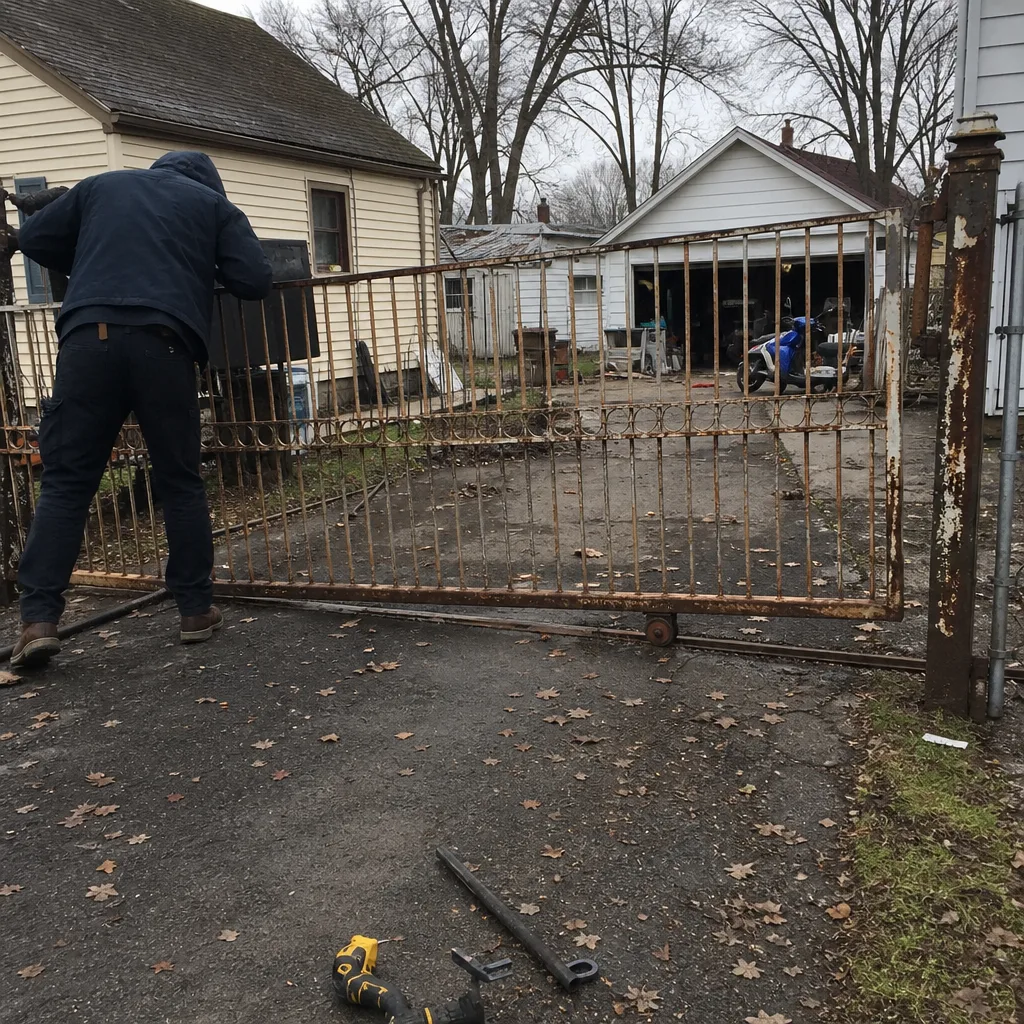 Before
 After
 Before
 After
 Before
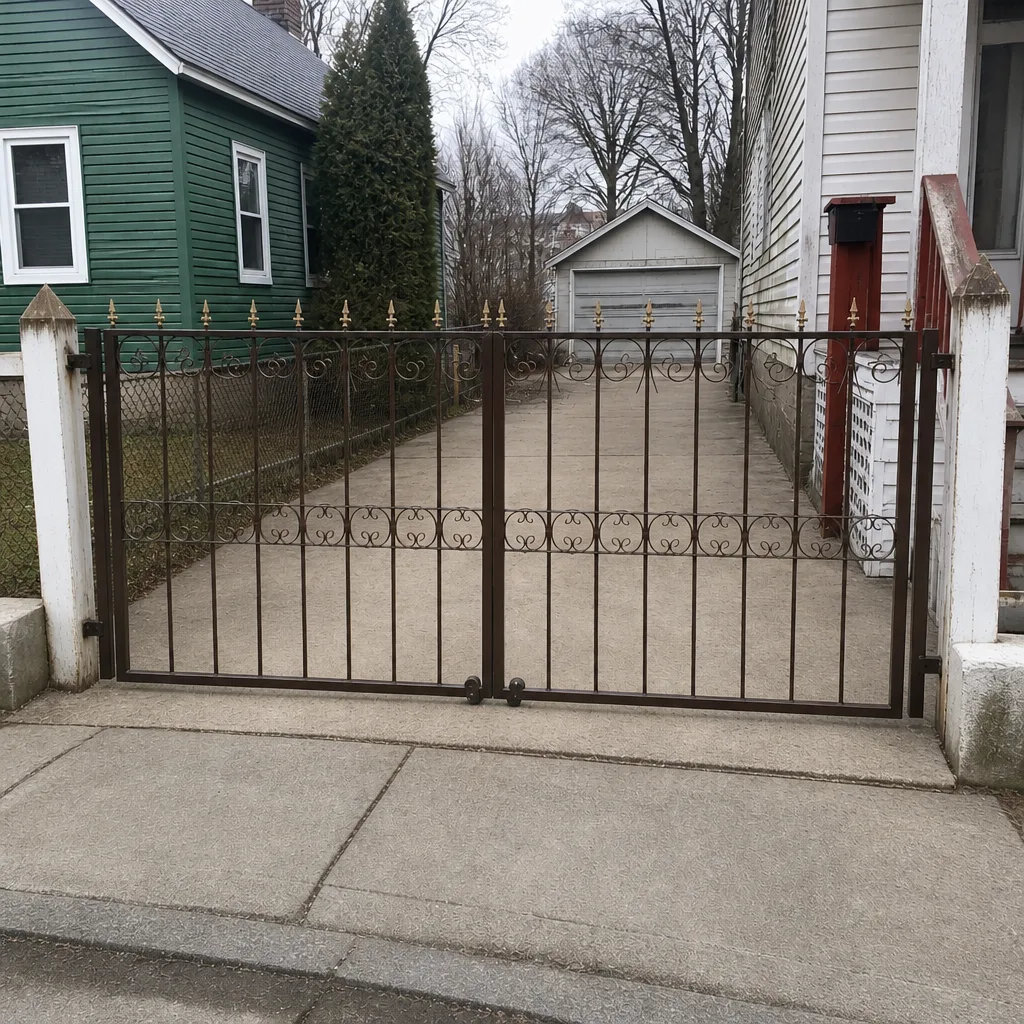 After