
Last updated November 15, 2026
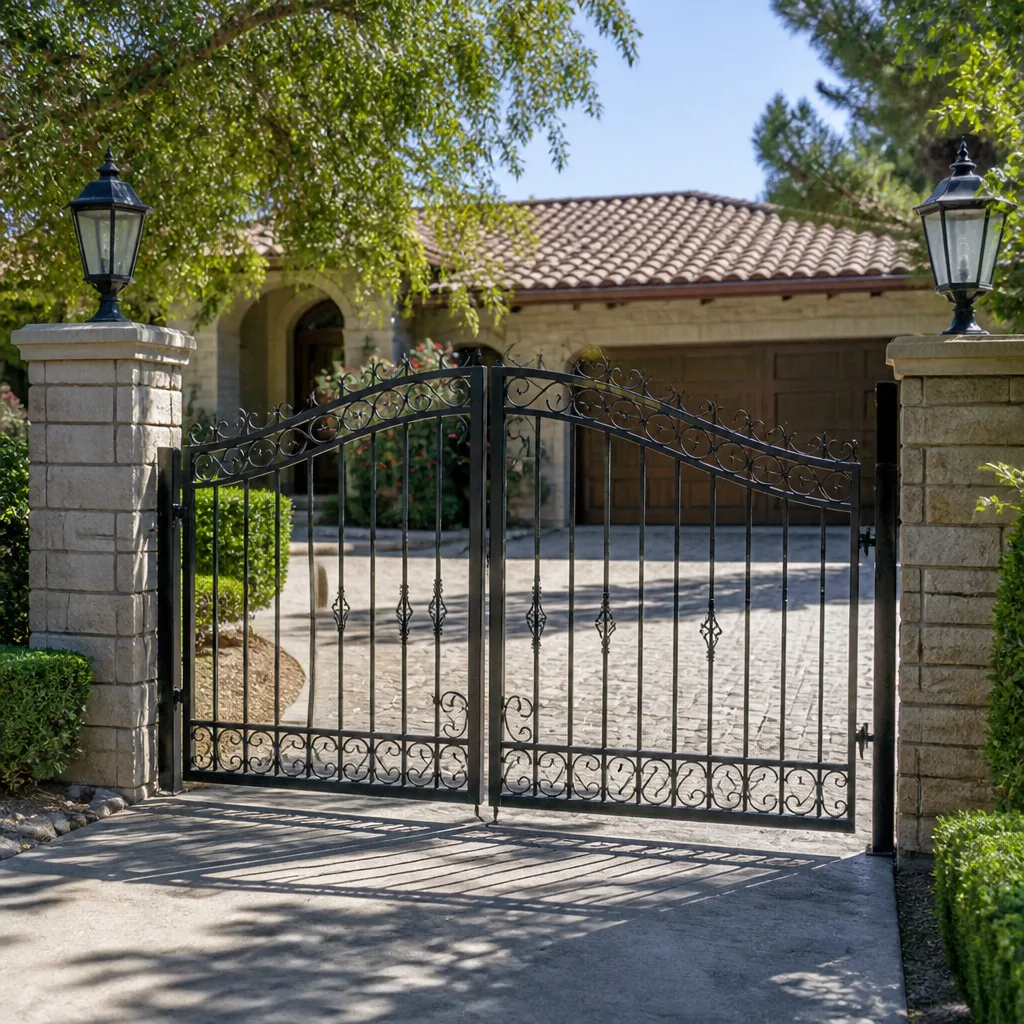 Wrought iron
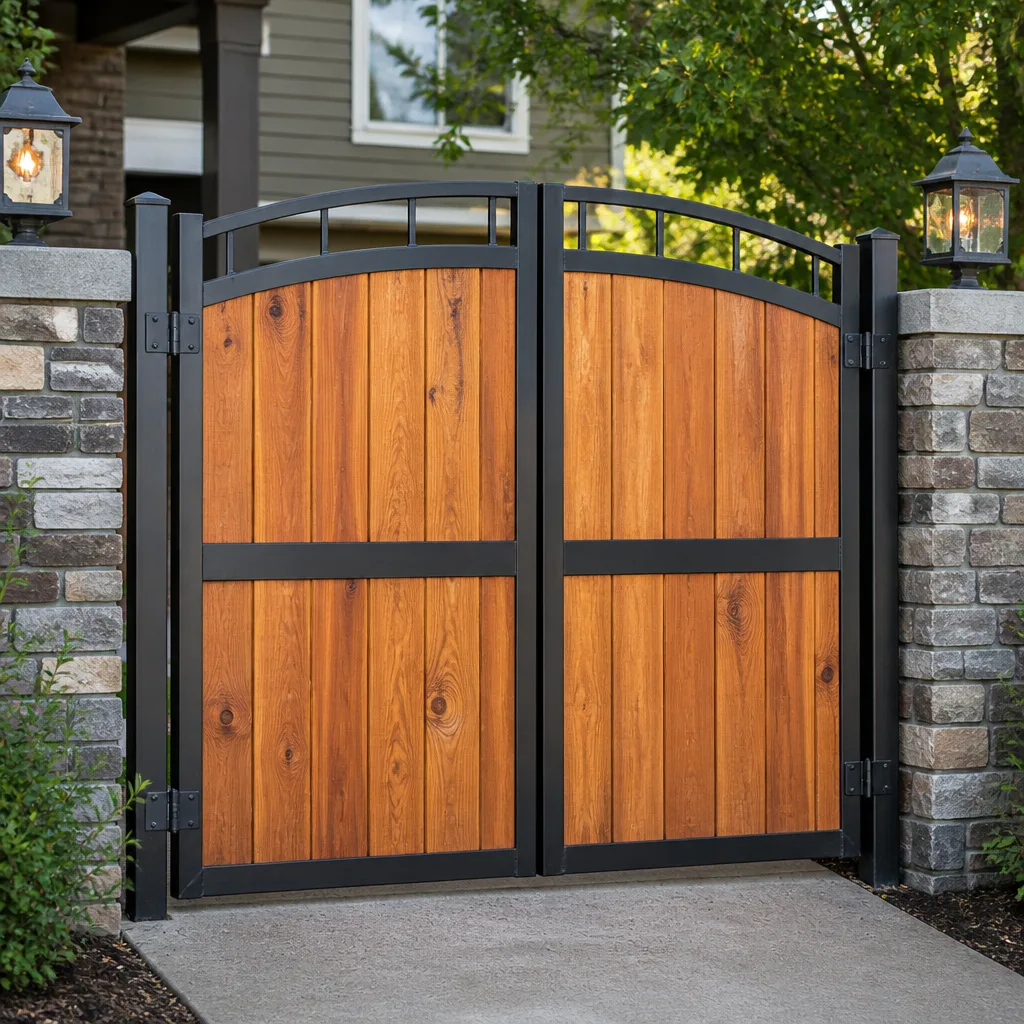 Wood & steel frame
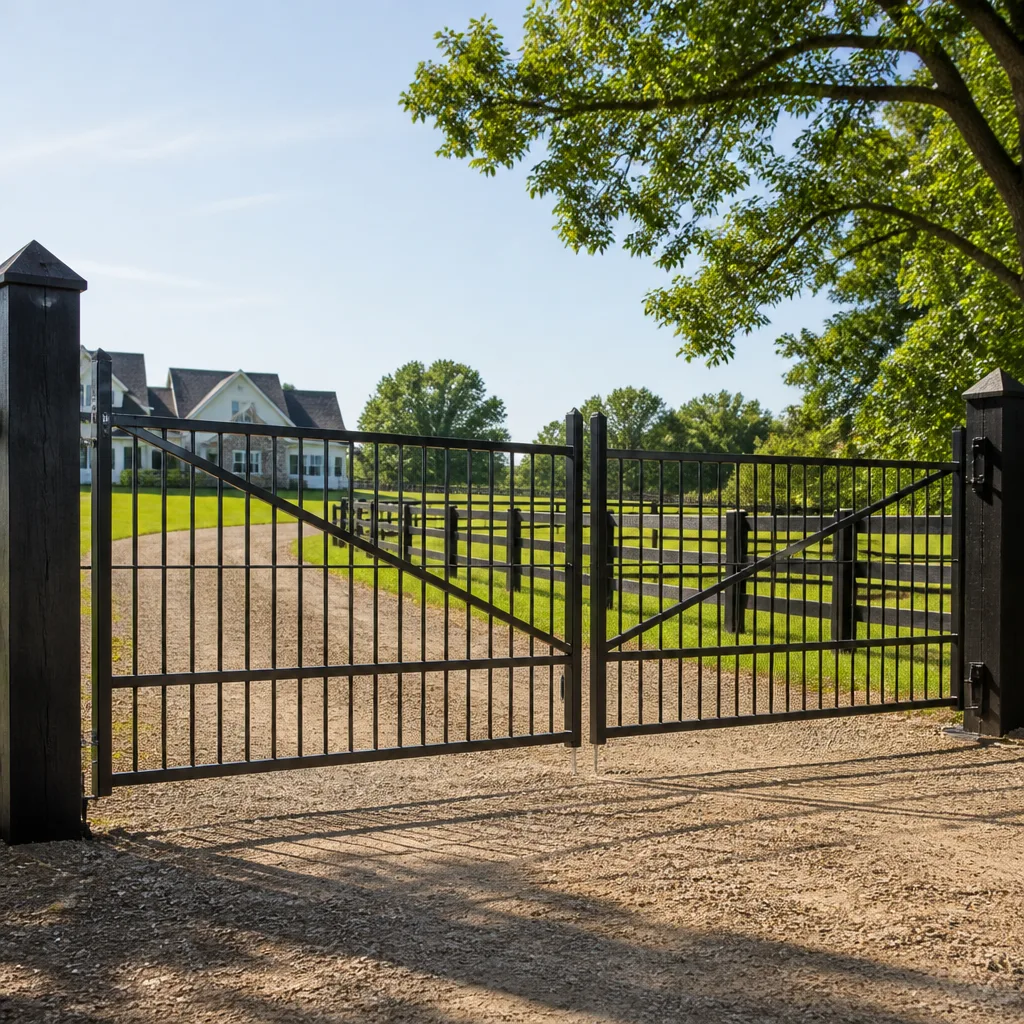 Farm & ranch
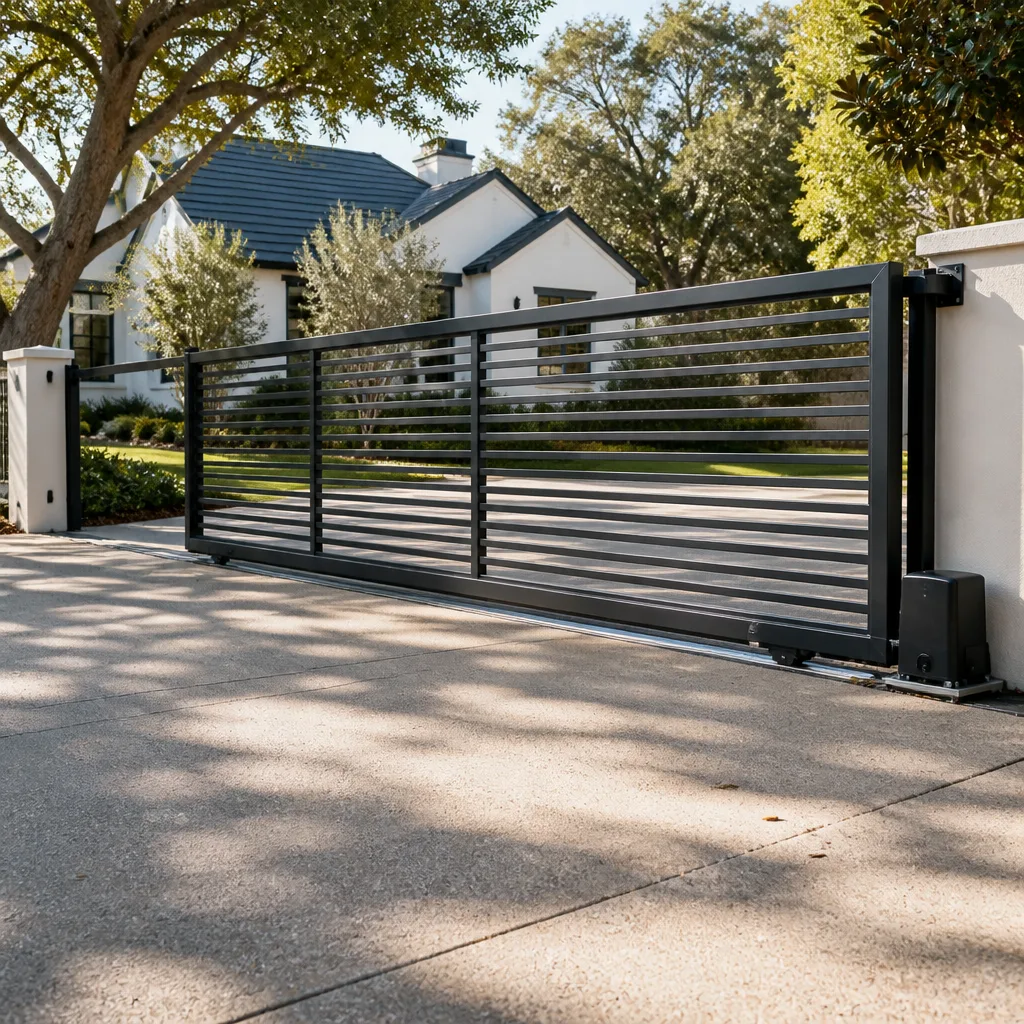 Sliding driveway gates
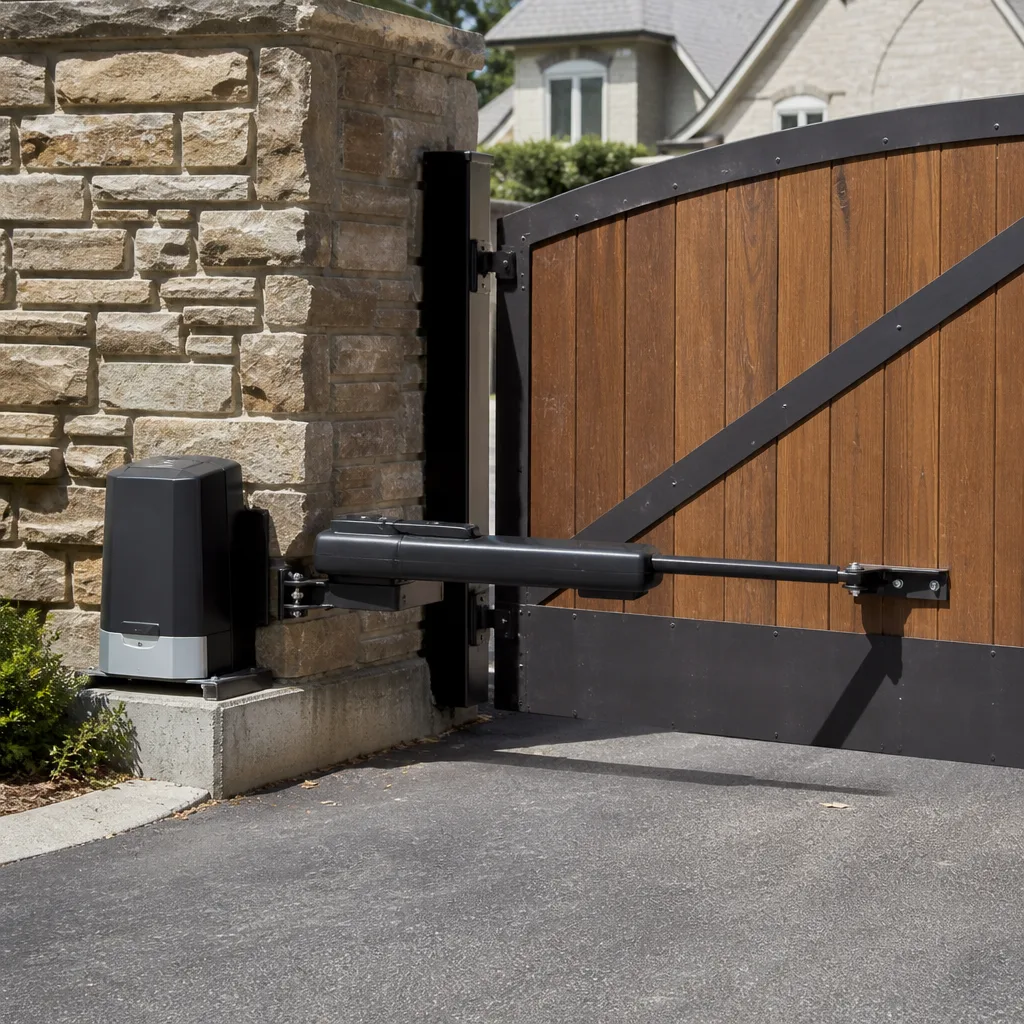 LiftMaster operators
Free on-site gate assessment - hinges, posts, and your LiftMaster or Nice gate operator checked before anything is quoted
The assessment is free and the quote is the invoice.
Get your free estimateGate Repair Troubleshooting in Syracuse: Common Problems and How to Fix Them
A gate that reverses before it closes isn’t broken. It’s telling you exactly what’s wrong, and in most cases it’s telling you in a language printed right there on the control board. Most homeowners never look. They see a gate that stops, stutters, or swings back open, assume the motor is finished, and start pricing a full replacement they don’t need. The truth is that almost every gate failure we see in Syracuse traces back to one of five root causes, and each one has a distinct signature if you know what to look for. This guide walks through a systematic diagnostic sequence, component by component, so you can name the problem before you spend a dollar on it.
Quick Answer
Most gate failures in Syracuse come down to five root causes: a dead or failing operator motor, a mechanical bind in the hinges or track, a misaligned safety sensor, a damaged loop detector, or a control board fault. Before you call anyone, check your manual release, look at the control board display for a fault code, and clear any snow, ice, or debris from the gate’s path. That sequence alone identifies the problem category in most cases.
Styles & brands we work with
- Wrought iron
- Wood & steel frame
- Farm & ranch
- Sliding driveway gates
- LiftMaster operators
Table of Contents
- Motor Failure vs. Mechanical Failure: Which One Do You Have?
- How Syracuse Freeze-Thaw Cycles Deform Gate Frames and Cause Binding
- Loop Detector vs. Safety Sensor: Same Symptom, Different Fix
- How to Read Fault Codes on an Operator Control Board
- Three Manual Override Checks Before You Conclude the Motor Is Dead
- Symptom-to-Cause Reference Table
- Brand-Specific Quirks That Change the Diagnosis
- Repair or Replace? How to Decide
Motor Failure vs. Mechanical Failure: Which One Do You Have?
The single most important distinction in gate troubleshooting is whether the fault is in the operator (the motor and electronics) or in the gate itself (the hinges, track, rollers, and arm). The two look identical from the driver’s seat but the repair path is completely different, and diagnosing the wrong one wastes both time and money.
Here’s the test. Put the operator into manual release mode, which disconnects the motor from the gate. Now push the gate open and closed by hand. A gate with healthy mechanics moves smoothly with even resistance and settles where you leave it. A gate with a mechanical fault will bind, scrape, catch, or drift on its own, or it will feel heavy at one point in the swing and light at another. If the gate moves freely by hand, your problem is electrical or in the operator. If it binds, your problem is mechanical, and no amount of motor work will fix it.
We separate these two categories before touching anything, because the failure symptoms overlap so heavily. Consider what each type actually looks like:
- Operator symptoms: motor hums but gate doesn’t move, gate moves a few inches then stops, remote works intermittently, gate runs at half speed, control board shows a fault code, motor gets hot and shuts down.
- Mechanical symptoms: gate drags on the ground, hinge pins are loose or seized, slide gate jumps the track, swing gate sags at the latch end, gate binds at a specific point in its travel, gate won’t stay fully open or fully closed.
Commercial slide gates on a property in Syracuse often show both at once, especially after a hard winter, which is why diagnosis has to come before any repair decision. For a deeper look at how we approach each category, our gate repair page covers the full scope of both mechanical and operator work.
How Syracuse Freeze-Thaw Cycles Deform Gate Frames and Cause Binding
Syracuse sits in one of the snowiest and most freeze-thaw-heavy climates in the country. That matters enormously for gate mechanics. Water gets into the hollow sections of aluminum gates, freezes, expands, and doesn’t fully retreat when it thaws. Do that repeatedly through a Central New York winter and the gate’s frame can deform, twist slightly, or pull out of square by enough to bind against itself.
The result is a gate that suddenly won’t close all the way, or that binds at the same point every cycle, or that jumps the track on a slide system. Homeowners understandably assume the motor has died because the gate is stalling, but the motor is actually doing exactly what it should: it’s detecting resistance and it’s stopping, because the safety system on a modern operator is designed to reverse or stall when it hits an obstruction. The motor isn’t the problem, and a new one won’t fix it.
Freeze-thaw shows up in several predictable ways in Syracuse:
- Aluminum gate frames that twist slightly out of square, causing binding at the latch or the rollers
- Hinge pins that deform or seize with ice, especially on older manual swing gates
- Ground settling around posts that pulls a slide gate’s track out of level
- Concrete footings that heave, changing the gate’s geometry at the mounting point
- Snow and ice packed into the track channel on slide gates, blocking the rollers
The practical lesson is simple: after every hard freeze and thaw, walk the gate by hand before you blame the operator. If the gate moves smoothly by hand but stalls under power, then the fault is electrical. If it binds by hand, you’re dealing with freeze-thaw geometry and the gate itself needs adjustment. Our technicians have up to 8 years of experience with exactly this pattern across Central New York. If you’d rather have a specialist look at it, Syracuse Gate Repair is built around diagnosing the mechanical and electrical sides together rather than guessing at one.
Loop Detector vs. Safety Sensor: Same Symptom, Different Fix
Both a loop detector and a safety sensor can cause a gate to reverse, refuse to close, or behave intermittently. They produce almost identical symptoms, but they’re different components with different fixes, and mistaking one for the other is one of the most common diagnostic errors we run into.
A loop detector is an inductive sensor buried in the driveway or the ground near the gate. It detects the presence of a vehicle by sensing a change in a magnetic field. When it senses a vehicle, it tells the operator to hold the gate open or to open it, and it’s the component responsible for preventing a gate from closing onto a car. A safety sensor is usually a photoelectric beam or a set of contacts mounted on or near the gate’s path, and it detects obstructions (a person, a pet, an object) in the gate’s travel area. Both protect people and property, but they’re wired, mounted, and diagnosed differently.
Here’s how to tell them apart in practice:
- Suspect the loop detector if: the gate opens automatically when a vehicle approaches but won’t close, the gate stays open whenever a car is parked within a few feet of the driveway, or the gate behaves erratically in wet or frozen conditions when the ground shifts.
- Suspect the safety sensor if: the gate reverses mid-travel with nothing in the way, the gate closes partway then reverses, the gate won’t close but opens normally, or the problem only happens when something is placed near the gate path.
Loop detector failures are common in Syracuse because underground loops are affected by frost heave, groundwater, and settling. Snowplows and heavy vehicles passing over the driveway can also disturb a loop. A failing loop will read as a fault on the control board, which is why checking the board comes first in any diagnosis. The safety sensor loop, meanwhile, is more often a misalignment issue or dirty optics. We cover both components thoroughly in our guide to electric gate repair, because the electrical side of a gate is its own discipline and it deserves a specialist’s eye.
How to Read Fault Codes on an Operator Control Board
Almost every modern gate operator has a control board that displays fault codes, status lights, or a diagnostic readout, and almost no homeowner ever looks at it. The board is the gate’s own diagnostic tool, and it will usually tell you the exact category of failure before you touch anything else. A LiftMaster operator, for example, has an LED diagnostic indicator that flashes a specific count corresponding to a fault type. DoorKing and similar commercial operators typically display fault codes or status LEDs on their control boards. The pattern is consistent across brands: the code narrows the problem dramatically.
Here’s the sequence we use to read the board safely and correctly:
- Locate the control board inside the operator enclosure, usually under the housing cover.
- With the power off, note the layout: find the diagnostic LED, the fault display, and any status lights. Photographing the board helps you compare later.
- Restore power and watch the board for its startup sequence. Most boards run a self-check and then display a status or fault indicator.
- Count the LED flashes or read the code and match it against the manufacturer’s diagnostic chart for your operator’s model.
- Note whether the code is static or only appears during a cycle. A code that appears only when the gate hits a certain point is a mechanical or obstruction signal; a code present at rest is usually electrical.
- Don’t clear the code until you’ve recorded it. Many boards store the most recent fault, and clearing it loses the diagnostic value.
We work from known fault-code charts for LiftMaster, FAAC, BFT, DoorKing, and the other brands we handle, which is why a brand-specific diagnosis is faster than a general one. If you’d rather not open the panel yourself, keep the safety caveat firmly in mind: the operator enclosure contains line voltage and the capacitor can hold a charge even when power is off. That is not a DIY job. When a specialist checks the board, the diagnostic is done safely and quickly.
Three Manual Override Checks Before You Conclude the Motor Is Dead
Before you decide the motor is dead, run three manual override checks. A surprising number of “dead motor” calls end with the gate working again within minutes because one of these three simple conditions was the real cause.
- Check the manual release. Every automatic gate has a manual release mechanism, sometimes a keyed handle, sometimes a lever, sometimes a different device depending on the operator. If the release has been engaged (or has drifted into the released position), the motor can run freely without moving the gate. A gate that “does nothing” when you press the remote but hums and doesn’t move is often in the release state. Re-engage the release and try again.
- Check the power supply to the operator. The gate might be dead because the operator isn’t getting power at all. Check the circuit breaker or dedicated circuit feeding the operator, and look for a tripped GFCI or a blown fuse inside the operator housing. In Syracuse, a dedicated circuit that has been serviceable all year can trip after a summer storm or a power surge; a dead operator is sometimes just a tripped breaker.
- Check the remote and the receiver. If the gate is dead to the remote but the operator board has power, the problem might be a flat remote battery or a receiver fault. Try a second remote or a keypad entry if you have one. If one works and the other doesn’t, the operator is fine and the issue is in the transmitter or receiver.
If the gate passes all three checks and still won’t move, you’re into genuine motor, board, or wiring territory, which is a specialist’s call. But most “dead” gates fail the manual-release check or the power-supply check, not because the motor is actually finished.
Symptom-to-Cause Reference Table
Once you know what you’re looking at, the symptoms usually point straight to the cause. This reference matches the most common gate symptoms in Syracuse with their most likely root causes, so you can build a shortlist before the technician arrives.
- Gate reverses before closing, nothing in the way: safety sensor misalignment or dirty sensor optics
- Gate won’t close, remote beeps, car parked nearby: loop detector holding the gate open
- Gate moves a few inches then stops: mechanical bind (freeze-thaw frame deformation, hinge seize, or track damage) triggering the operator’s obstruction detection
- Gate stalls in the same spot every cycle: mechanical obstruction, not operator failure
- Motor hums but gate doesn’t move: manual release is engaged, or the gate is mechanically bound
- Motor runs, gate coasts and drifts: worn gearing inside the operator or a damaged drive arm, depending on mechanism
- Operator is dead, board has no lights: power supply fault, tripped breaker, or blown fuse
- Gate won’t respond to any remote: receiver fault, remote battery, or board-level fault
- Gate opens on its own: loop detector false trigger or board fault
- Gate is slower than it used to be: mechanical drag or motor wear
This table is the short version. The full diagnostic sequence in this guide is what turns a shortlist into a confirmed cause. When a gate fails in Syracuse, our technicians run through the mechanical check, the sensor and loop check, the board read, and the manual override check in that order, because it’s the fastest path to the right fix.
Brand-Specific Quirks That Change the Diagnosis
Gate operators are not interchangeable. Each brand has its own failure patterns, its own fault-code language, and its own quirks, and a technician who knows the brand walks up to the gate already suspecting the right cause. That’s the difference between a diagnosis that takes twenty minutes and one that takes an afternoon of trial and error.
A LiftMaster operator typically has clear diagnostic LED patterns and a few characteristic quirks in how it registers obstructions. FAAC operators often have their own specific board layouts and release mechanisms, and BFT operators have their own fault reporting. Mighty Mule operators, common on residential swing gates, tend to show different symptoms for the same underlying fault. A technician who works from the actual schematic and failure history for the brand at hand doesn’t need to reason from general principles.
We work on LiftMaster, FAAC, BFT, Linear, Viking, Ghost Controls, DoorKing, Elite, and Mighty Mule, and we don’t push any of them. If a board is repairable, we repair it. If a part is genuinely gone, we tell you what fits your gate, not what fits a sales target. That brand-agnostic approach is deliberate. It means when we say the operator needs a part, you can trust the recommendation came from the gate, not from a catalog.
Our technicians have up to 8 years of experience across these systems, and the models within a brand change over time, so we verify the specific unit at the gate before quoting a repair. It’s one more reason to have the gate inspected in person rather than diagnosed over the phone. If you’re in the Syracuse area and want a technician familiar with your brand to look at it, that’s exactly the work we do.
Repair or Replace? How to Decide
The right call between repair and replacement usually comes down to three questions: what is actually broken, how old is the operator and gate, and what is the cost of the repair relative to the cost of a new system. A single failed component on a modern operator is almost always a repair. A gate whose frame has deformed or whose operator has failed at the board level on an older unit can tip toward replacement.
We work through it in a specific order:
- Confirm the root cause using the diagnostic sequence above: mechanical, electrical, or both.
- Assess the repair in terms of cost, parts availability, and how long the repair will realistically last.
- Weigh the repair against replacement only after both numbers are known, because a repair estimate that’s a fraction of replacement is the right answer unless the rest of the system is on its way out.
- Check the gate’s structural condition separately. A gate with mechanical damage can justify operator replacement only if the gate itself is sound.
There’s a common trap here: a gate that reverses or won’t close gets quoted for a full replacement because the symptom looks like a motor failure. In our experience the majority of these cases trace back to a sensor or a bind, not a dead motor. We diagnose before we replace, and we’ll tell you when repair is the right call. If replacement is genuinely the right answer, we install new systems too, so you don’t have to find a second company. That lifecycle coverage is part of being a gate specialist rather than a general contractor.
Common Mistakes to Avoid
- Replacing the motor when the gate is mechanically bound. A new operator on a binding gate will stall and fail the same way the old one did. Always run the manual-release test before buying parts.
- Assuming the safety sensor is bad without checking the loop detector. The two cause the same reversal behavior, so test both. Guessing wrong means replacing a part that was never broken.
- Ignoring what happens during a Syracuse freeze-thaw. A gate that worked in October and won’t close in February is usually a geometry problem, not an electrical one. Walk the gate by hand before touching the board.
- Skipping the fault code. The board has a diagnostic readout. Reading it first saves time, and it’s the one step most homeowners omit entirely.
- Opening the operator enclosure without training. The enclosure contains line voltage and a capacitor that can hold a charge. Diagnosis is safe only when done with the correct procedures, so treat the board as a job for a technician.
- Clearing a fault code before recording it. If you clear it, you’ve lost the best clue. Note the code first, then clear it if you need to.
- Assuming a bundled service call will be cheaper. A focused gate specialist diagnoses faster because they already know the brand and the failure pattern, which usually means fewer visits overall.
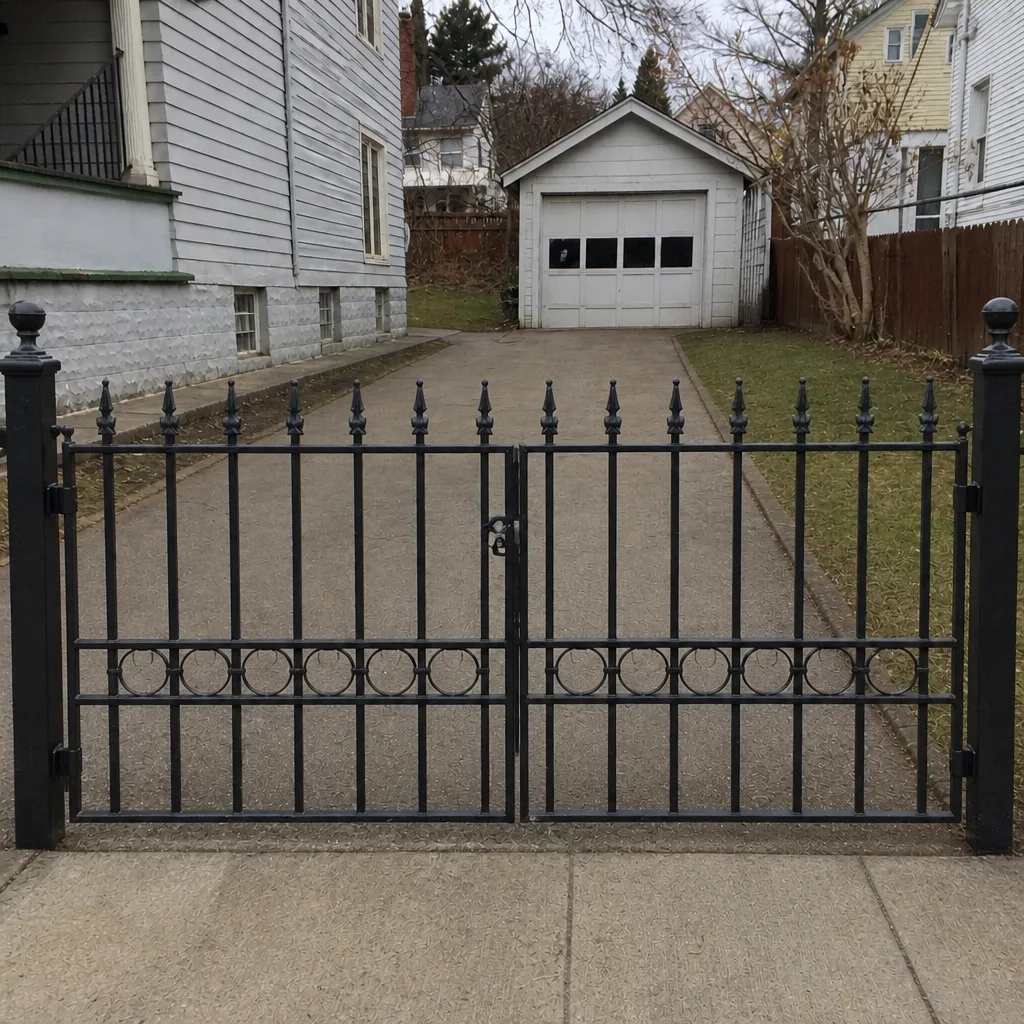
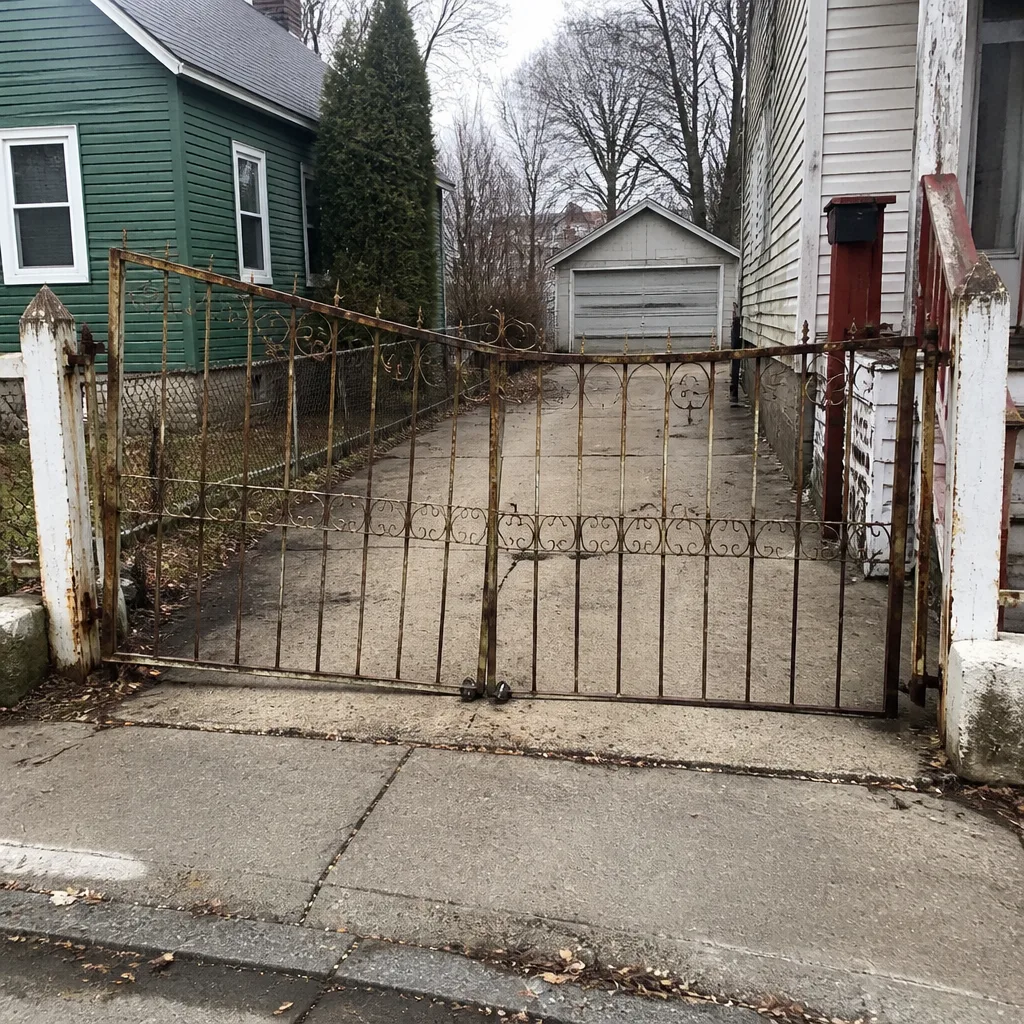
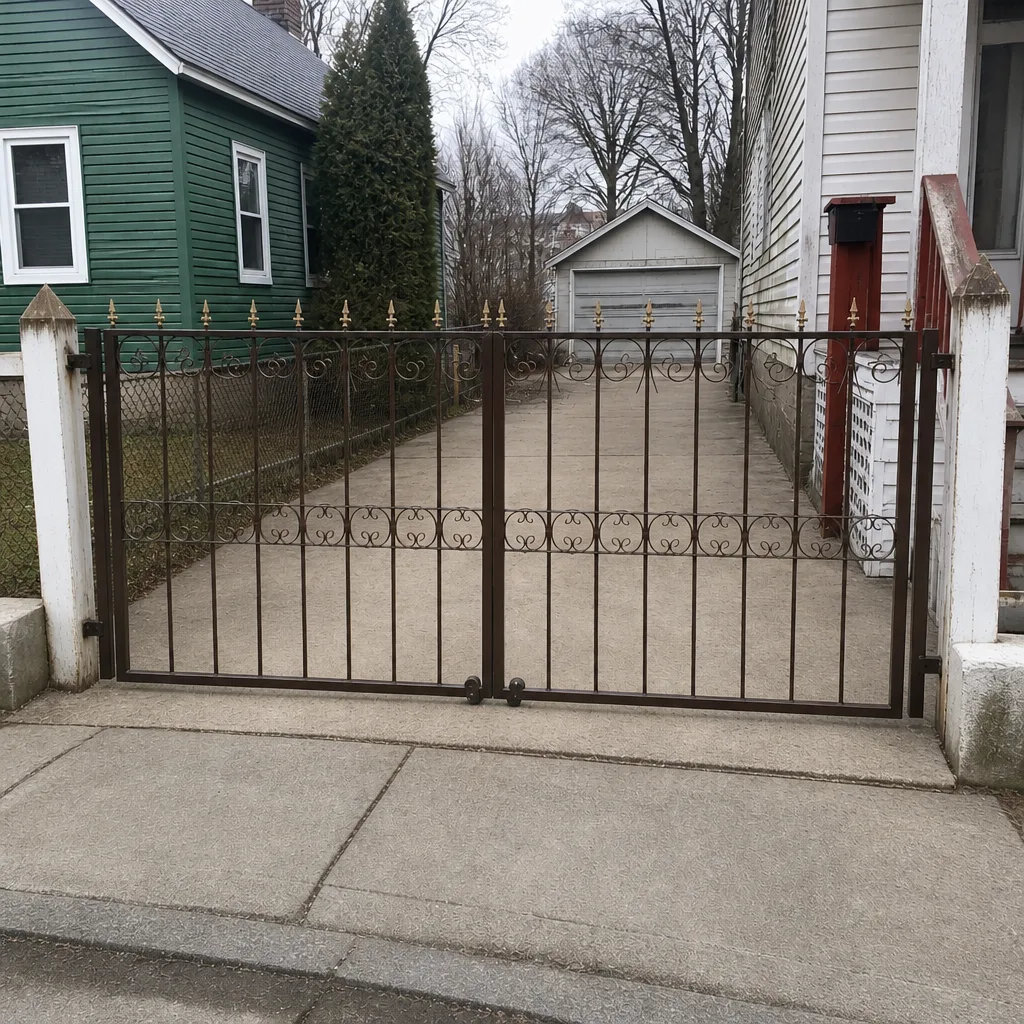
See the difference
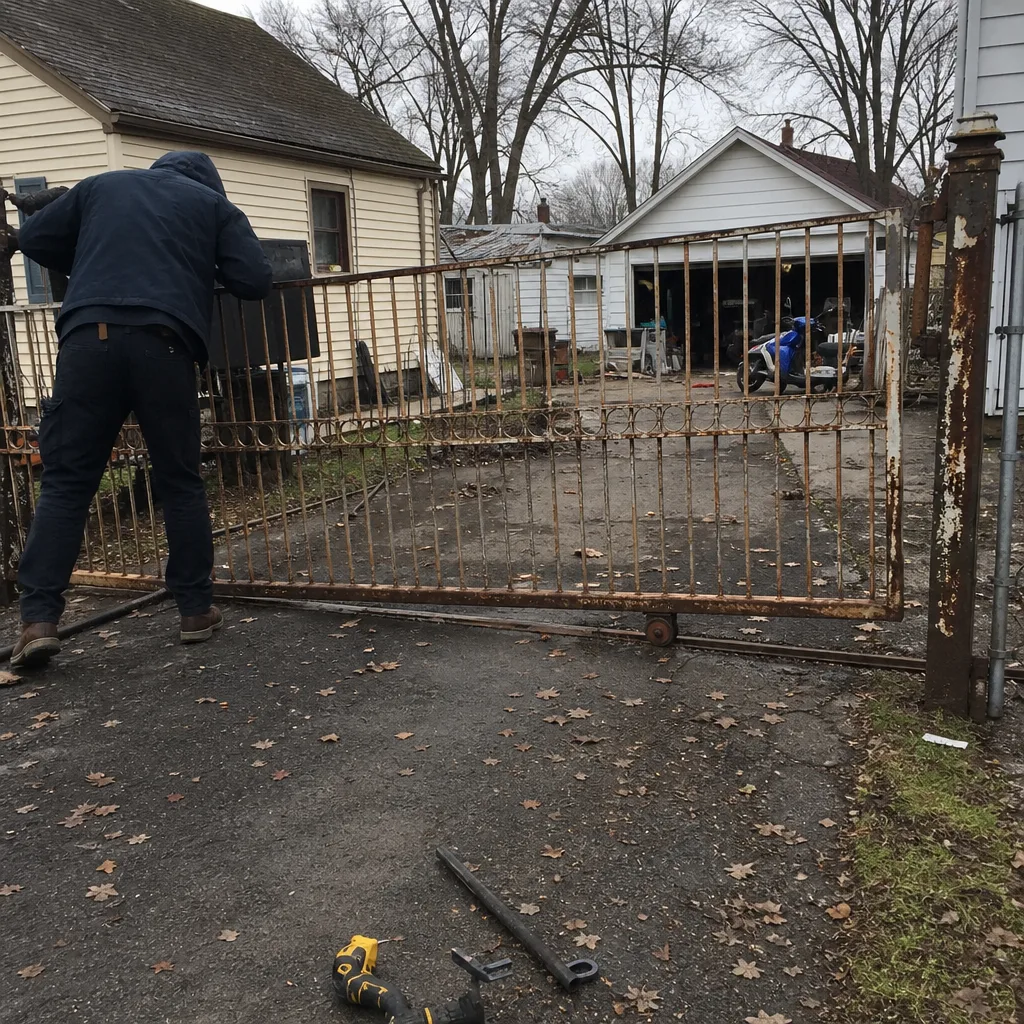 Before
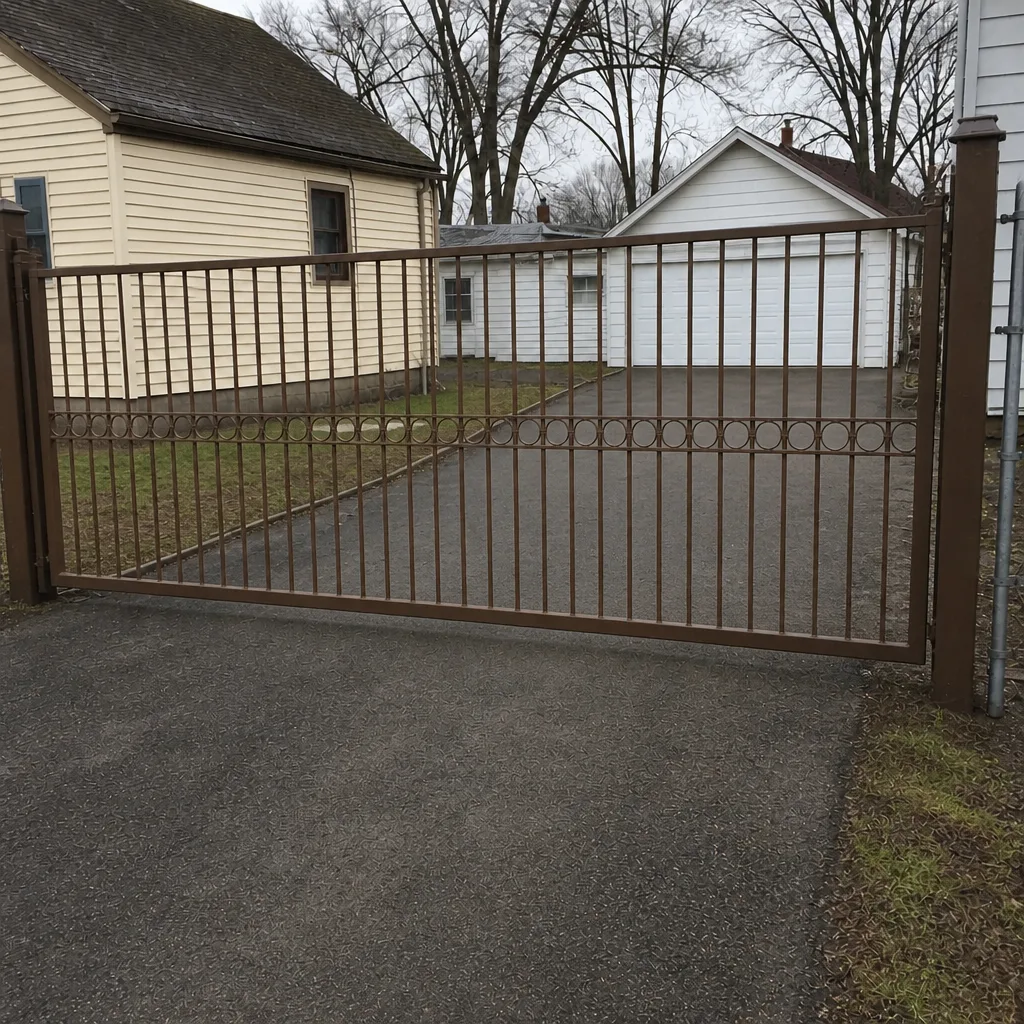 After
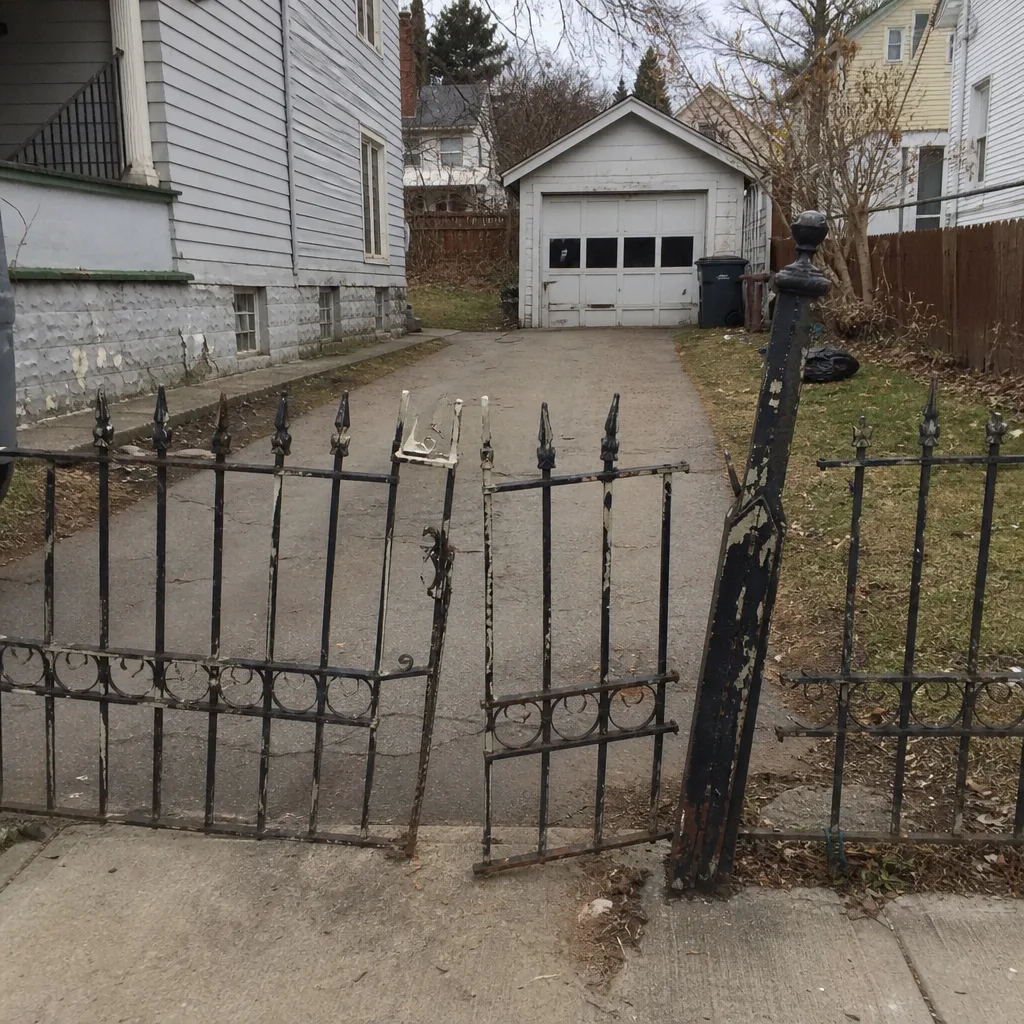 Before
 After
 Before
 After
When to Call a Professional
Some diagnostics are safe for a homeowner. Others aren’t. Call a professional if the gate stalls while someone is in its path, if the operator enclosure smells hot or is physically damaged, if the gate has come off its track, if you can hear the motor humming but the gate won’t move after a manual-release check, or if a control board fault persists after you’ve verified that the operator has power. These cases involve heavy panels that can crush, operator parts that store voltage, and wiring that should only be handled by someone trained for it. Don’t force a gate and don’t reach into the enclosure. If a gate has failed during a Syracuse cold snap, walk the gate by hand first; if it’s binding, stop and call. Syracuse Gate Repair offers free estimates in Syracuse. Call (844) 761-3861. We answer 24/7. Fast dispatch from 7am to 7pm, Sunday through Friday.
Frequently Asked Questions
The most common cause is a safety sensor or loop detector reporting an obstruction, not a motor failure. Check whether the sensor beam is aligned and its optics are clean, then check whether a vehicle or object is sitting near the buried loop detector. If the reversals continue with the path clear, the board fault code will narrow down which sensor is reporting. Call (844) 761-3861 for an exact quote on the repair; estimates are free.
Put the operator in manual release mode and move the gate by hand. If it moves smoothly, the mechanics are fine and the problem is electrical or in the operator. If it binds or drags, the problem is mechanical and no new motor will fix it. That one test separates the two failure categories faster than anything else.
A gate that stalls at the same point in its travel every cycle is almost always hitting a mechanical obstruction, usually a deformed gate frame, a seized hinge, a damaged track, or a foreign object. In Syracuse, freeze-thaw cycles are a major cause of frame deformation that creates exactly this stall pattern. Don’t keep forcing it; let a technician inspect the mechanics.
Gate repair in Syracuse happens all winter, and waiting can do more damage. A binding gate keeps working the operator against resistance, and a stuck gate increases the risk of bending the operator arm or the gate itself. Cold-weather diagnosis is straightforward when done correctly, and the earlier the freeze-thaw deformation is caught the simpler the adjustment. Call (844) 761-3861. We answer 24/7. Fast dispatch from 7am to 7pm, Sunday through Friday.
Gate repair pricing is set per job by a written estimate after we inspect the gate, because the cost depends entirely on whether the fault is mechanical, electrical, or both. A sensor adjustment is a very different job from an operator control board replacement. That’s why we diagnose before we quote. Call (844) 761-3861 for an exact quote; estimates are free.
A call to (844) 761-3861 reaches a live response, and we’ll get a technician out to look at the gate and confirm the actual fault. We answer 24/7, with fast dispatch from 7am to 7pm, Sunday through Friday. A call outside dispatch hours is booked into the next opening, Sunday through Friday, 7am to 7pm. Free estimates and an upfront price before any work begins.
The Bottom Line
Most gate failures trace back to one of five root causes, and most of them can be identified before anyone touches a tool. Run the manual-release test to separate mechanical from electrical. Read the control board fault code. Check the safety sensor and the loop detector separately, because they look the same from the driveway but aren’t. Take Syracuse freeze-thaw seriously when a gate suddenly binds. The payoff is simple: fewer unnecessary replacements, faster correct repairs, and a gate that stays working through the next winter. Our technicians have up to 8 years of experience diagnosing exactly these patterns, and we’d rather tell you the gate needs a repair than sell you a gate you don’t need.
Call (844) 761-3861 for a free estimate. We answer 24/7. Fast dispatch from 7am to 7pm, Sunday through Friday.
Written by the team at Syracuse Gate Repair.