
Last updated November 15, 2026
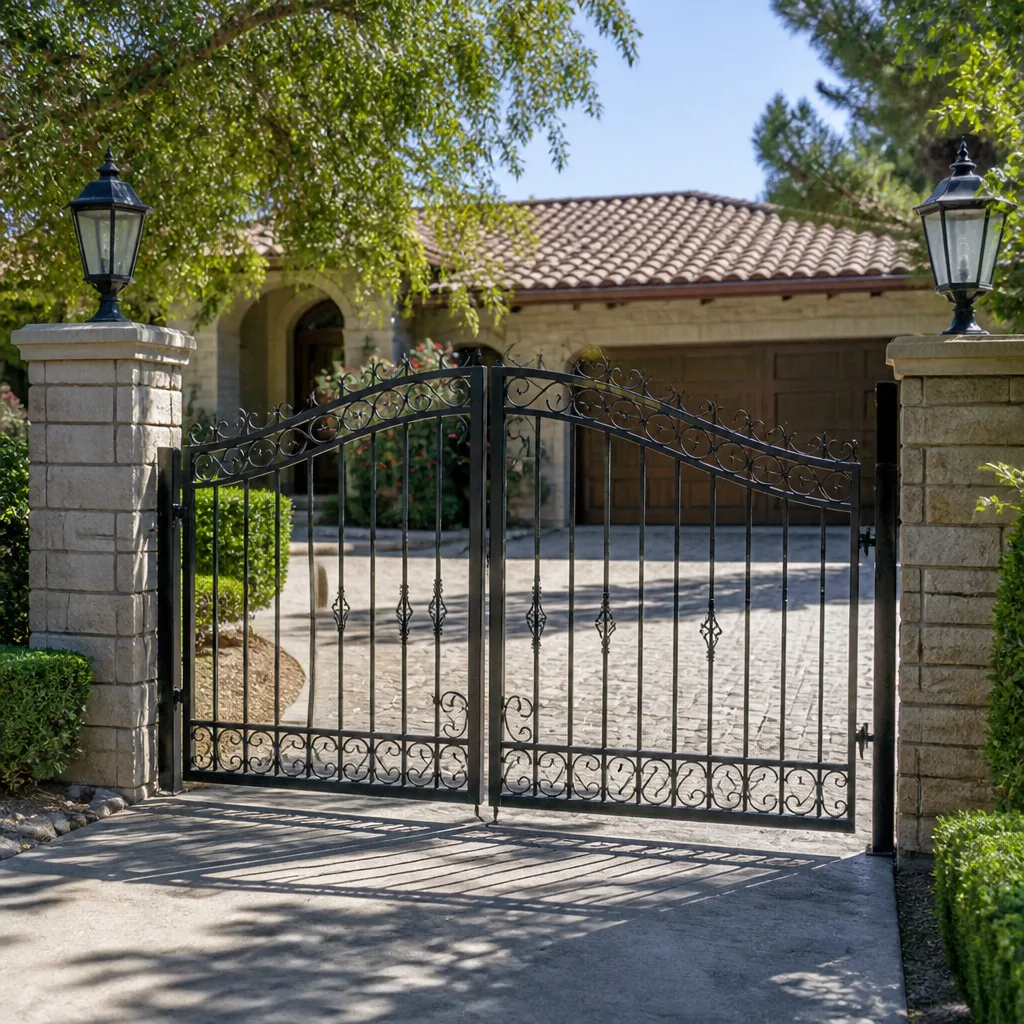 Wrought iron
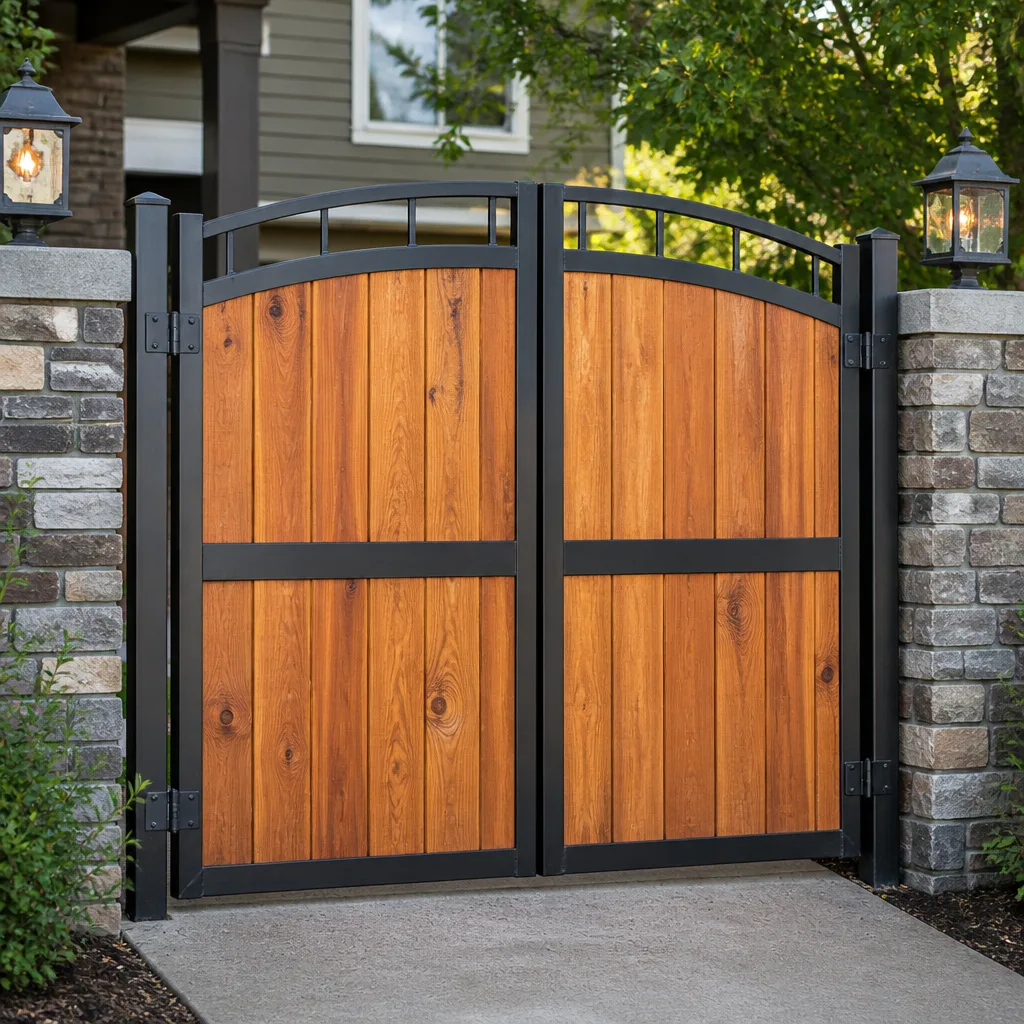 Wood & steel frame
 Farm & ranch
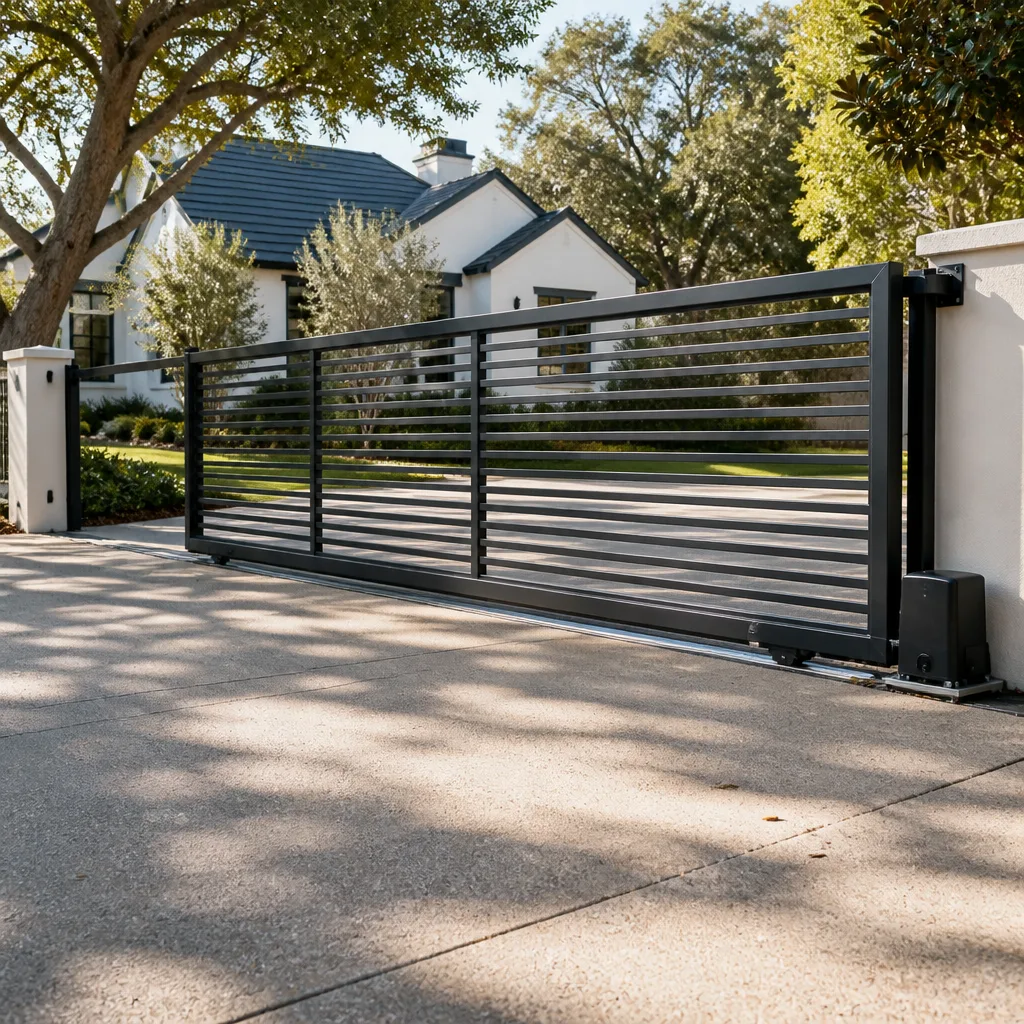 Sliding driveway gates
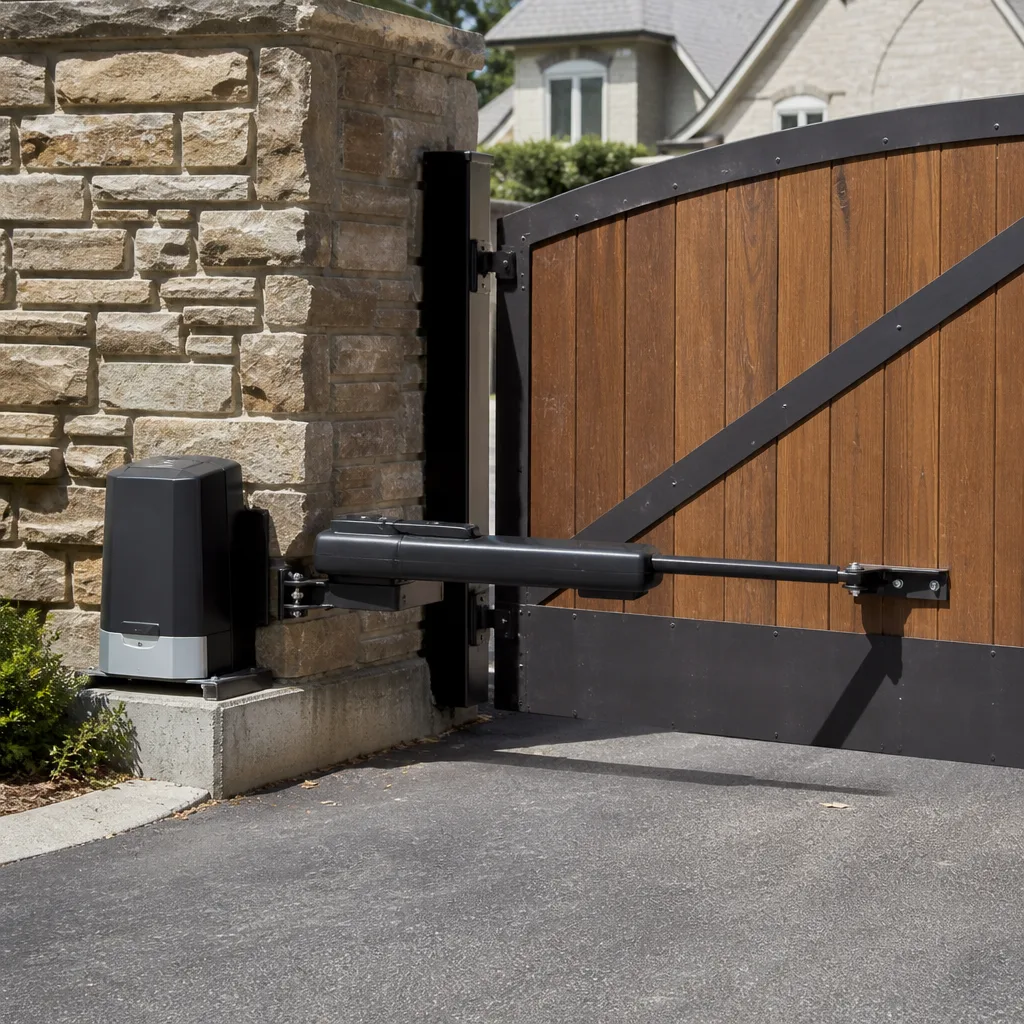 LiftMaster operators
Free on-site gate assessment - hinges, posts, and your LiftMaster or Nice gate operator checked before anything is quoted
The assessment is free and the quote is the invoice.
Get your free estimateGate Repair Warning Signs: A Syracuse Homeowner’s Reference Guide
A gate that reverses on its own isn’t malfunctioning. It’s doing exactly what its safety sensor is programmed to do when it detects resistance, which means something is mechanically wrong that the operator has been compensating for, possibly for months. Most homeowners write that off as a quirk and keep tapping the remote. This guide names the specific symptoms we see on gates across Syracuse, explains the mechanical condition behind each one, and tells you how much time you realistically have before the quirk becomes a crisis. You’ll learn how to tell hardware problems from control problems, and which signs mean stop now.
Quick Answer
The warning signs that matter most on a Syracuse gate are grinding at one point in the swing arc, sagging on one side only, reversal under load, and intermittent operation that seems to fix itself. Any of these means a mechanical or control fault is already active. Grinding and sagging point to gate hardware; reversal, sporadic failure, and dead remotes often point to the operator, sensors, or wiring. Reversal under load and a gate that drags its path are the two signs that should stop you from using it until a technician looks at it.
Styles & brands we work with
- Wrought iron
- Wood & steel frame
- Farm & ranch
- Sliding driveway gates
- LiftMaster operators
Table of Contents
- The eight warning signs and what each one means
- Hardware or operator: how to tell which system is failing
- Urgent or monitor: which signs buy you time and which don’t
- Why an intermittent gate is closer to failure than a dead one
- The compounding effect: how a small fix becomes a large one
- How Syracuse conditions stress a gate system
- A seasonal check you can do yourself
- Common mistakes to avoid
- When to call a professional
- Frequently asked questions
The Eight Warning Signs and What Each One Means
Gates fail in patterns, not randomly. In our experience, almost every failing gate shows at least one of these eight symptoms well before it stops working. Reading them precisely saves you from guessing. You can also start with a general read of gate repair before you diagnose anything yourself.
1. Grinding at one point in the swing arc. A gate that grinds during one segment of its travel has a hinge, roller, or post issue, not a motor issue. The gate is fighting something on its own travel path. A technician will check hinge play, post movement, and roller condition.
2. Sagging on one side only. Sag shows up when a hinge has worn, a post has settled, or a weld on the frame has cracked. The gate may still open, but each cycle puts more strain on the operator.
3. Reversal under load. The sensor is detecting resistance and reversing the gate as designed. This is reassurance, not comfort. Resistance means the gate is dragging or binding somewhere.
4. Intermittent operation. The gate works, then doesn’t, then works. That pattern usually points to a loose wire, a failing sensor, or a control board that’s beginning to fail.
5. Slow, uneven, or jerky travel. The gate is struggling under its own weight or against its own trolley. Wear and obstruction both produce this.
6. A grinding or buzzing sound from the operator. The motor is trying to move the gate and can’t. On a LiftMaster or Mighty Mule, a buzzing opener with a stuck gate is often a symptom of gate binding, not a dead motor.
7. Dead or unreliable remotes and keypads. If the gate opens from the panel but not the remote, the operator and motor are probably fine and the issue lives in the control side.
8. Photocell or safety edge faults. On many systems, a misaligned or fouled sensor stops the gate from closing at all. That’s the interlock working, not the gate failing.
Hardware or Operator: How to Tell Which System Is Failing
The single most useful distinction in gate diagnostics is between the gate hardware and the operator or control system. Gate hardware includes hinges, rollers, track, frame, posts, and stops. The operator and control system includes the motor, control board, sensors, wiring, and remotes. Getting this wrong sends you to the wrong kind of technician and delays the fix. In Syracuse, both kinds of work are common, and telling them apart is the first thing a specialist does on-site.
Signs the problem is hardware:
- Grinding at a specific point in the arc
- Sagging on one side or visibly out of plumb
- The gate drags against a post or a stop
- The gate wobbles as it swings
- Visible rust, loose hinges, or a bent frame rail
Signs the problem is the operator or control system:
- Motor runs but the gate doesn’t move
- No sound at all from the operator
- Remotes or keypads work inconsistently
- Safety sensors fault or trip constantly
- The gate reverses with no visible obstruction
The overlap is real: binding hardware can make the operator behave like a control fault, and a failing sensor can make the gate behave like a hardware problem. That’s why precision on-site matters. Here at Syracuse Gate Repair, we start every diagnosis by watching the gate travel, then working from known schematics and failure patterns for each supported brand. Electric systems get their own dedicated track because the motor, control board, sensor, and wiring failure modes are a separate discipline. If your issue turns out to be on the electrical side, that’s a job for electric gate repair rather than a hardware repair call.
Urgent or Monitor: Which Signs Buy You Time and Which Don’t
Not every warning sign needs the same urgency. A homeowner who treats all of them the same either overreacts and pays for a service visit on something minor, or under-reacts and runs a gate that should be out of use. Here’s a clear split you can work from. When in doubt, keep the gate out of service and get eyes on it.
Stop using the gate today
- Reversal under load, repeated
- The gate drags against the ground, a post, or a stop
- A loud grinding or clunking noise on every cycle
- A gate that has jumped or is riding off its track
- Safety sensors that fault or fail to stop the gate at all
These signs mean something is either carrying abnormal weight or defeating a safety interlock. Both put the gate, the operator, and anyone near the gate at risk. On a commercial or multi-tenant gate in Syracuse, take it out of service rather than leaving a sign on it. Public traffic and a breached gate is a liability problem, not a repair problem.
Schedule a repair within the next two to three weeks
- Sagging on one side that hasn’t gotten worse
- A grinding noise on part of the arc but not all of it
- Slow or jerky travel that still completes
- Occasional reversal with no clear cause
- A remote or keypad that works most of the time
These symptoms are active faults, not background noise, but a careful homeowner can monitor them briefly while a date is set. Keep a note of what’s happening, when, and under what conditions. That record will speed up diagnosis and, in our experience, shortens the repair.
Why an Intermittent Gate Is Closer to Failure Than a Dead One
A gate that fails completely is easy to read. It doesn’t move. You call for repair. A gate that mostly works is more dangerous because the failure isn’t visible yet, but the cause is already there. Intermittent behavior on a gate almost always has one of a few root causes, and each one is on a path to full failure:
- A loose or corroded wire connection. It’s making contact today. It won’t tomorrow.
- A failing safety sensor. The beam loses alignment under certain light or temperature conditions, so the gate closes in mild weather and reverses in the cold.
- A power supply that’s sagging. The motor works until a cold Syracuse morning demands more current than the supply can deliver.
- A control board beginning to fail. Relays degrade. Signals become inconsistent. The board works until it doesn’t.
- Binding hardware that isn’t binding yet. A gate that binds in one location only binds at all temperatures within a few weeks.
Look at your gate’s behavior across a week. Does it fail in the cold? When it’s wet? Only from the remote? Only at one part of the trip? Those patterns point to the cause. A gate that fails the same way, every time, has already taught you its problem. A gate that fails unpredictably is still hiding it, and unpredictability is the risk you’re carrying.
If you can describe three or four examples of when the gate fails, a technician can usually tell you what’s going on before the visit. That’s not diagnosis over the phone, but it does help put the right parts and tools on-site on the first trip.
The Compounding Effect: How a Small Fix Becomes a Large One
A gate is a system of parts that are supposed to move together, and when one part is out, the others take up the load. That’s the mechanism behind most “out of nowhere” gate bills. The progression is not a sales pitch; it’s how the mechanics work.
- The hinge wears, and the gate drops slightly. A hinge replacement is a narrow, targeted repair.
- The drop puts extra force on the operator each cycle. The operator motor and gears wear faster because they’re now lifting a load the pivot was designed to carry.
- The gate begins to bind. The binding forces the operator to draw more current than it was rated for, which stresses the control board and power supply.
- The board fails under the strain. A board replacement is a much larger job than the original hinge.
- The frame starts to distort. Distorted frames add to the binding and sometimes require repair before the gate can run smoothly again.
The same pattern plays out on the control side. A sensor that’s dirty or misaligned causes the operator to reverse mid-cycle. Repeated reversals wear the gate’s travel mechanism and force the motor to restart under load. Clean the next time the gate acts up and you stop the cascade. Ignore it and you pay for the sensor plus the wear it caused. If you’ve had two or three of these in the last year on the same gate, it’s worth asking a technician to check every pivot and stop before the next cold snap in Syracuse.
How Syracuse Conditions Stress a Gate System
The Central New York climate is hard on gate systems. The same freeze and thaw that play out on the roads here also play out on a gate’s pivots and posts, and the temperature swings between seasons push each component differently. A gate that works fine in June can show every warning sign in the list during a cold Syracuse morning.
Here’s where we see the climate biting hardest in Syracuse:
- Freeze cycles on hinges and rollers. Water gets into a hinge or a roller, freezes, and temporarily seizes it. The operator compensates by pulling harder, which is the start of the compounding effect.
- Post movement from ground frost and soil movement. A post that has moved even slightly throws the gate’s travel off. This is one reason hinge repair alone sometimes isn’t enough.
- Snow and ice in the gate path. A gate that has to push through snow piles on its own path reverses mid-cycle. That’s a safety response, but repeated cycles put extra strain on the motor and travel mechanism.
- Temperature swings on the operator. Seals on a gate operator wear more slowly than they do on a car, but the constant temperature cycling between warm days and cold nights shortens the life of seals, wiring connectors, and control boards.
The practical takeaway: any symptom that appears in the cold and clears up mid-morning should be treated as a mechanical issue that the operator is compensating for, not as a passing nuisance. If your gate works fine in the summer and acts up every January, the mechanism is telling you something about a hinge, a post, or the gate’s fit in its path, and it’s worth getting on a repair schedule before the cold makes it worse.
For readers looking at a full system replacement or a new install, our Syracuse page covers the broader scope of gate work we handle in the area.
A Seasonal Check You Can Do Yourself
You don’t need tools to catch most of the warning signs early. A 10-minute walk-around every change of season is enough to catch the problems that compound. Here’s the sequence we recommend. If anything in the list flags a real problem, stop and schedule a technician.
- Clear the gate path. Remove snow, ice, debris, gravel, and anything else in the gate’s travel zone. The gate should open into a clean path.
- Open the gate by hand (with the operator off). If the operator allows a manual release, disengage it and swing the gate through its full travel. Grinding, resistance, or hanging in one spot is a hardware sign.
- Look at the gate’s height and plumb. One side higher than the other, or a gate visibly out of plumb, points to hinges or posts.
- Check the safety sensors. Look for debris on the lenses and confirm the light pattern on both sensors matches the manual’s state for “clear.”
- Run the gate through full cycles. Watch for jerking, slow travel, and reversal. Try the remote and the panel keypad separately.
- Listen for grinding, ticking, or buzzing. Any unusual sound from the operator is worth a note and a call.
This check will surface most of the symptoms in this guide before they become a crisis. It also doesn’t replace a proper technician diagnosis. Manually releasing a gate is safe when done correctly and dangerous when the gate’s mechanism is already binding. If the release doesn’t feel like it’s operating the gate the way the manual describes, stop and call a technician rather than fighting the gate.
See the difference
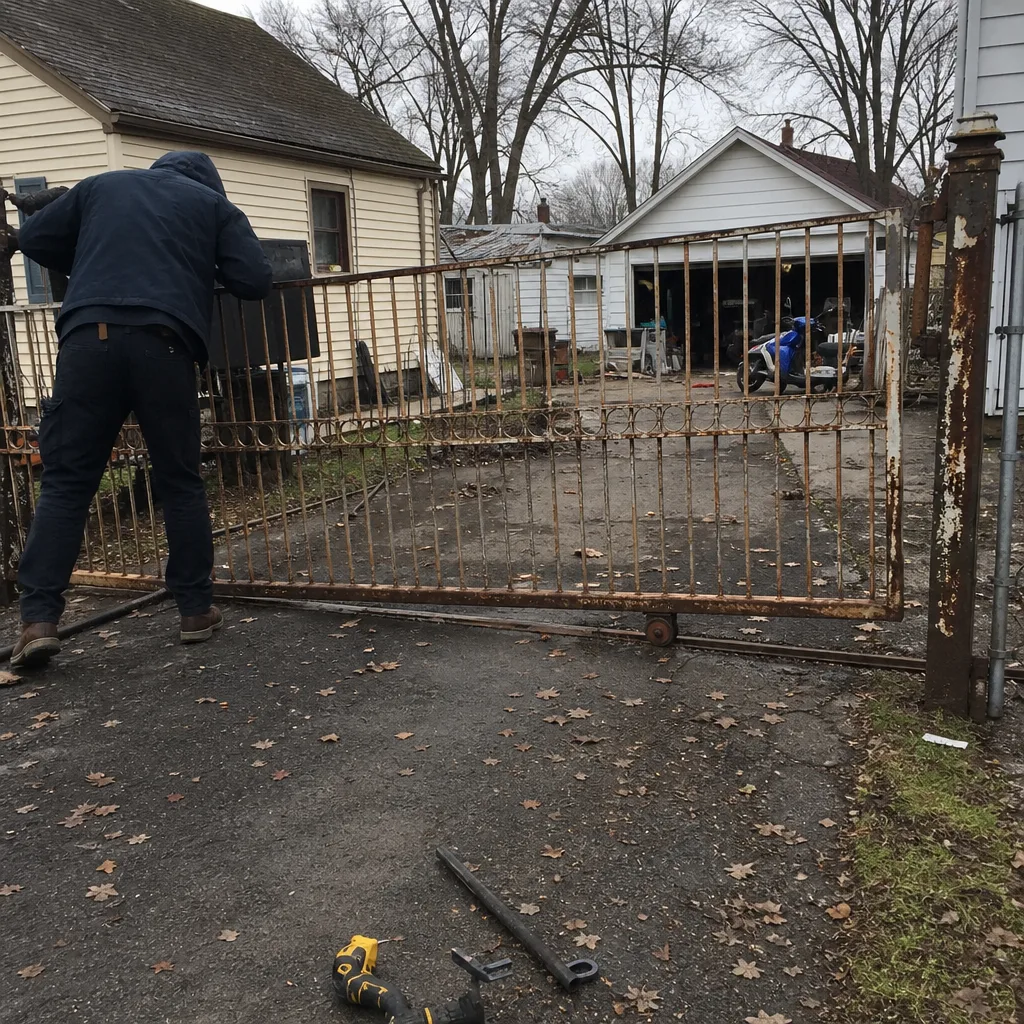 Before
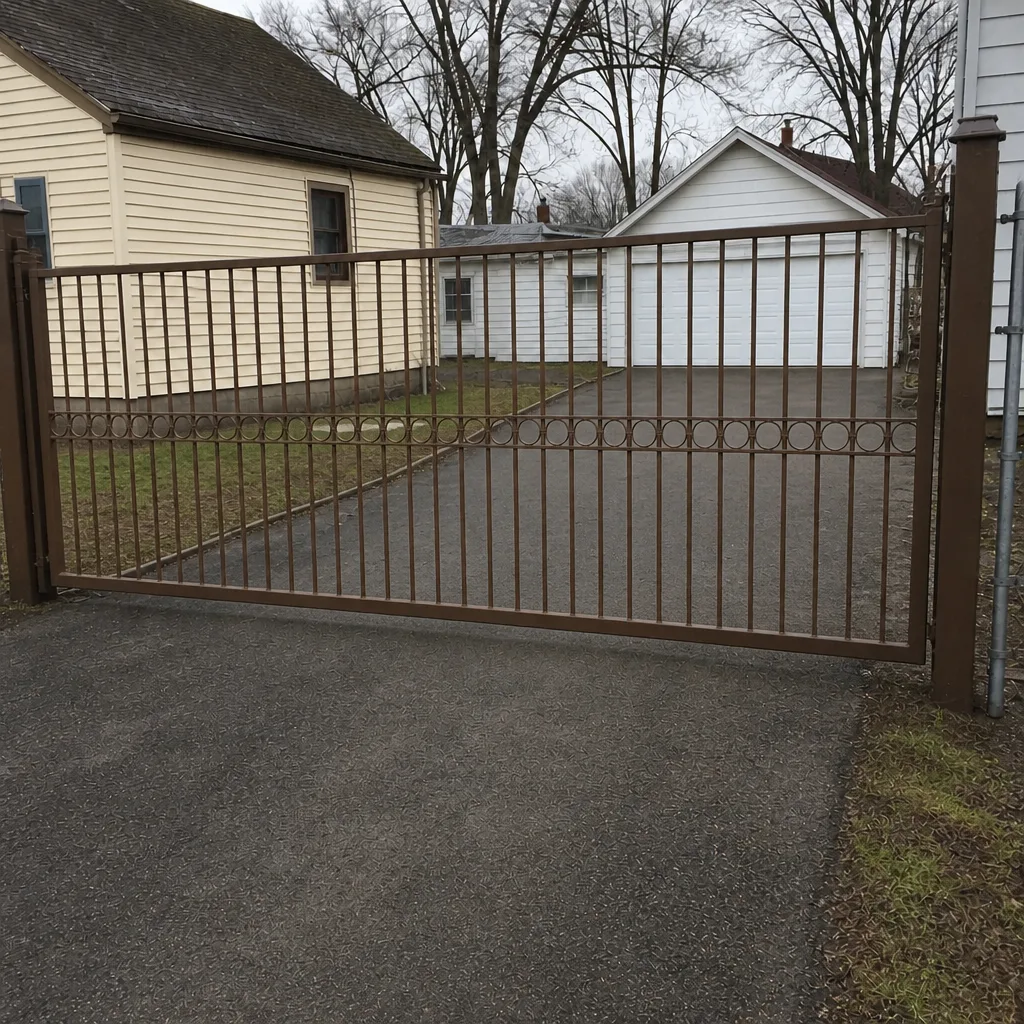 After
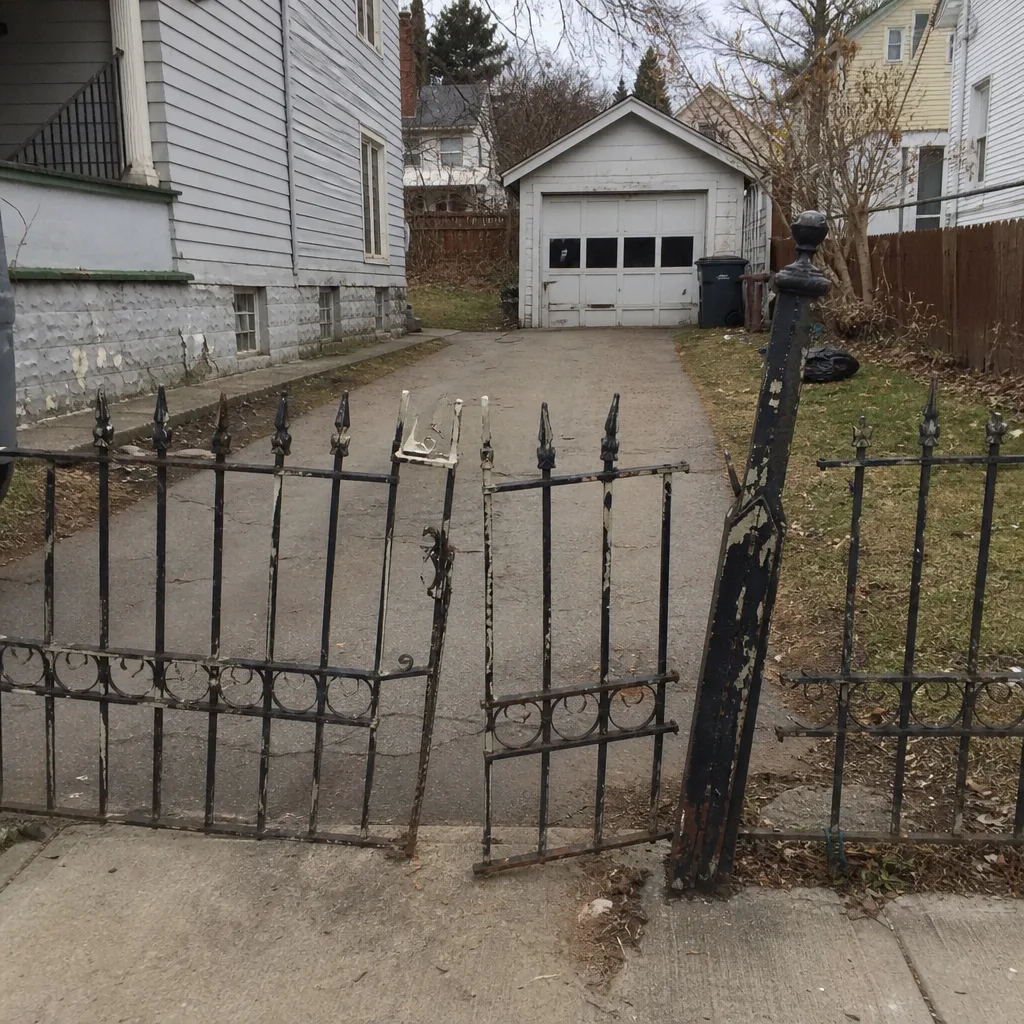 Before
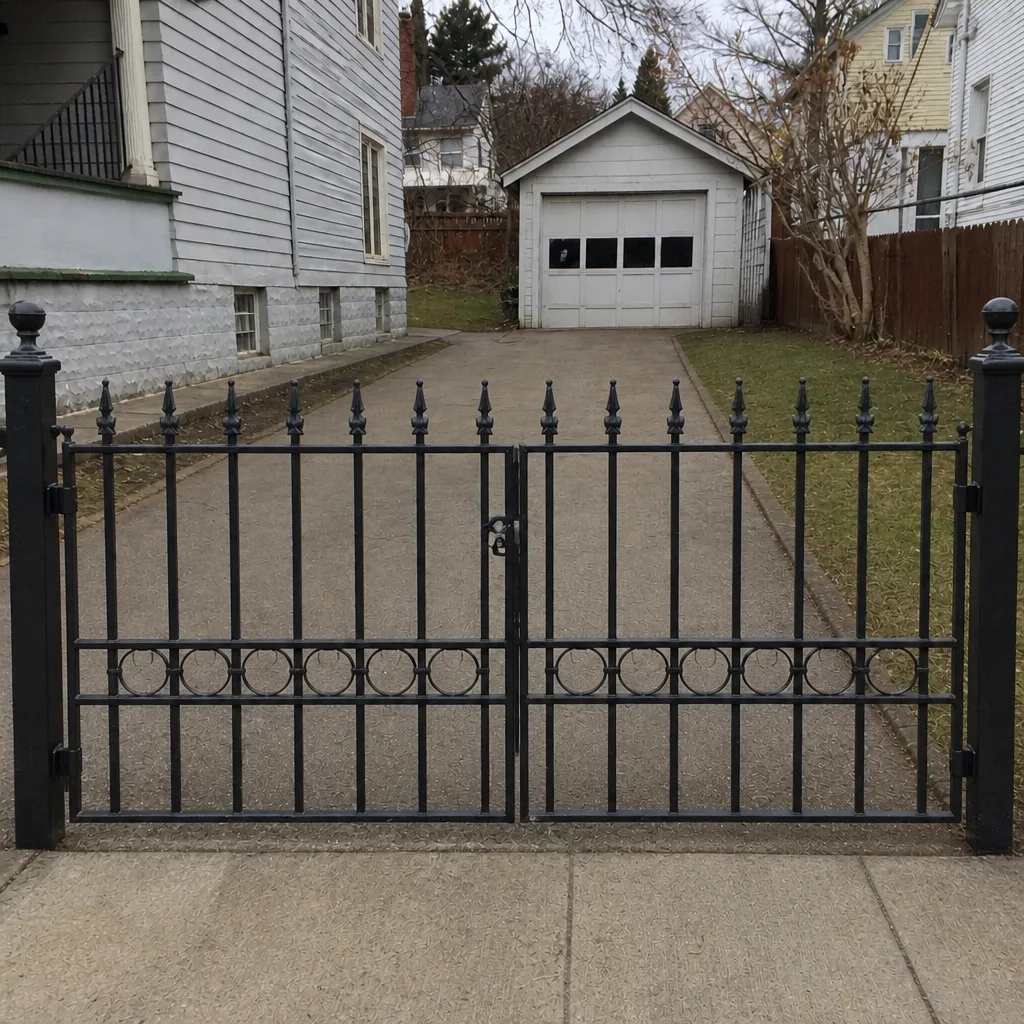 After
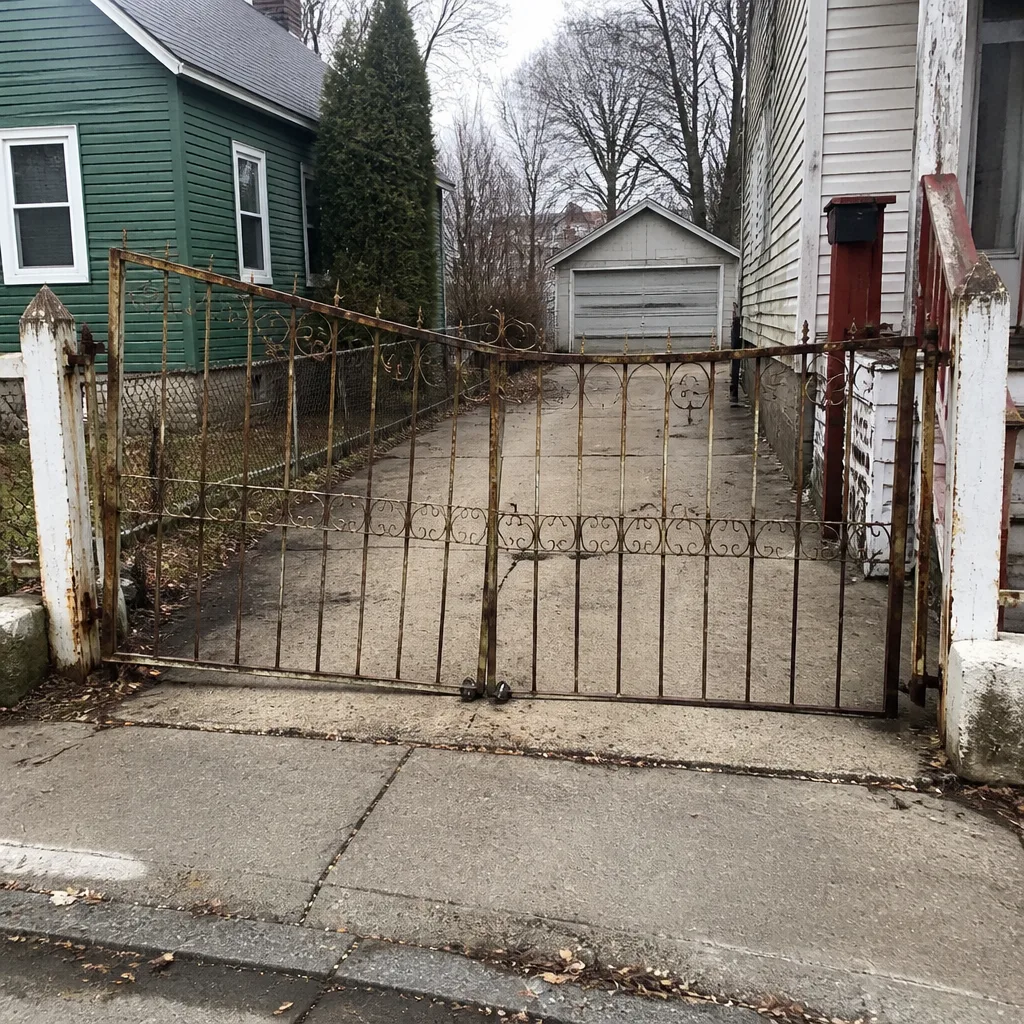 Before
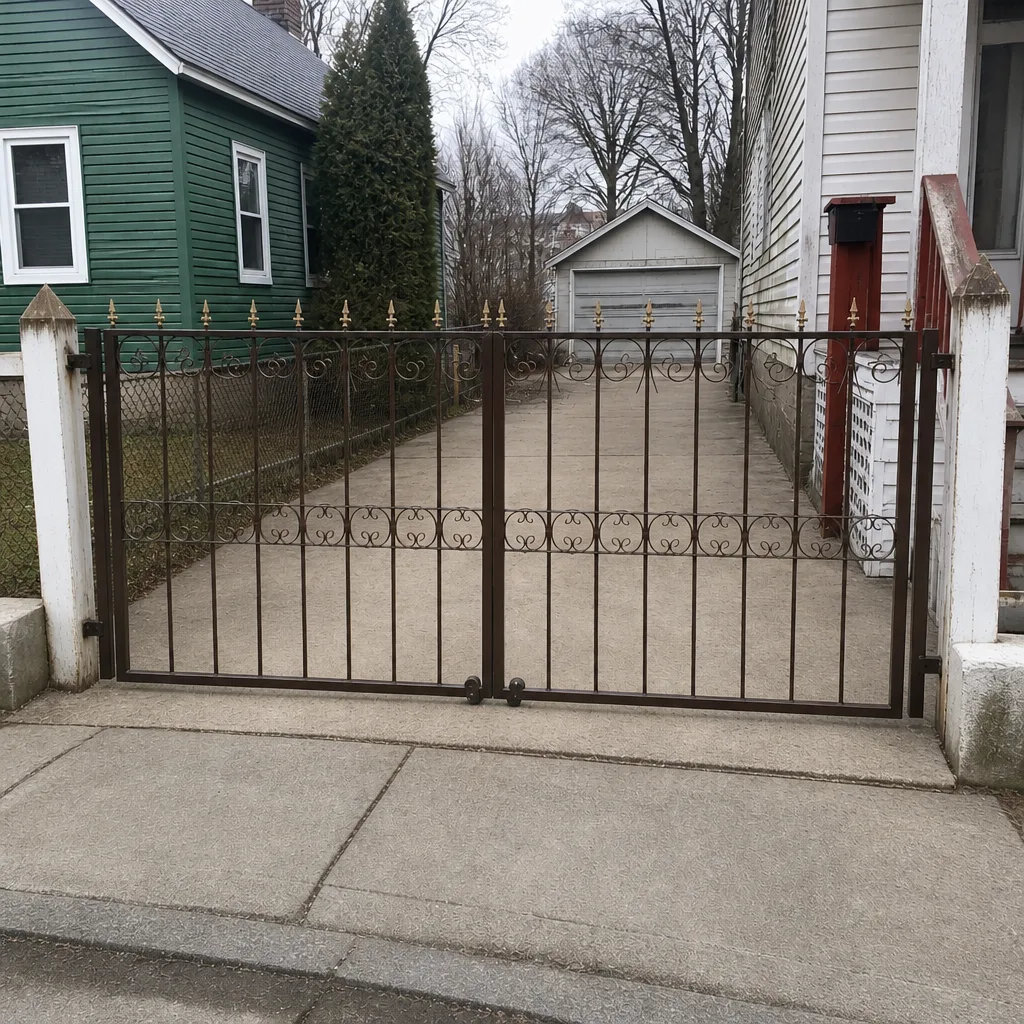 After
Common Mistakes to Avoid
- Greasing a hinge or roller that’s already binding. Lubrication reduces noise, not load. If the gate is binding, the cause is wear or misalignment, and grease just hides it for a season, then lets it come back worse.
- Ignoring an occasional reversal. Reversal is the safety system working. Every time it fires, there’s a mechanical condition the gate couldn’t complete. Those conditions don’t clear on their own in Syracuse winters.
- Wiring your own operator to skip the sensor. Safety interlocks exist because a gate can crush or trap. Bypassing a sensor is unsafe and can also damage the control board, which is a much larger repair on a LiftMaster or FAAC operator than the sensor itself.
- Replacing the remote when the panel also fails. If the gate opens from the wall keypad but not the remote, the remote isn’t the problem. A technician can test the operator and control side to isolate the actual fault.
- Treating a gate the same way you’d treat a garage door. Gates have their own scope, their own mechanisms, and their own failure patterns. A generalist who works on both gets the diagnosis wrong on the gate because the two systems don’t fail the same way.
- Calling a general contractor or handyman for an electric gate operator. Motor, control board, sensor, and wiring work is its own discipline. A technician who already knows your brand’s failure patterns reaches the diagnosis faster than one who has to learn the system on your driveway.
- Putting off any repair because the gate still opens. The gate is still opening because it hasn’t failed completely yet, and the fault driving it is getting more expensive with every cycle.
When to Call a Professional
Call us when any of these apply: the gate reverses under load more than once in a day; the gate drags or hangs in its path; you hear grinding, clunking, or a buzzing opener; a gate has jumped off its track or is visibly out of line; or your sensors are faulting in a way you can’t correct with cleaning. Call also if you’re managing a commercial or multi-tenant gate in Syracuse and it’s showing intermittent behavior, because a gate that’s still mostly working is still a liability in a public driveway. One more good trigger: you’ve had the same symptom return twice after a previous repair. That’s a sign the earlier repair treated symptoms rather than cause.
Syracuse Gate Repair offers free estimates in Syracuse. Call (844) 761-3861. We answer 24/7. Fast dispatch from 7am to 7pm, Sunday through Friday.
Frequently Asked Questions
The most common warning signs in Syracuse are grinding at one point in the swing arc, sagging on one side, reversal under load, and intermittent operation that seems to clear up. Grinding and sagging point to the gate hardware; reversal, sporadic failure, and dead remotes often point to the operator or control system. If a gate has any of these and you’re not sure which system is failing, call (844) 761-3861 for a free estimate.
Gate repair in Syracuse is priced per job based on the written estimate, and the estimate is free. A hinge or roller repair is a different scope than a control board or operator replacement, and we set the price from what we find on-site before any work starts. There’s no service charge to get the number to you. Call (844) 761-3861 for an exact quote.
Intermittency is not a sign the gate is safe. Intermittent failures usually mean a loose wire, a failing sensor, sagging power, or a control board beginning to fail, and each of those is on a path to full failure. A gate that mostly works is often closer to failure than one that has stopped completely, because the cause is still active and getting worse. Call (844) 761-3861 to schedule a diagnosis before the next cold snap.
Schedule a visit for sagging, partial-arc grinding, slow travel, or intermittent symptoms that haven’t gotten worse. Stop using the gate and call for immediate attention when it reverses under load, drags its path, jumps its track, or when a safety sensor fails to stop the gate. The first group buys you a couple of weeks. The second doesn’t. Call (844) 761-3861 for a free estimate either way.
We handle both sides of a gate system, and the electric side is a core specialty rather than a side job. That includes the motors, control boards, sensors, and wiring that often get misdiagnosed when a generalist treats them the same as a garage door opener. We work on LiftMaster, FAAC, Mighty Mule, BFT, Linear, Viking, Ghost Controls, DoorKing, and Elite systems, and we work from known failure patterns for each. Call (844) 761-3861 for a free estimate.
Yes. Freeze and thaw cycles here accelerate hinge and roller wear, and ground movement from frost can throw a post out of line. A gate that works fine in the summer and acts up every January is usually telling you about a mechanical wear point, not a seasonal quirk. Getting it looked at before the cold gets worse is cheaper than waiting for it to bind. Call (844) 761-3861 for a free estimate.
The Bottom Line
Gate failures have causes, and the cause usually shows up as a specific symptom long before the gate stops working. Grinding at one point in the arc, sagging on one side, reversal under load, and intermittent behavior are the four you should never ignore. The split that matters most is between hardware and control side; getting that right early shortens the repair, and getting it wrong sends the technician on a wild goose chase. Stop using a gate that reverses under load, drags, or jumps its track. Schedule a visit now for anything intermittent, since intermittent failures compound faster than dead ones. Catch it early in Syracuse and the repair stays narrow.
If you’re seeing any of these signs, don’t wait for the gate to lock up. Call Syracuse Gate Repair at (844) 761-3861 for a free estimate. We answer 24/7. Fast dispatch from 7am to 7pm, Sunday through Friday. Our technicians have up to 8 years of experience, and we work on your brand, whether that’s Mighty Mule, LiftMaster, FAAC, or BFT.
Written by the team at Syracuse Gate Repair.