
Last updated November 15, 2026
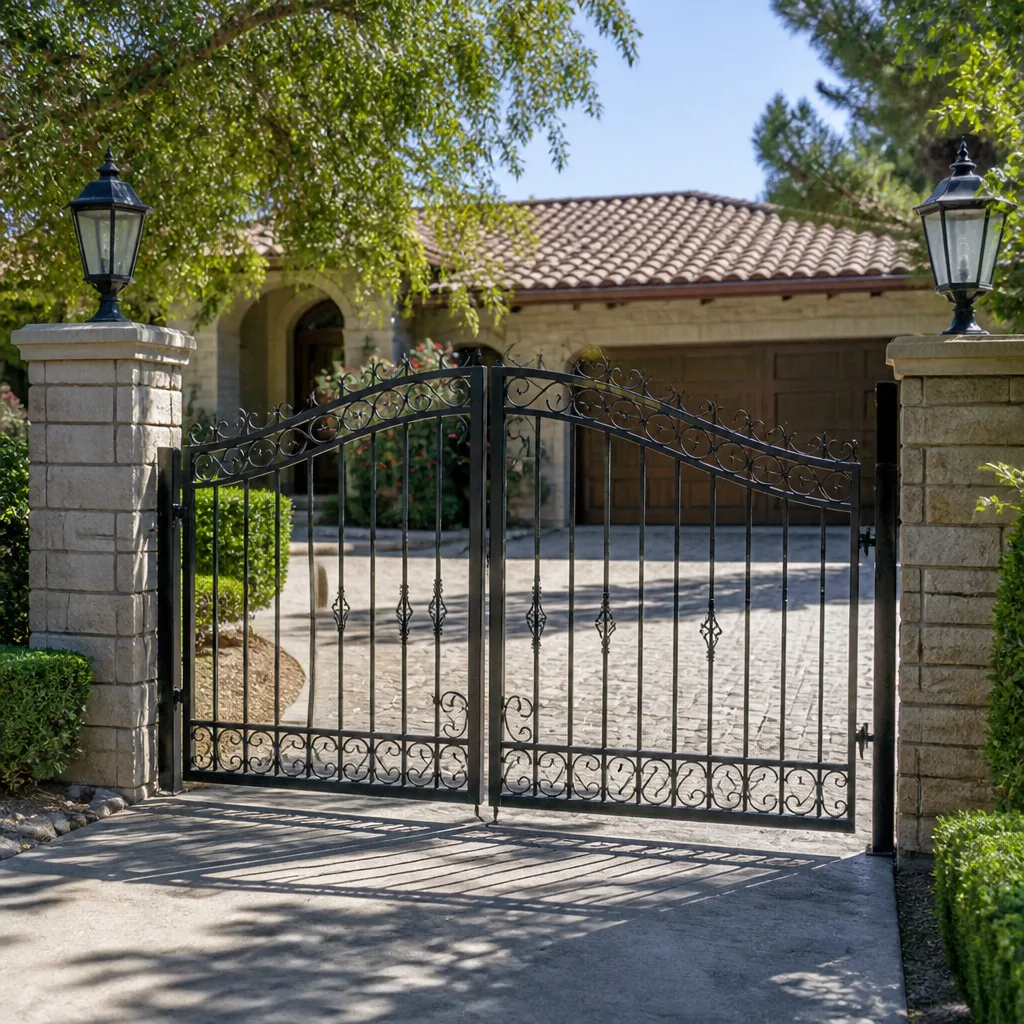 Wrought iron
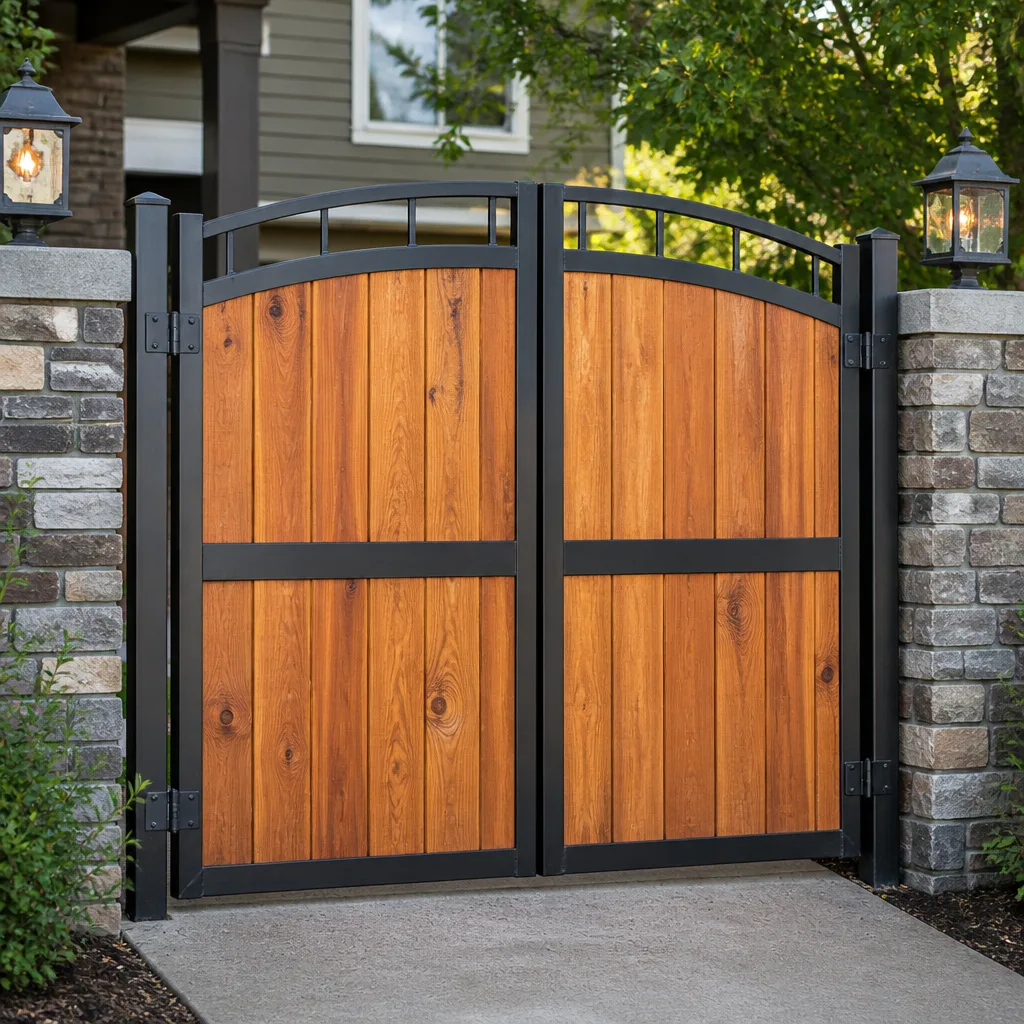 Wood & steel frame
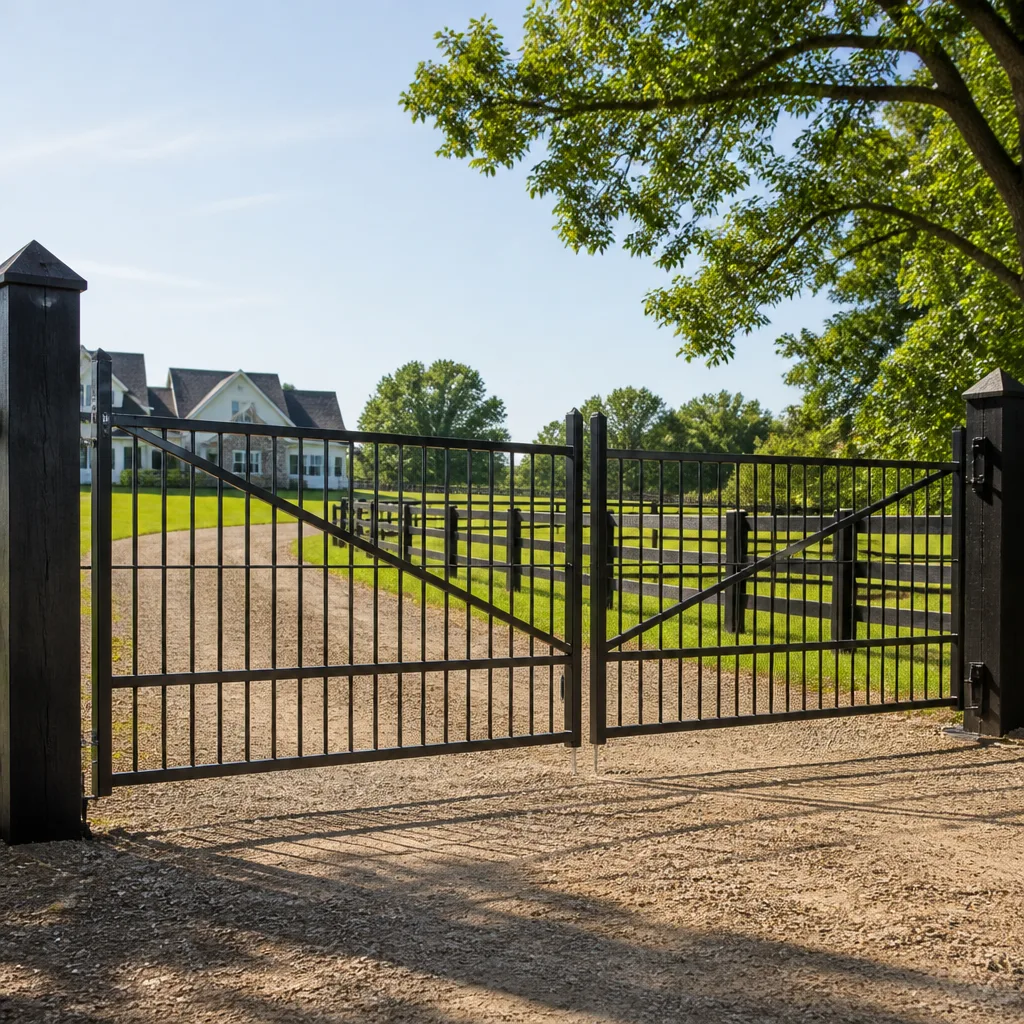 Farm & ranch
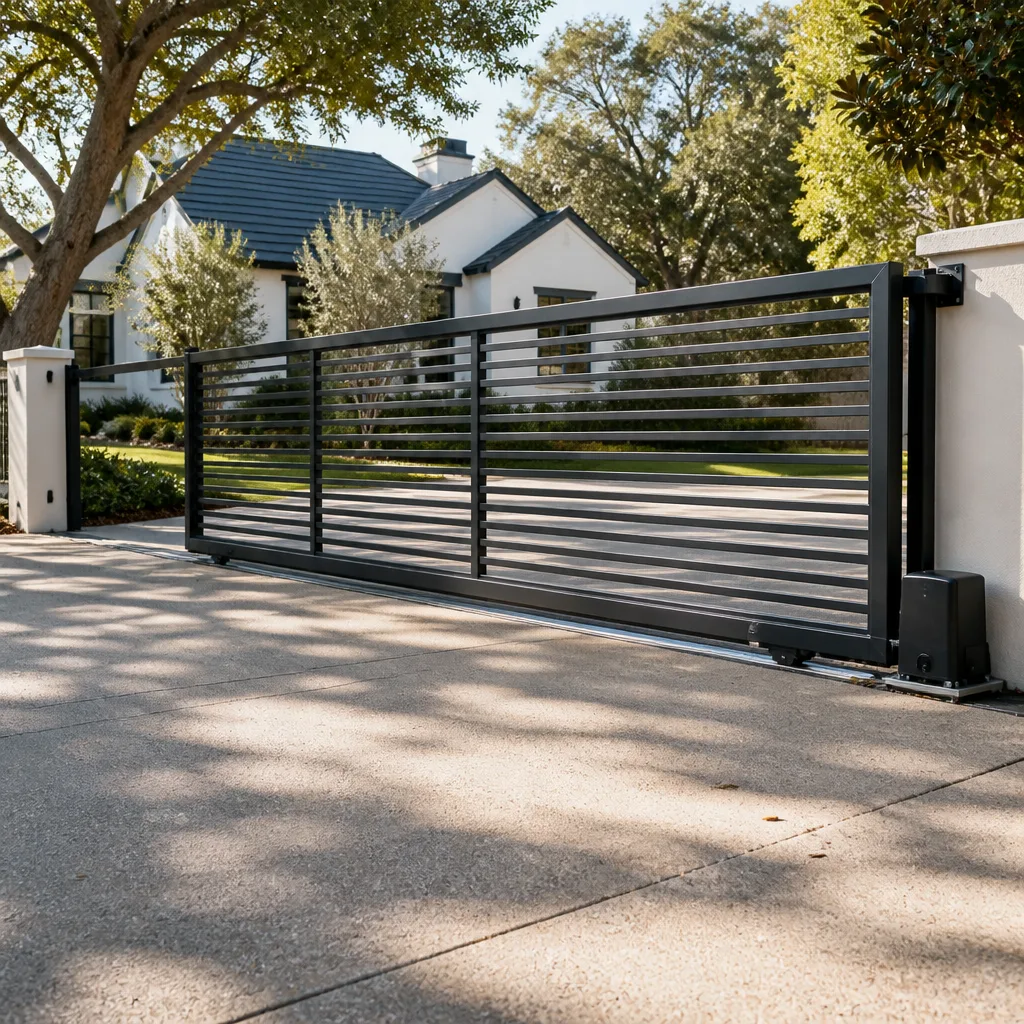 Sliding driveway gates
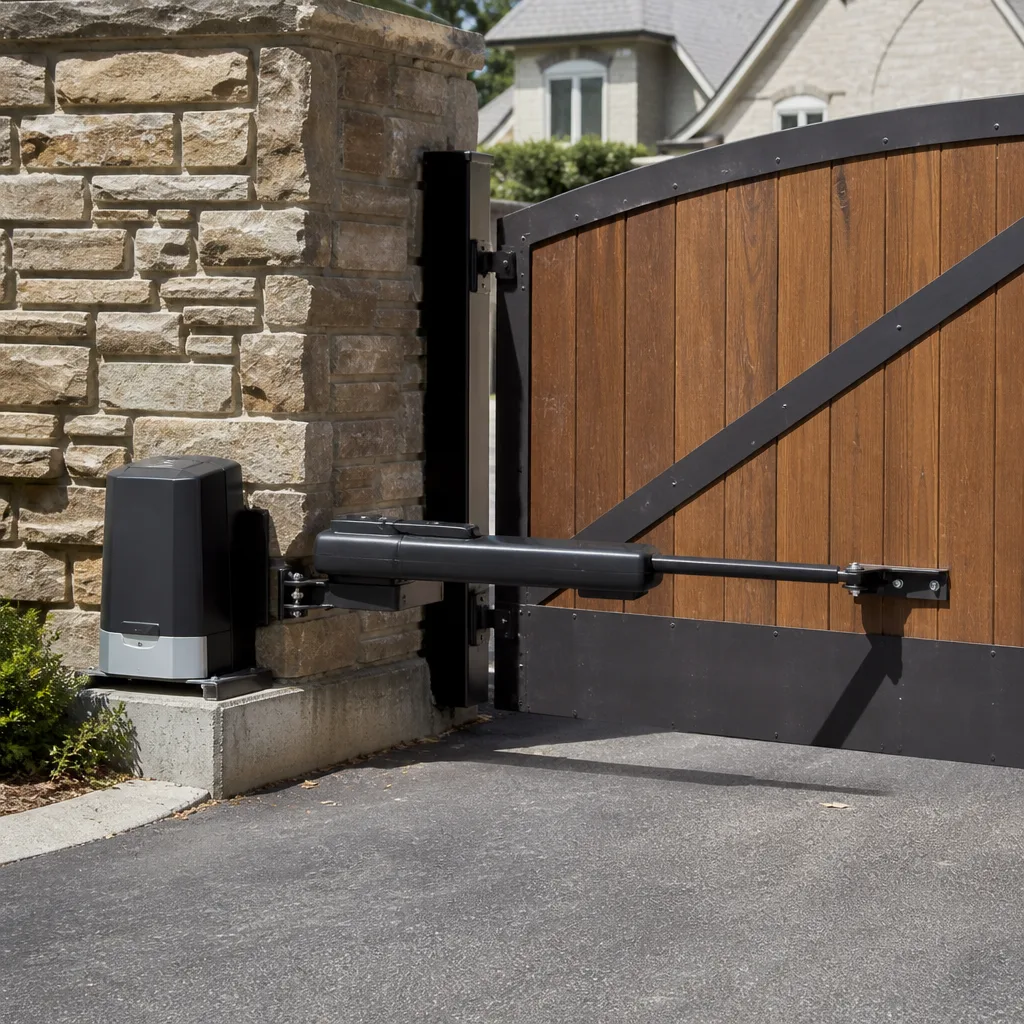 LiftMaster operators
Free on-site gate assessment - hinges, posts, and your LiftMaster or Nice gate operator checked before anything is quoted
The assessment is free and the quote is the invoice.
Get your free estimateGate Repair Cost Breakdown: The Syracuse Homeowner’s Reference for 2026
Two quotes for the same job can be $350 and $900 apart and both be legitimate. That’s the part of gate repair pricing that nobody explains, and it’s the part that costs homeowners in Syracuse the most. The gap isn’t a market problem. It’s a parts-sourcing problem, an operator-brand problem, and a question of whether you were quoted a flat rate or a diagnostic fee that can keep climbing. This guide breaks down what each type of repair actually involves in 2026, what the range should look like, and how to read a quote so you know which number you’re looking at.
Quick Answer
Gate repair in Syracuse in 2026 typically runs from $150 to $350 for hinge, latch, or hardware work, $300 to $650 for motor and operator repairs, and $400 to $900 for control board or loop detector replacement with labor. The biggest cost variable isn’t the repair type, it’s the brand of the operator and whether your quote includes a separate diagnostic fee. The written estimate you agree to before any work starts is the number that should be on your final invoice.
Styles & brands we work with
- Wrought iron
- Wood & steel frame
- Farm & ranch
- Sliding driveway gates
- LiftMaster operators
Table of Contents
- Component-Level Price Ranges for 2026
- Why Operator Brands Carry Different Price Floors
- The Diagnostic Fee Question
- Repair vs. Full Replacement: When Each Makes Sense
- Emergency and Same-Day Pricing in the Syracuse Market
- How to Read a Gate Repair Quote Line by Line
- What to Check Before Your Technician Arrives
- How Syracuse Weather Shapes Gate Repair Costs
Why Two Quotes for the Same Job Can Be $350 and $900
A gate opener that’s stopped cycling has four or five realistic causes. A bad control board. A failed motor. A safety sensor tripped or misaligned. A worn drive gear. A wiring fault. Any one of those can produce identical symptoms, and each one has a very different price tag attached. The problem is that a generalist handyman without brand-specific schematics often replaces the whole operator because they couldn’t isolate which of those five is failing.
A gate specialist working from known failure patterns can usually isolate the cause during diagnosis. That’s the entire difference in price. It’s not that one shop charges more per hour. It’s that one shop installs a part you don’t need.
The second variable is the operator brand. Viking parts and LiftMaster parts aren’t priced the same wholesale, and neither are the labor hours required to reach them. A control board for one brand may run three times the cost of the same-function board for another. When you get a quote, ask which brand of operator is on the gate and which specific part is being replaced. If the person holding the clipboard can’t answer that, that’s your information.
We mention this because the Syracuse gate repair market includes both specialty gate shops and general fencing contractors, and the pricing structure reflects that. There’s a real difference between diagnostic depth and upselling, and it’s visible in the quote if you know what to look for.
Component-Level Price Ranges for 2026
These ranges are typical estimates for gate repair in Syracuse and the surrounding area during 2026. Parts and labor are combined, and both vary with gate weight, access, and the specific operator. The written estimate you agree to before work begins always sets the final price.
| Repair Type | Typical 2026 Range | What’s Usually Involved |
|---|---|---|
| Hinge replacement | $150 – $300 | New hinge hardware, realignment, lubrication; higher with heavy or rusted panels |
| Latch replacement | $120 – $280 | New latch assembly, catch plate adjustment, alignment check |
| Post re-setting | $350 – $800 | Excavating around the base, straightening or replacing the post, pouring new footing, rehanging hardware |
| Control board replacement | $400 – $900 | Diagnostic time, new board matched to operator, wiring verification, test cycles |
| Loop detector replacement | $400 – $850 | New detector, saw-cut repair if the loop is damaged, wire re-pulled, sensitivity tuning |
| Motor replacement | $450 – $1,100 | New motor unit, mounting adjustment, control wiring, testing |
| Safety sensor/photo-eye replacement | $200 – $475 | New beams, bracket alignment, wiring, test |
| Full operator replacement | $950 – $2,400 | New operator, control board, sensor set, and installation labor |
Loop detector work is the one line that catches people off guard. If the buried loop is damaged from frost movement or grading work, the repair is more than a replacement part. A new loop usually goes in, which means saw-cutting and patching. DoorKing and Elite systems in commercial applications often use multiple loops, so the labor and material add up quickly. That’s normal and shouldn’t be a surprise if we’re being honest about what the work involves.
Why Operator Brands Carry Different Price Floors
LiftMaster, FAAC, and Viking are the three brands with the widest price spread in the Syracuse market. Not because one is better. Because they’re designed differently, use different control architectures, and their replacement parts sit at different price points.
LiftMaster
LiftMaster operators have a very wide install base for both residential and commercial gates, which keeps part prices competitive and availability high. That combination produces the lowest long-term repair economics of any brand we work with. Common failure points like control boards and drive gears tend to have predictable, moderate part costs.
FAAC
FAAC is a European brand with strong mechanical construction and higher-cost replacement parts. When a FAAC motor or reduction unit fails, the price floor is higher than a LiftMaster equivalent. A repair that runs $400 on one brand can run $650 on a FAAC because of hardware alone, before any labor differential.
Viking
Viking operators sit in the middle tier on parts pricing but often have a higher labor component because of access and mounting design. Viking swing operators, in particular, can take longer to disassemble and reinstall than a comparable LiftMaster, so the labor side of the bill reflects that.
Ghost Controls and Elite sit in different niches. Ghost Controls is common on residential solar-friendly installations and tends to have moderate part costs. Elite is more often seen on high-traffic commercial gates and represents a heavier-duty system with heavier-duty replacement pricing. We work with all of these brands directly and carry the schematics and failure patterns so the diagnosis doesn’t start from scratch.
The takeaway: if you’re replacing an operator, the brand you choose sets your repair floor for the next decade. A slightly higher-install brand with cheap, available parts often costs less over time than a lower-install brand with expensive parts. Ask your technician which brand has the best parts economics for your specific gate, not just which one is easiest to order.
The Diagnostic Fee Question
A diagnostic fee covers the time and travel required to actually find out what’s wrong with your gate. It’s a real cost, and it’s usually in the $75 to $150 range in the Syracuse market when it’s charged separately. Some gate shops waive it if you authorize the repair on the spot. Some roll it into a flat-rate repair quote. Some charge it and refund it toward eventual repair work.
Refusing to pay a diagnostic fee is usually the more expensive choice. Here’s why. A shop that works for free until they find the problem has to protect itself somewhere. That usually shows up later as a bigger repair quote, a “while we’re here” list of recommended add-ons, or a bias toward full replacement because it’s the only way to guarantee a billable outcome. A clean diagnostic fee keeps the incentive aligned: the shop gets paid for finding the cause, and you get an honest answer about what comes next.
When a diagnostic fee is reasonable
- You get a written report of what was found, not just a verdict.
- The fee is disclosed before anyone comes out.
- You aren’t pressured to authorize work on the spot.
- You get a written estimate with parts and labor broken out separately.
- Waiving or rolling into a repair is offered in writing, not verbally.
When to walk away
- The fee is “free” but the quote is much higher than others.
- You’re told the whole operator must be replaced and no specific part failure is identified.
- No written estimate is offered.
- You’re asked to sign anything before diagnosis begins.
- The technician can’t tell you the brand of operator on your gate.
A fair diagnostic fee is a sign that the shop is serious about finding the real cause. That’s the discipline that separates a proper electric gate repair specialist from someone guessing their way through the panel.
Repair vs. Full Replacement: When Each Makes Sense
The most common upsell in the gate repair market is the recommendation to replace the entire operator when one component has failed. Sometimes that’s the right call. Often it isn’t. Here’s how to tell the difference.
Targeted repair makes sense when:
- The operator is under roughly 10 years old and has no other known failures.
- A single component has failed (board, sensor, motor) and the rest tests clean.
- The gate’s mechanical structure is sound and the operator is well matched to the gate weight.
- Parts for the current operator are still available and tend to be reasonably priced.
- The failure is traceable to something environmental (storm, power surge, frost) rather than wear.
Full replacement makes sense when:
- The operator is 15+ years old and multiple components are failing or close to it.
- Replacement parts for the current model are discontinued or priced near a new unit.
- The gate has been modified repeatedly and is no longer well matched to the operator.
- You’re moving from a manual gate to an automated system.
- Safety sensors and controls are out of date and modern standards can only be met by new equipment.
Entertainment and convenience aren’t on that list. If a technician’s entire case for replacement is that the new one “has more features,” that’s a preference, not a failure. A repair that keeps a 12-year-old LiftMaster running for another three years is often the better economic decision, and it’s the one we’ll quote when it fits.
If you’re ready to move on from a failing system, that’s a different conversation, and it usually starts with a free measure and a written estimate rather than a same-day repair. You can read more about that path on our gate repair page or ask us directly when you call.
Emergency and Same-Day Pricing in the Syracuse Market
A gate that won’t close is a security problem. A gate that won’t open is an access problem. Either one gets prioritized, and the pricing should not change based on which day you call. In our experience, the fair approach to pricing urgent gate work in Syracuse is that the price for the repair is the price of the repair, regardless of when you call. If you’re told otherwise, ask why.
What a fair urgent call looks like
- You call and get a real person, not a voicemail box.
- You’re asked questions about symptoms, gate type, and operator brand.
- You’re scheduled for the earliest dispatch window and told what it is.
- You receive a written estimate before any work begins.
- The price on the estimate is the price on the invoice.
What should raise a flag
- Different quotes depending on whether it “sounds urgent.”
- No written estimate, or estimates given verbally and only verbally.
- Price inflation that’s not tied to parts or labor differences.
- Diagnosis skipped in favor of “let’s just replace the whole thing.”
- Pressure to sign before the problem is even identified.
Emergency pricing in a competitive market should track the same parts-and-labor math as any other job. That’s the whole point of the written estimate. When we quote a repair, we quote it before work starts. The number doesn’t shift because your gate picked the wrong day to fail.
How to Read a Gate Repair Quote Line by Line
A proper gate repair quote in Syracuse for 2026 should look like a small itemized list, not a single number on a napkin. Here’s the checklist you can bring to any quote you receive, ours included.
- Diagnosis stated. The quote names what failed and why. “Control board failure due to a power surge” is a diagnosis. “Gate not working” is not.
- Parts listed with brand. You should see something like “LiftMaster control board, model matching your operator.” Not “control board.”
- Labor hours estimated. A range is fine. An unexplained total is not.
- Total price, all in. One number you can set against your other quotes.
- What’s not included. If the repair exposes a wiring fault behind a wall, will that be an add-on? A good quote is honest about what’s outside scope.
- Warranty terms. Parts and labor coverage, stated plainly.
- Written signature or acknowledgment. A quote you’ve agreed to in writing is the price you pay.
If you’re comparing three quotes and each one uses the same items, you’re comparing apples to apples. If one is a flat price and one is a diagnostic fee plus open-ended repair, you’re comparing a finished project to a starting point. That’s the single biggest source of apples-to-oranges comparisons in the Syracuse gate repair market.
What to Check Before Your Technician Arrives
You can shorten your repair visit, and sometimes avoid one, by doing a few minutes of checking before we show up. Nothing on this list involves opening the operator housing or working near the power feed. Never do that yourself.
- Note the brand and model. Look for a label on the operator housing. Viking, DoorKing, LiftMaster, and Elite labels are usually on the inside of the housing door, but sometimes on the outside bottom edge. If you can read it, note it.
- Check the outlet or breaker. Confirm the operator is receiving power. A tripped GFCI outlet accounts for a surprising share of “dead gate” calls.
- Test the remote and the keypad separately. If one works and the other doesn’t, that narrows the problem to a receiver, remote, or keypad issue rather than the operator.
- Clear debris from the track or hinge path. A jammed slide gate or a swing gate that won’t close may just be riding on something.
- Look at the photo-eye alignment. On most systems, a small LED on each sensor tells you whether the beam is seeing its partner. A misaligned or blocked beam will stop the gate.
- Note when it fails. Does it fail on opening, closing, or both? Does it fail when the sun is in a specific spot on the sensors, or after a heavy rain? Those details save diagnosis time.
None of that involves working on the motor or the wiring that feeds it. That’s the part a trained technician handles, because the voltages and stored mechanical energy inside the operator can cause serious injury. If the gate is a slide gate that has come off the track, don’t try to muscle it back on. Heavy panels can crush. Leave it to a professional.
How Syracuse Weather Shapes Gate Repair Costs
Central New York’s climate is genuinely hard on gate hardware. The freeze-thaw cycle that runs from November through March pushes posts, heaves footings, and works hinges loose. By the time spring arrives, gate repair requests in Syracuse spike, and the frequent ones we see are hinge failures, sagging swing gates, and post re-setting.
Post re-setting is the repair most affected by local conditions. A gate post that was set to proper footing depth handles a Syracuse winter fine. A post that was set shallow doesn’t. When we re-set a post, the fix includes digging out a proper footing depth that will hold up through a hard winter, which is why the range for post re-setting sits higher than most hardware work. A cheap fix that skips the footing depth is a repair that will be back in the spring.
Snow and ice also affect automatic gate operators. Snow load on a swinging gate can trip a safety sensor or stall a motor. Ice jammed in a slide gate track can force a limit switch to fail. A handful of winter-related repairs each season are genuinely weather damage rather than equipment failure, and that’s worth knowing when you’re quoted a motor replacement. If the failure is traceable to a block of ice that jammed the track, a full motor replacement is a bigger answer than the question asked.
For commercial properties in the city, snow removal equipment and plow damage to buried loop detectors is a recurring issue. Loop detector damage from plow blades and grading work is one of the more common commercial gate repair calls we get through the winter, and it’s one of the more expensive repairs because of the excavation involved. If you manage a comercial property, it’s worth calling your snow contractor and your gate technician into the same conversation before spring.
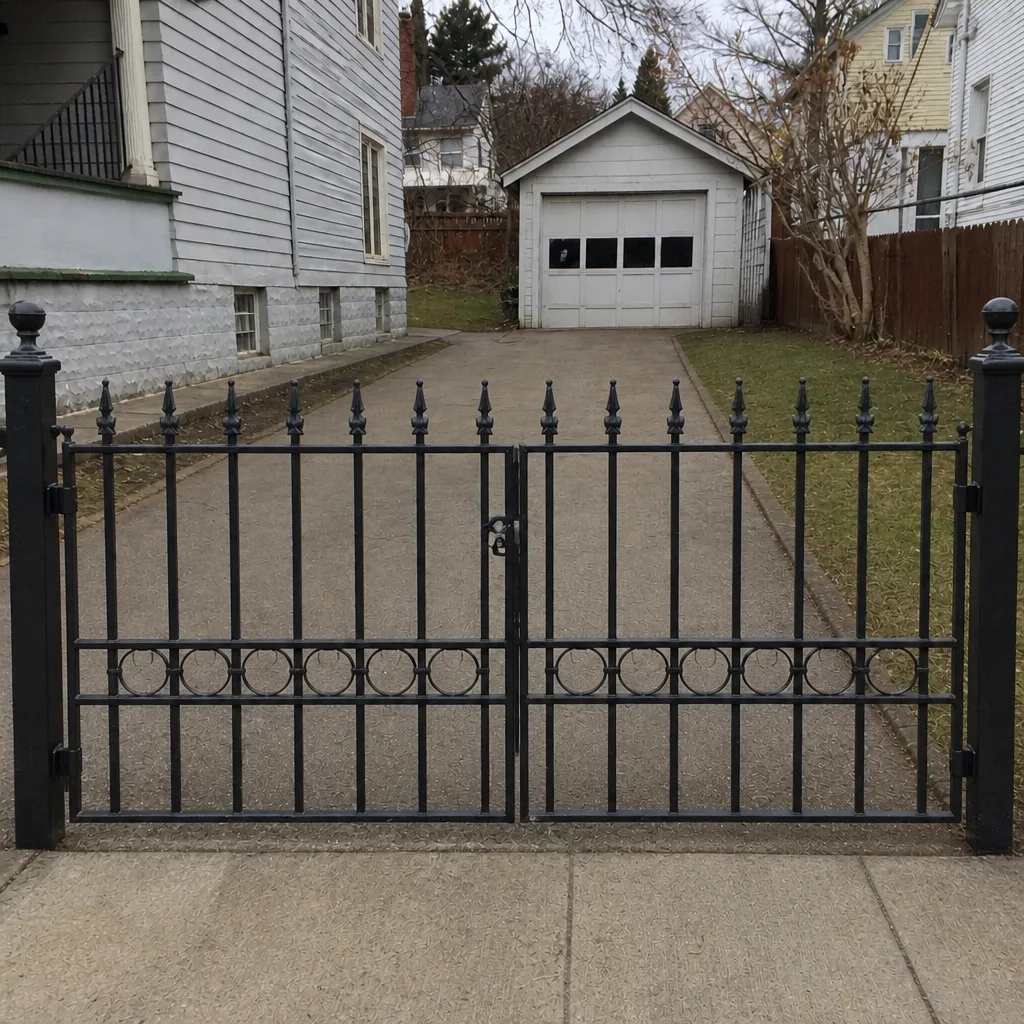
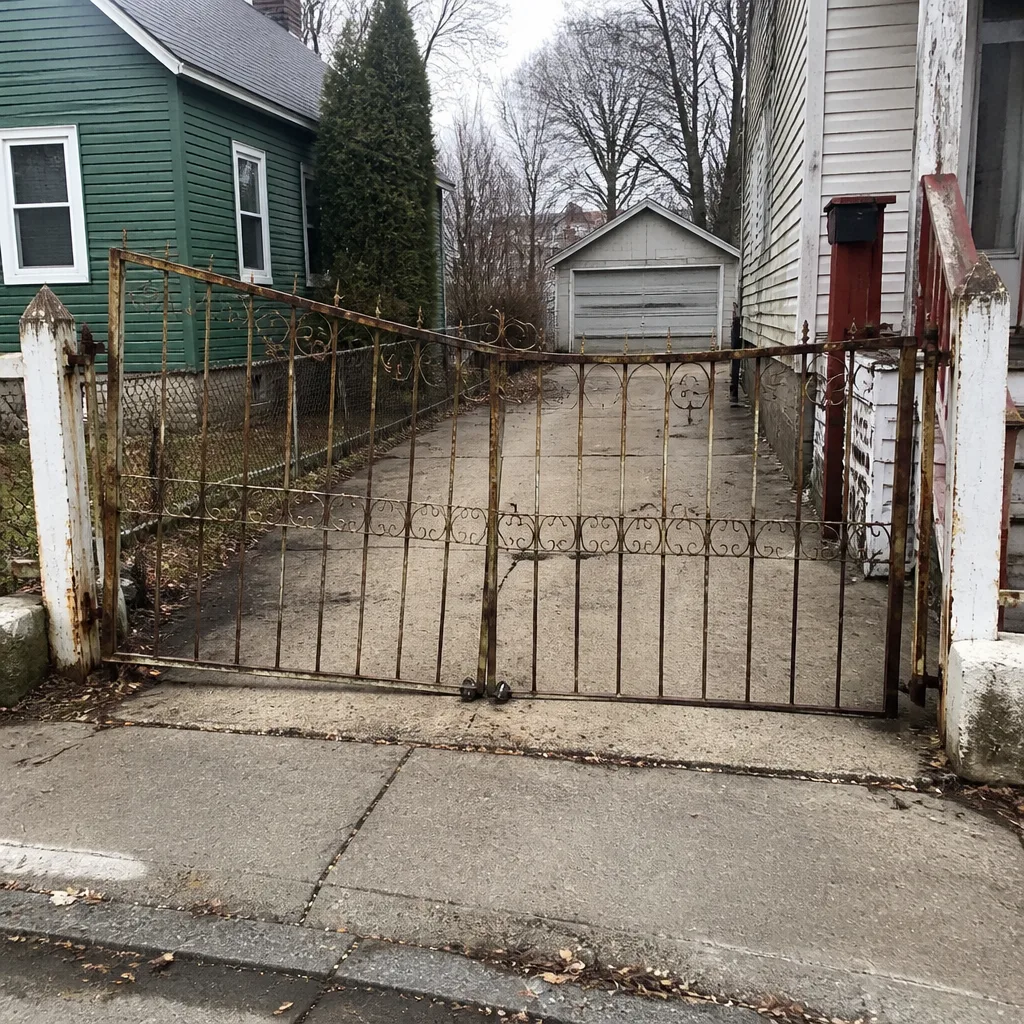
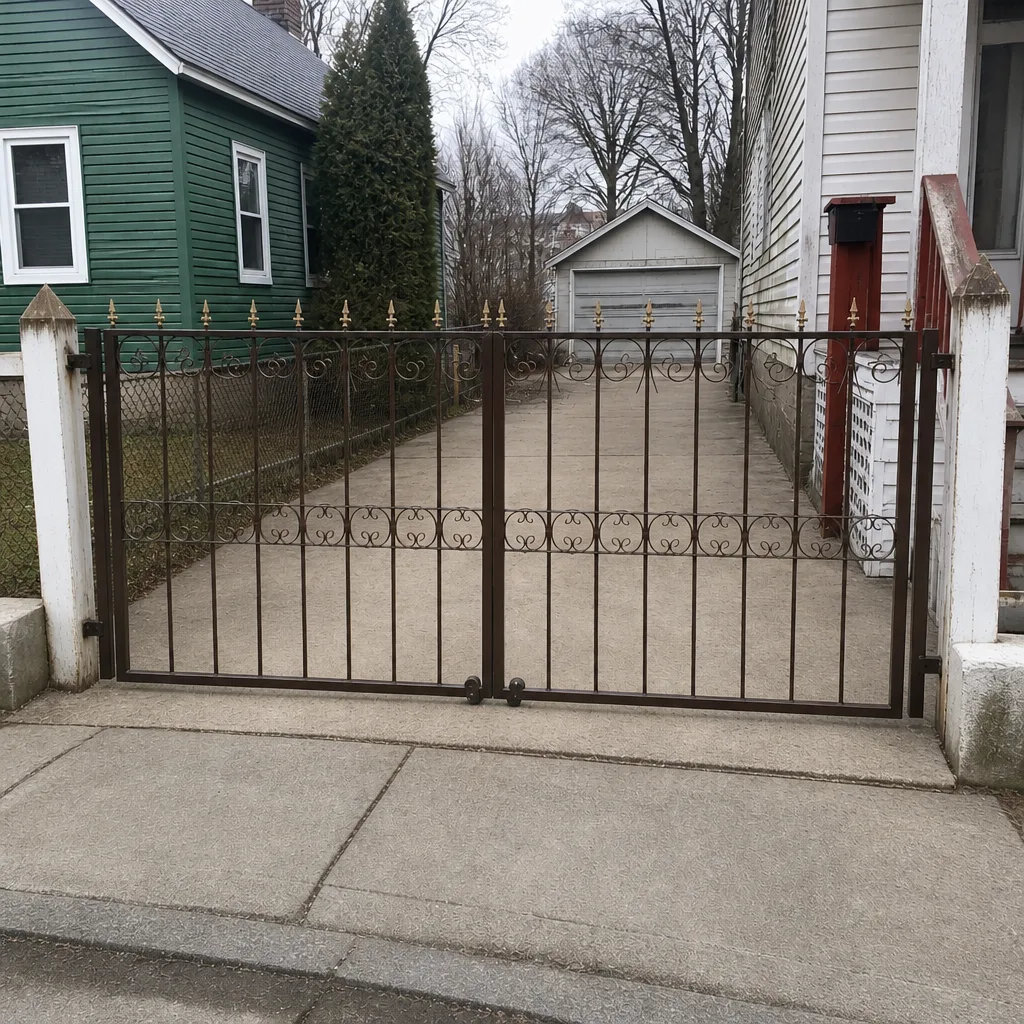
See the difference
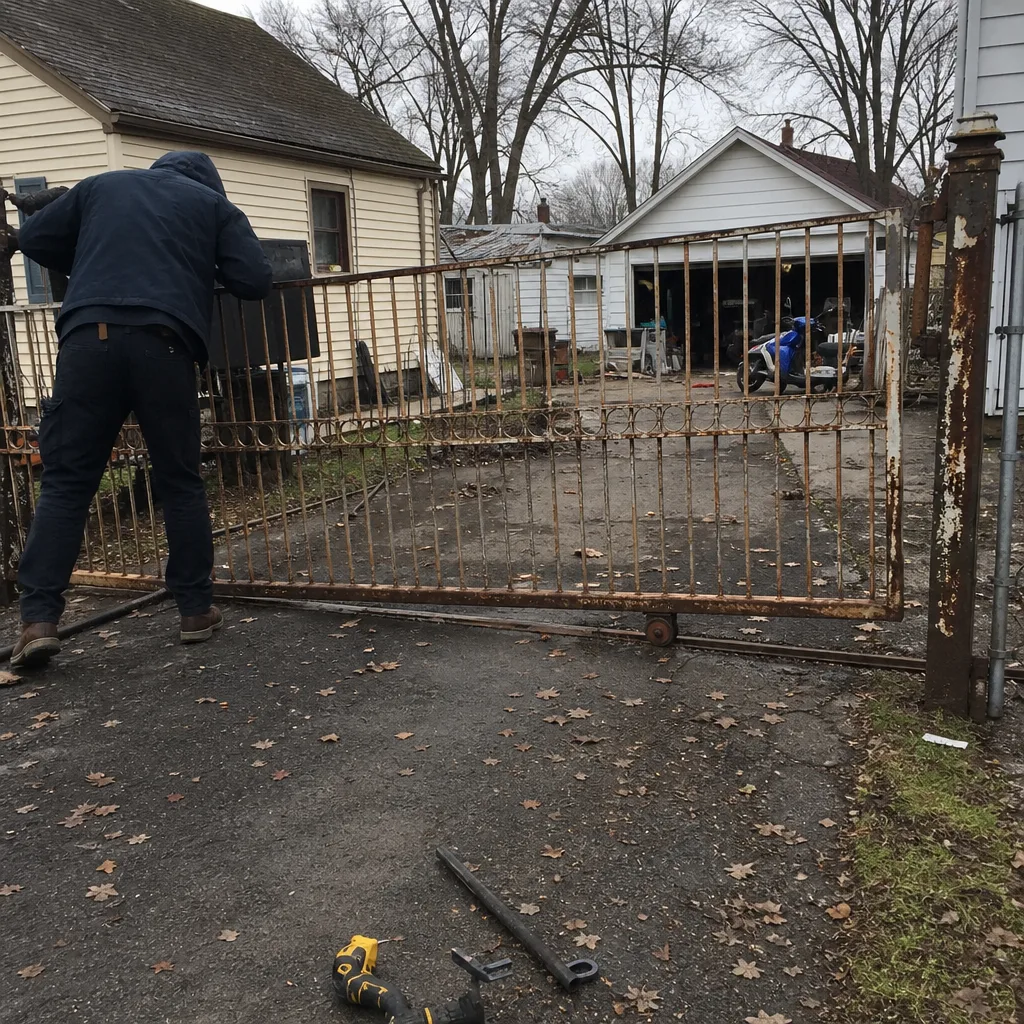 Before
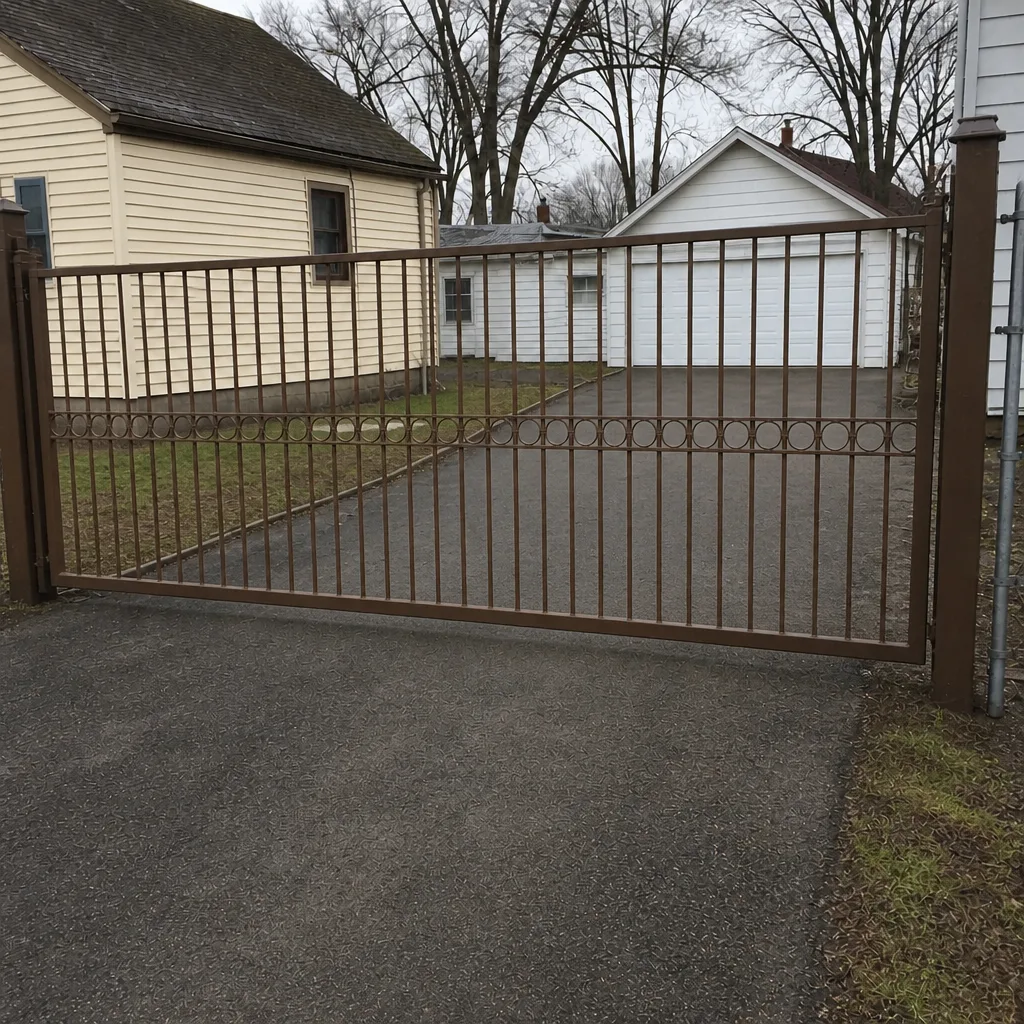 After
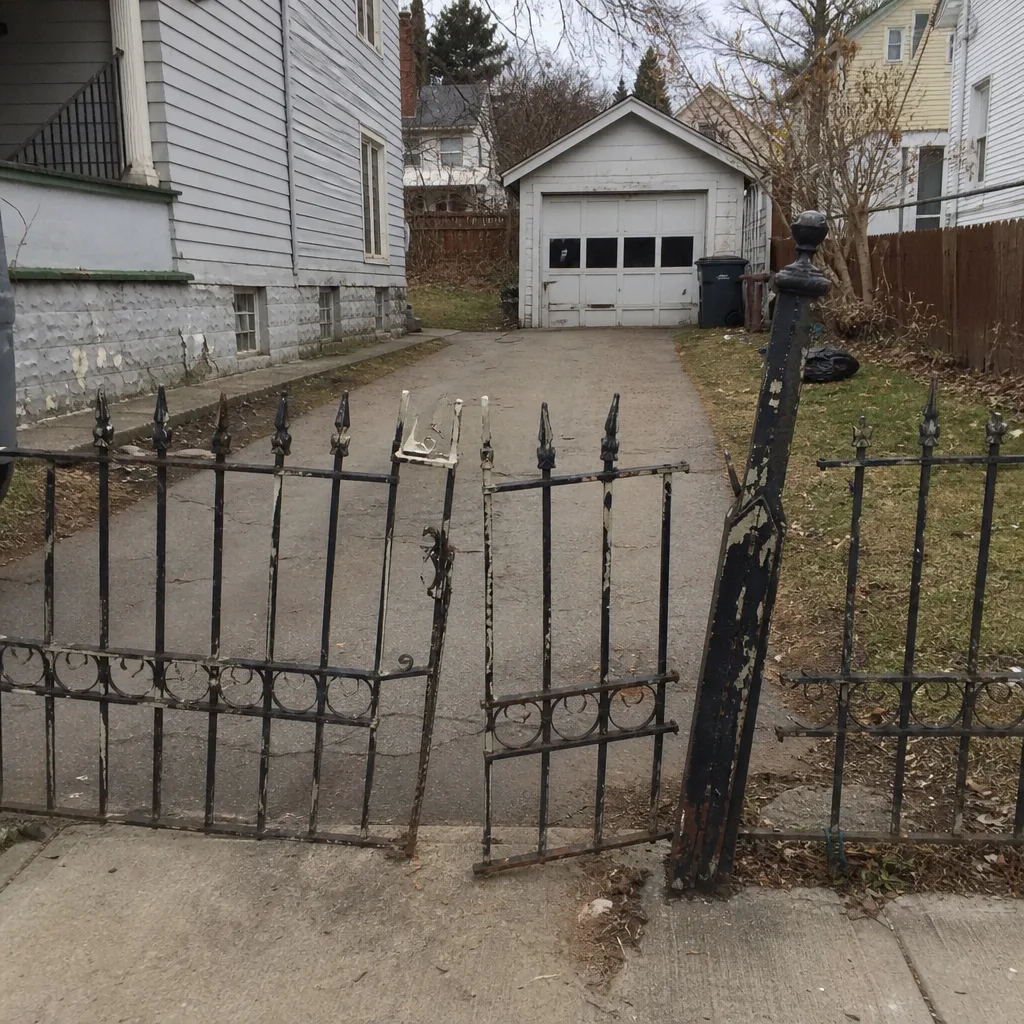 Before
 After
 Before
 After
Common Mistakes to Avoid
- Comparing a flat-rate quote to a diagnostic-plus-repair quote. Those are two different numbers measuring two different things. A $350 quote could be the finished job or the down payment on a $950 job. Ask which one you have.
- Skipping the brand question. If the person quoting you can’t name the operator brand on your gate before they arrive, the diagnosis is trial-and-error. Brand-specific schematics and known failure patterns are what cut repair time, and time is a big part of what you’re paying for.
- Paying for a diagnosis you never get in writing. You should end every diagnostic visit with a written summary of what failed and why. A verbal verdict isn’t a diagnosis, and it leaves you with no way to compare quotes.
- Accepting “full replacement” without a part-level explanation. A legitimate replacement recommendation names the specific failures that make the repair uneconomical. If you can’t articulate why the repair isn’t viable, neither can the technician who recommended it.
- Trying to free a jammed slide gate by hand. Heavy panels can crush, and a gate that comes off its track under load is a genuine safety risk. That’s a professional’s job, not a DIY one.
- Calling a general handyman for an operator failure. Electric gate repair is its own discipline. Motor, control board, sensor, and loop work require the specific diagnostic knowledge and the safety practices that come with it. A generalist isn’t cheaper; they just replace more parts before they get the right one.
- Setting a post shallow to save money. A failed post is the most weather-exposed part of your system in Syracuse. It’s also the most expensive component to revisit. Proper footing depth the first time is the cheaper decision over three years.
When to Call a Professional
Call a professional whenever the gate stops responding, sticks partway through a cycle, opens and closes on its own, or leaves a gap when it should be closed. Call when the operator makes a new noise, when the remote stops working but the keypad doesn’t (or the other way around), when the safety sensor light is off or flickering, or when the gate feels physically bound up. Same goes for post shifting after a storm and for any slide gate that has come off its track.
The one thing not to touch is the wiring, motor, and control board. The voltages and stored mechanical energy inside a gate operator can cause serious injury, so diagnosis and repair on those components belongs with a trained technician.
Syracuse Gate Repair offers free estimates in Syracuse. Call (844) 761-3861 for a written quote. We answer 24/7, with fast dispatch from 7am to 7pm, Sunday through Friday. The price is quoted and agreed before any work starts.
Frequently Asked Questions
Most gate repairs in Syracuse in 2026 run between $150 and $950 depending on what failed. Hinge and latch work is at the low end. Control board, loop detector, and motor replacement sit higher. The number is set by the written estimate and the final price is the one you agreed to before work began. Call (844) 761-3861 for an exact quote – estimates are free.
Yes, we offer same-day service on most repairs when you call during dispatch hours. We answer 24/7, and fast dispatch runs from 7am to 7pm, Sunday through Friday. A call outside dispatch hours is booked into the next opening. Call (844) 761-3861 and we’ll tell you what’s available today.
Quotes usually differ because one is a flat rate for a diagnosed part and the other is a diagnostic fee plus an open-ended repair estimate. They can also differ because of operator brand, since LiftMaster, FAAC, and Viking parts sit at very different price floors. Ask each shop what part is being replaced and which brand it belongs to. That closes the gap. Call (844) 761-3861 for a straight answer on your gate.
Yes, it’s one of the biggest cost variables. LiftMaster parts are the most widely available and often cheapest to replace. FAAC parts sit higher. Viking labor tends to run higher because of access and mounting. Ghost Controls and Elite sit in their own niches. Call (844) 761-3861 and we’ll tell you what your brand’s repair economics look like.
Yes. Full installation covers the operator, control board, safety sensor set, and the wiring that runs between them. A new install starts with a free measure and a written estimate, not a same-day repair visit. Call (844) 761-3861 to schedule an on-site measure.
Repair is usually the right answer if one component has failed, the operator is roughly under 10 years old, and the gate structure is sound. Replacement is usually right when the operator is 15+ years old, multiple parts are failing, or replacement parts are discontinued. If the recommendation is replacement, ask which specific failures make repair uneconomical. Call (844) 761-3861 for a second opinion.
Those are straightforward repairs and typically the cheapest line items on this list, running around $120 to $300 depending on hardware and gate weight. They’re also a smart time to have the rest of the gate checked, since a worn hinge often means a second one is close behind. Call (844) 761-3861 and we’ll give you a written price for the whole job.
The Bottom Line
Gate repair pricing in Syracuse for 2026 comes down to three things: what actually failed, which brand of operator is on the gate, and whether your quote is flat-rate or diagnostic-plus-repair. Those three variables explain the entire spread between a $350 quote and a $900 quote for the same symptom. Learn to read a quote on those terms and you’re no longer comparing prices in the dark. Our approach is to diagnose before we replace, name the specific part and brand, and quote the price in writing before work starts. When the gate fails, call (844) 761-3861. We answer 24/7, with fast dispatch from 7am to 7pm, Sunday through Friday, and the estimate is free.
Written by the team at Syracuse Gate Repair.