
Last updated November 15, 2026
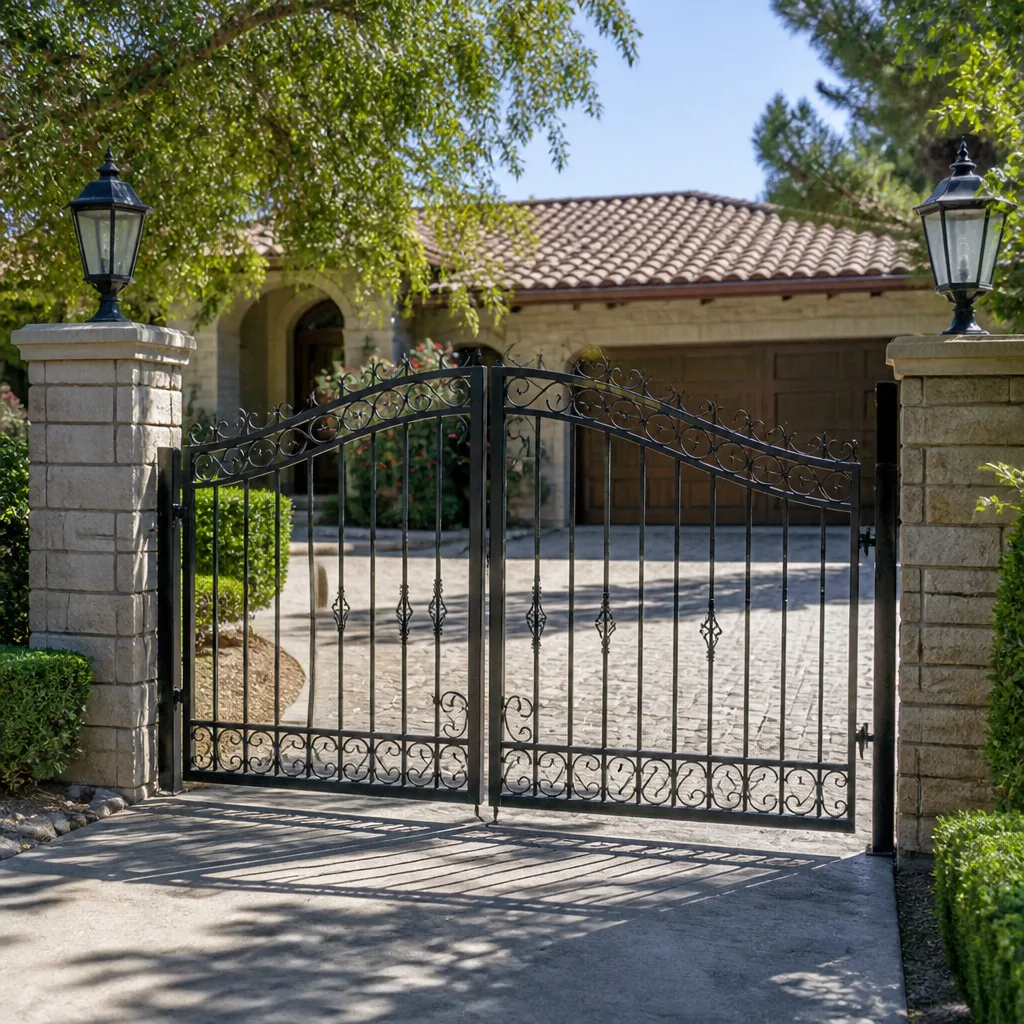 Wrought iron
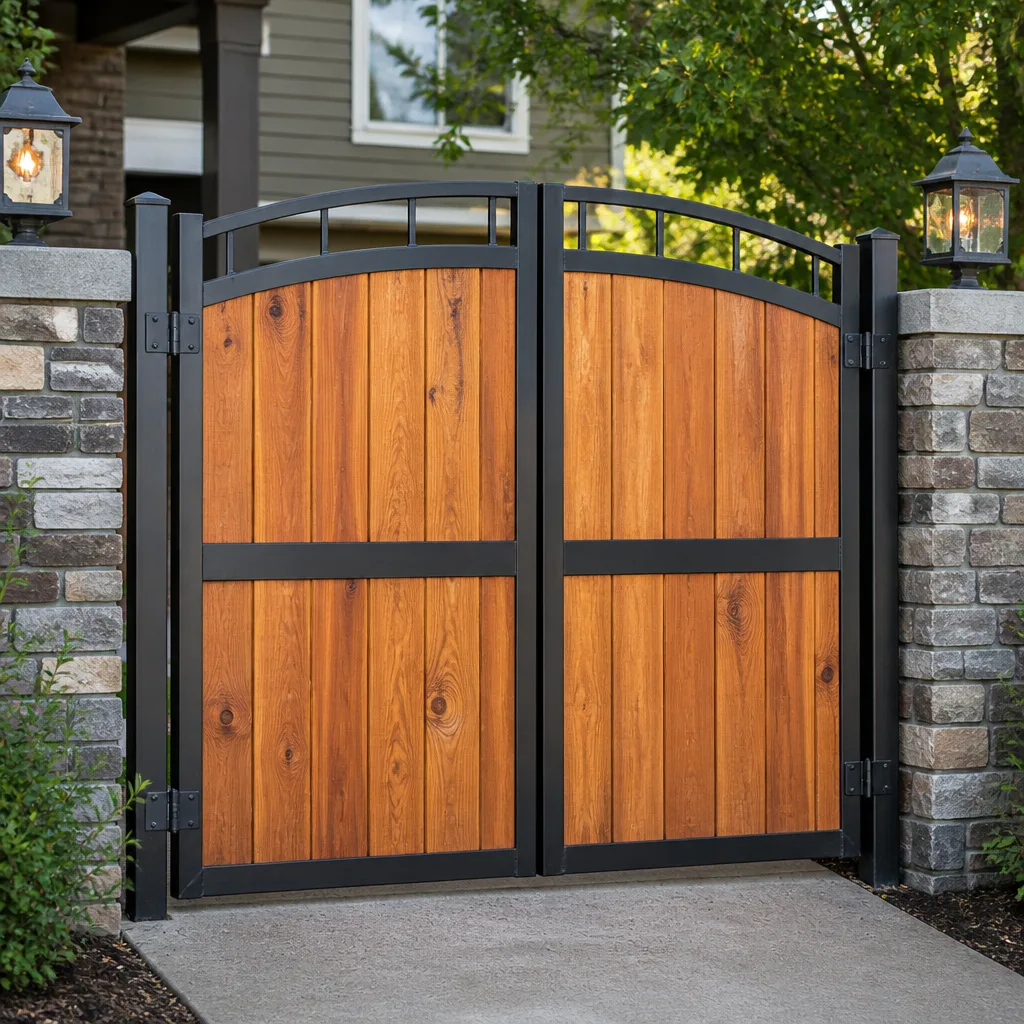 Wood & steel frame
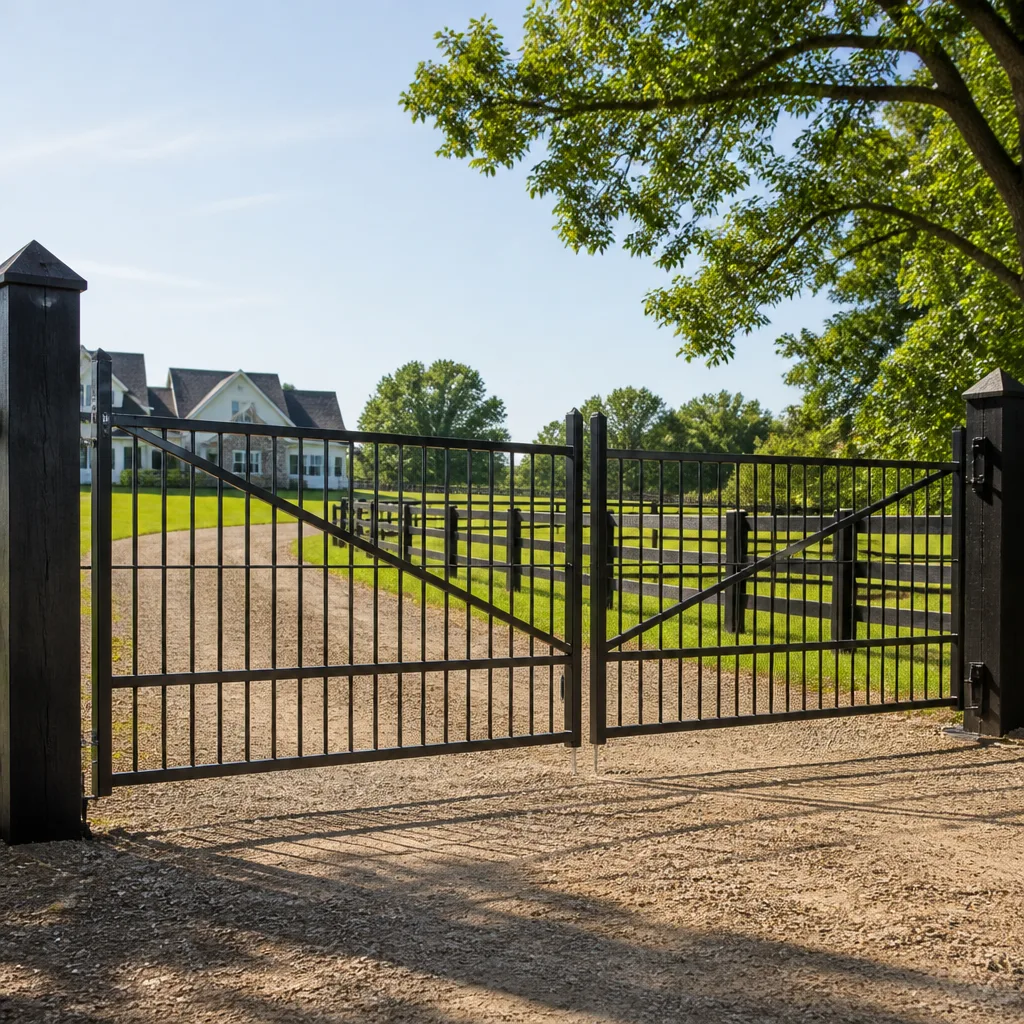 Farm & ranch
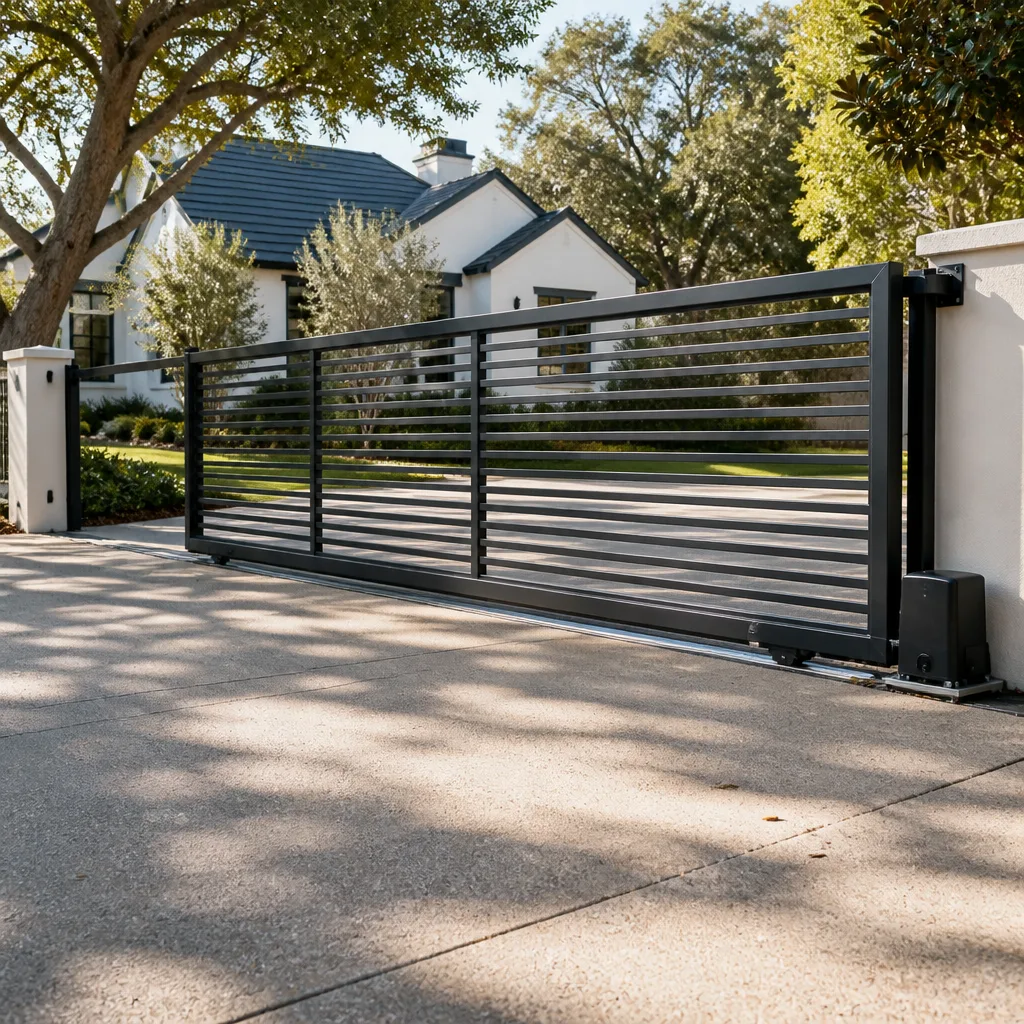 Sliding driveway gates
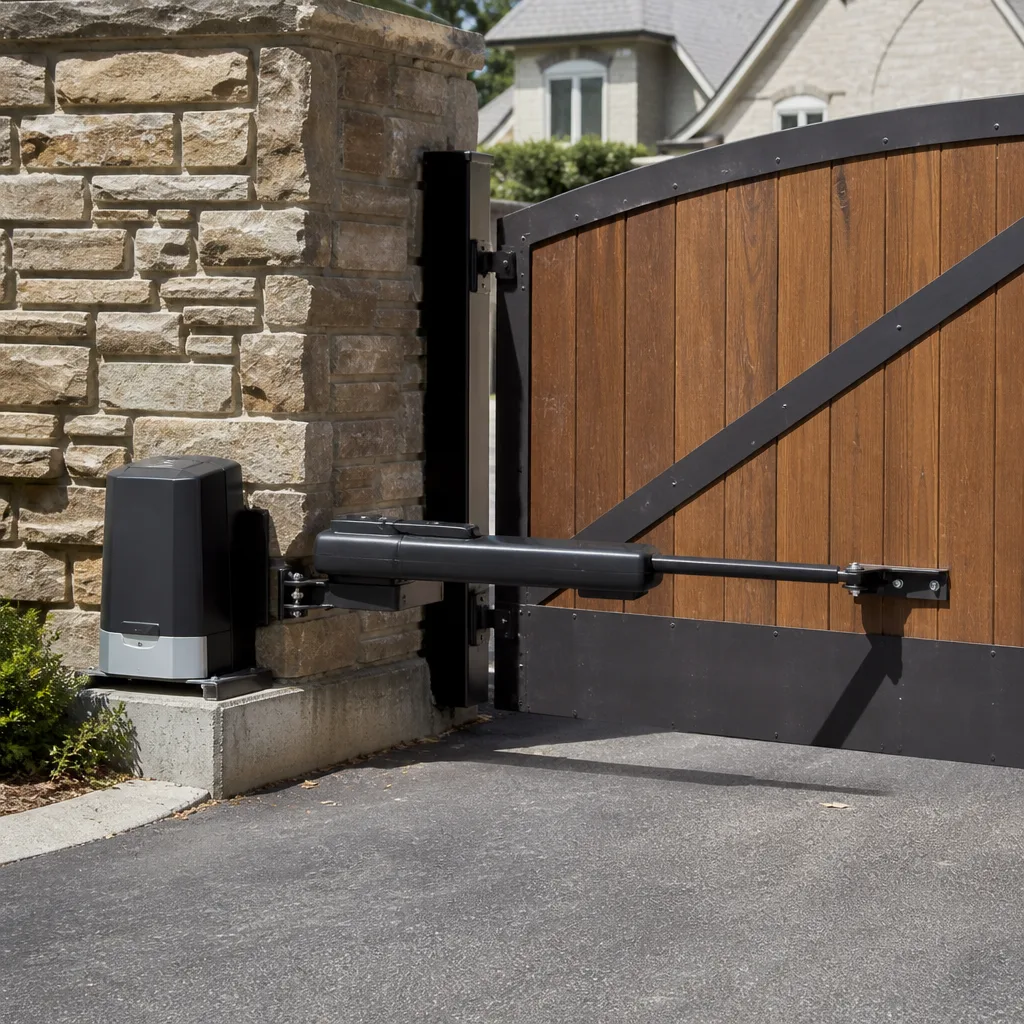 LiftMaster operators
Free on-site gate assessment - hinges, posts, and your LiftMaster or Nice gate operator checked before anything is quoted
The assessment is free and the quote is the invoice.
Get your free estimateChoosing the Right Gate Repair Brand: A Buyer’s Guide for Syracuse
The gate operator brand with the best national reviews can be the worst choice for a Syracuse homeowner if the nearest service center is in Rochester and the control board takes two weeks to source. That’s the part most buying guides skip. They compare marketing specs and ignore what actually happens when a motor fails in February and you still need to get the car out of the driveway. In this guide, we’ll look at what the top gate brands actually deliver for Central New York properties, how to read a warranty before you sign, and how to tell whether a contractor’s brand pitch is based on your application or their inventory shelf.
Quick Answer
For most residential properties in Syracuse, the best gate repair brand is the one with a local service network, a warranty that doesn’t require an authorized dealer, and a documented cold-weather operating range that covers Upstate New York winters. LiftMaster and Linear tend to win on parts availability in Central New York, while FAAC and BFT are strong commercial choices with deeper automation features but longer lead times on certain components. The right answer depends on whether your gate is residential or commercial, how often it cycles, and who’s going to service it when something breaks.
Styles & brands we work with
- Wrought iron
- Wood & steel frame
- Farm & ranch
- Sliding driveway gates
- LiftMaster operators
Table of Contents
- Why the Brand Decision Matters More at Repair Time
- Cold-Weather Performance: What the Specs Actually Say
- Local Parts Availability in the Syracuse Market
- Residential Versus Commercial Grade: When to Step Up
- How to Evaluate a Contractor’s Brand Recommendation
- Warranty Structures by Brand: What’s Actually Covered
- A Step-by-Step Evaluation Process
- Common Mistakes to Avoid
Why the Brand Decision Matters More at Repair Time
Choosing a gate operator is not like choosing a microwave. It locks you into a parts ecosystem, a control architecture, and a service network for a decade or more. Brands don’t just sell motors. They sell the boards, the receivers, the remotes, the sensors, and the failure patterns that come with all of them. When your unit dies at the ten-year mark, you’re not shopping for a motor. You’re shopping for the entire support system around that motor.
That’s why the moment of repair is the worst possible time to make the decision. Your gate won’t open, you need it working, and now you’re comparing brands under pressure. Every property manager in Syracuse has been in that position at least once. The operators who come out ahead are the ones who thought about brand displacement six months before the failure.
A few things worth knowing before you commit to a brand:
- Parts ecosystem. Every brand has its own control boards, connectors, and accessory line. Cross-brand swaps are rarely plug-and-play.
- Service network. Some brands honor warranty work through any qualified technician. Others want an authorized dealer, which can mean a longer wait locally.
- Failure patterns. Each brand has known weak points. A technician who works the brand daily already knows what fails on that gate at year seven.
- Obsolescence policy. Brands discontinue boards and receivers on their own schedule. What’s available today may not be in stock when yours fails.
For more detail on how repair actually plays out at the operator level, see our guide on electric gate repair.
Cold-Weather Performance: What the Specs Actually Say
The four brands we’re asked about most in Syracuse – LiftMaster, FAAC, Viking, and Linear – all publish operating temperature ranges. Those ranges matter more here than almost any other specification. A gate that runs perfectly at 65 degrees can bind, stall, or fault at 20 below.
When we look at cold-weather performance, we’re looking at four things:
- Published operating temperature range. Most residential operators list a low end between -4°F and -20°F. That’s the manufacturer’s number, and it’s a floor, not a comfort zone.
- Battery backup behavior in cold. Lead-acid batteries lose capacity in the cold. A unit rated for 20 cycles on battery at 70 degrees may manage six or eight at 15 degrees.
- Board-level fault tolerance. Cold mornings are when intermittent faults show up. A board with weak fault handling will lock the gate in the middle of an open cycle.
- Mechanical failure patterns. Grease thickens. Roller bearings stiffen. Slider chains get stiff. Cold magnifies whatever’s already marginal on the mechanism.
Here’s the practical read on the four brands:
- LiftMaster. Residential units are generally rated to -20°F. In our experience, they handle Syracuse cold well when the mechanism is well-maintained. Boards stay on the shelf locally, so faults get fixed fast.
- FAAC. Strong cold-weather performance, especially on commercial swing operators. Certain mid-level residential units are rated slightly less generously on paper. Lead time on some boards runs longer than LiftMaster.
- Viking. Solid cold-weather spec, particularly on the residential swing operators. Fewer local service points than the big names, so parts can take a week to arrive if we don’t have the board already.
- Linear. Residential units hold up in cold but are typically rated a few degrees less conservatively than LiftMaster on paper. Good parts availability, which matters when a board fails in January.
None of these brands are “bad” in cold weather. The difference is whether the mechanism is adjusted for it and whether the operator’s floor matches the reality of the driveway. A gate that gets no shade and puddles at the base is under more cold-weather strain than the brand spec anticipates.
Local Parts Availability in the Syracuse Market
This is the section that most national buying guides skip entirely, and it’s the one we care about most. A brand’s reputation doesn’t help when the control board is on backorder from a warehouse three states away.
In our experience working the Central New York market, parts availability breaks down roughly like this:
- Fast and locally stocked. LiftMaster and Linear parts are the easiest to source through standard supply channels. Boards, receivers, and remotes usually show up in days, sometimes the same day.
- Available with a bit more lead time. Mighty Mule has solid distribution but fewer local supply points. Some components need a day or two of lead time.
- Special order, generally. FAAC and BFT boards and specialty components frequently require ordering. When the part is in the national pipeline, it’s fast; when it isn’t, it’s not. Some specialty FAAC boards we’ve needed have taken a week or more.
What this means for a Syracuse homeowner is simple. If you own a LiftMaster and the control board fails, we can usually diagnose and repair on the same visit or the one after. If you own a FAAC and the same board fails, plan for a gap while the part arrives. Not because FAAC is worse. Because the part isn’t sitting on a shelf in Onondaga County.
That’s a real cost to a commercial property manager with a gate that has to cycle hundreds of times a day. For a residential driveway with light use, the gap is annoying. For a commercial entry, it can matter to your tenants. If parts availability is the deciding factor, weigh it accordingly.
Residential Versus Commercial Grade: When to Step Up
Most residential properties in Syracuse don’t need a commercial operator. But there’s a threshold where a residential unit stops being the right answer, and it’s worth knowing where that threshold is before you buy.
Residential operators are typically designed for a lower daily cycle count. Commercial operators are designed for much higher duty. Two things go into the rating:
- Cycle rating. How many open-close cycles the unit is tested for over its service life. Commercial units are usually rated several times higher than residential models.
- Duty cycle. How frequently the operator can cycle without overheating. Long driveways with heavy use, multi-tenant entries, and gates that open and close many times an hour all push the duty cycle.
Where it makes sense to step up to commercial grade on a residential property:
- Long or heavy gate panels. A 16-foot swing or a solid privacy gate puts far more strain on the operator than a lightweight decorative gate. A commercial operator handles the weight without straining.
- High daily use. Households where the gate runs ten, fifteen, twenty times a day. Multiple drivers, deliveries, and a dog that comes and goes all add up.
- Multi-tenant or short-term rental use. If a gate gets cycled like a commercial entry, treat it like one.
- Extremely cold or exposed sites. Cold magnifies mechanical strain. A commercial operator has margin the residential unit doesn’t.
What you pay for is margin. A commercial operator on a residential property will typically outlast a residential unit by several years under the same use. That’s the trade-off to weigh against the higher up-front cost.
How to Evaluate a Contractor’s Brand Recommendation
Not every brand recommendation is dishonest. Most are just shortcuts. A contractor who says “I recommend X brand” is often saying “X brand is what I have on the truck” or “X brand is what I know best.” That’s not the same as “X brand is the right choice for your gate.”
Some questions worth asking before you accept a brand recommendation:
- Why this brand for this application? The answer should reference the gate weight, cycle count, site exposure, or automation needs. Not the brand’s reputation.
- What alternatives did you consider? A good technician can name a second option and explain why it wasn’t chosen. A one-brand shop will only have one answer.
- What’s your parts lead time on this brand? If the answer is “a week or more,” that’s important before you commit. Ask how they handle it.
- How do you handle warranty work? Ask whether a future repair has to go back to them or can be handled by any qualified technician.
- What’s the failure pattern on this brand at year five? A technician who works the brand should be able to tell you what typically fails and when.
We work on nine major gate brands: LiftMaster, FAAC, BFT, Linear, Viking, Ghost Controls, DoorKing, Elite, and Mighty Mule. That range isn’t a sales pitch. It’s how we avoid pushing one brand because it’s the one we know. If your current operator is repairable, we repair it. If it isn’t, we install what fits your gate, not what’s convenient.
For the broader context on repair options in the area, gate repair is where we walk through diagnosis and repair paths.
Warranty Structures by Brand: What’s Actually Covered
Warranty structure is where a lot of purchase decisions fall apart. The brand says “five-year limited warranty,” and the buyer assumes that means the gate stays working for five years. What it usually means is the motor is covered for five years against manufacturing defect, and basically nothing else.
The typical pattern across gate operator brands:
- Motor and gearbox. Usually the longest coverage on the unit, often several years. Wear items like gears and belts are typically excluded or covered only partially.
- Control board. Usually shorter than the motor. One to three years is common. This is often the component most likely to fail.
- Accessories. Remotes, receivers, safety edges, keypads, and photo eyes typically carry much shorter warranties – often a year or less.
- Labor. Almost never covered by the brand. Some installers offer their own labor warranty, but that’s a contractor’s promise, not a brand’s.
The bigger variable is who honors the warranty. Some brands honor warranty work through any qualified technician. Others require an authorized dealer. In Syracuse, that means the closest authorized service for some brands can be in Rochester or beyond, and the customer pays the difference in downtime.
What to ask before you commit:
- Which components are covered, for how long, and which are excluded?
- Does warranty service have to go through an authorized dealer, or can any qualified technician perform the work?
- How long does a warranty claim typically take from diagnosis to repair?
- Is there a labor warranty from the installer, and for how long?
- What’s excluded as “normal wear”?
The answers matter more than the brand’s headline warranty number. A shorter warranty honored locally is often better than a longer one that requires a two-week wait for the nearest authorized dealer.
A Step-by-Step Evaluation Process
Here’s a repeatable process for choosing a brand at repair time, whether you’re a homeowner or a property manager. Follow it in order:
- Confirm the current unit is actually unrepairable. Boards, motors, and sensors fail in ways that look fatal but aren’t. Get a diagnosis before you commit to replacement.
- Identify the application. Residential swing, residential slide, commercial swing, commercial slide, or barrier. Cycle counts matter more than square footage.
- List your non-negotiables. Battery backup, smart-home integration, keypad entry, safety edge type, vehicle sensor, and any access control system you already run.
- Shortlist two brands that meet those needs. Not one, not five. Two. It keeps you honest about trade-offs.
- Ask each brand’s local parts lead time. The answer changes the math. If you’re not sure how to get that answer, ask a technician who works the market.
- Check warranty structure on the parts most likely to fail. Board and receiver coverage is usually the deciding factor.
- Confirm service network locally. Ask any candidate installer how they’d handle a board failure two years out on this brand.
- Get the price in writing before work starts. The written estimate sets the final price. Not the phone estimate, not the verbal quote.
That process usually takes an afternoon of phone calls, not weeks. If a contractor can’t answer questions four through seven, that’s information too.
Common Mistakes to Avoid
- Buying on national reviews alone. A brand with strong national ratings can still be the wrong choice for Syracuse if the parts lead time is measured in weeks. Local service and local parts matter as much as reputation.
- Letting a contractor install what’s on the truck. Some technicians recommend the brand they carry, not the brand your gate needs. Ask for the alternatives they considered and why they rejected them.
- Skipping the diagnosis on a “failed” unit. A board that looks dead often isn’t. Get a real diagnosis first. Replacement without a diagnosis is guesswork.
- Choosing a brand by warranty length instead of warranty coverage. A five-year motor warranty means less than you think if the control board is only covered for one year. Look at the components, not the headline.
- Overlooking the duty cycle for a heavy gate. A residential operator on a heavy swing gate will burn out early. Match the operator class to the panel weight and cycle count.
- Assuming “authorized dealer” warranty is a good thing. Sometimes it is. Often it means the nearest service center is in Rochester, and the downtime that follows is longer than a local technician’s turnaround on a non-authorized brand.
- Not asking what happens at year seven. Every brand has failure patterns. Ask a technician who works the brand what they see, and factor that into the decision.
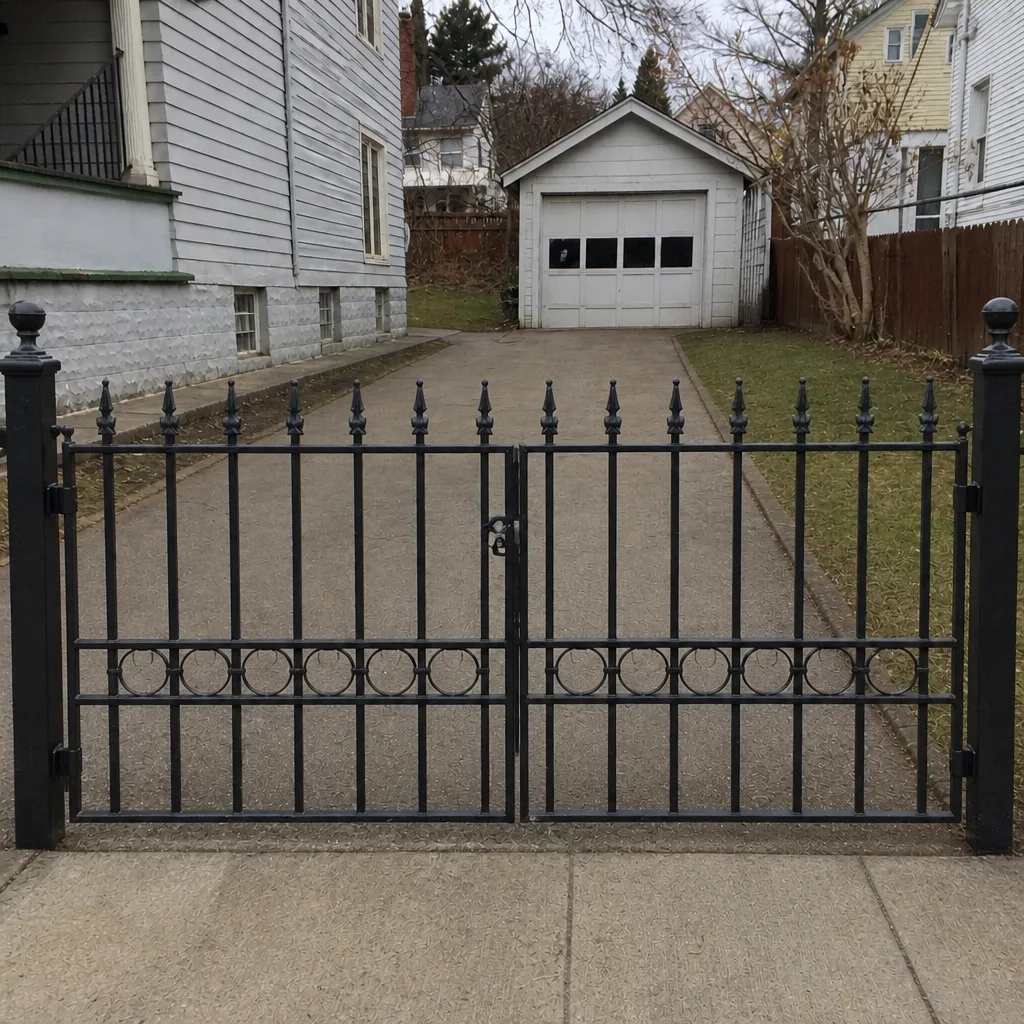
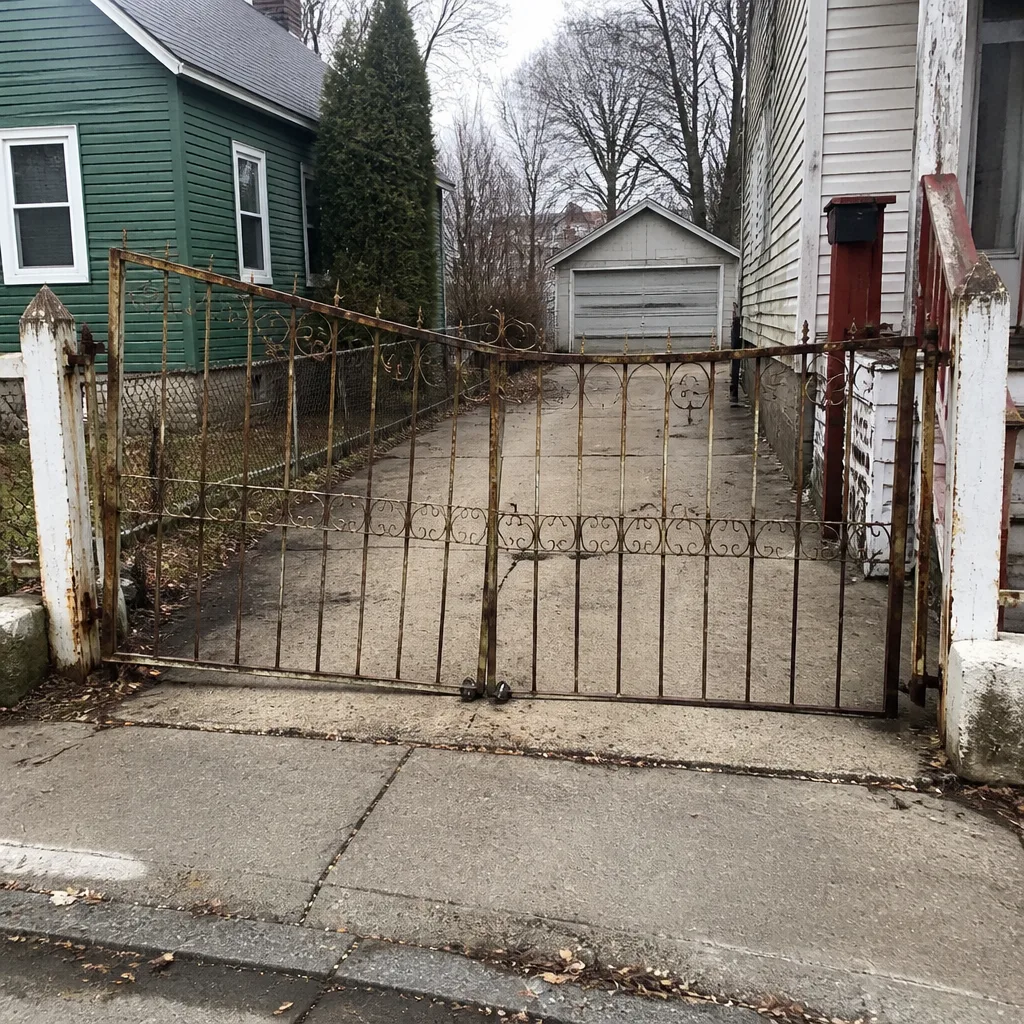
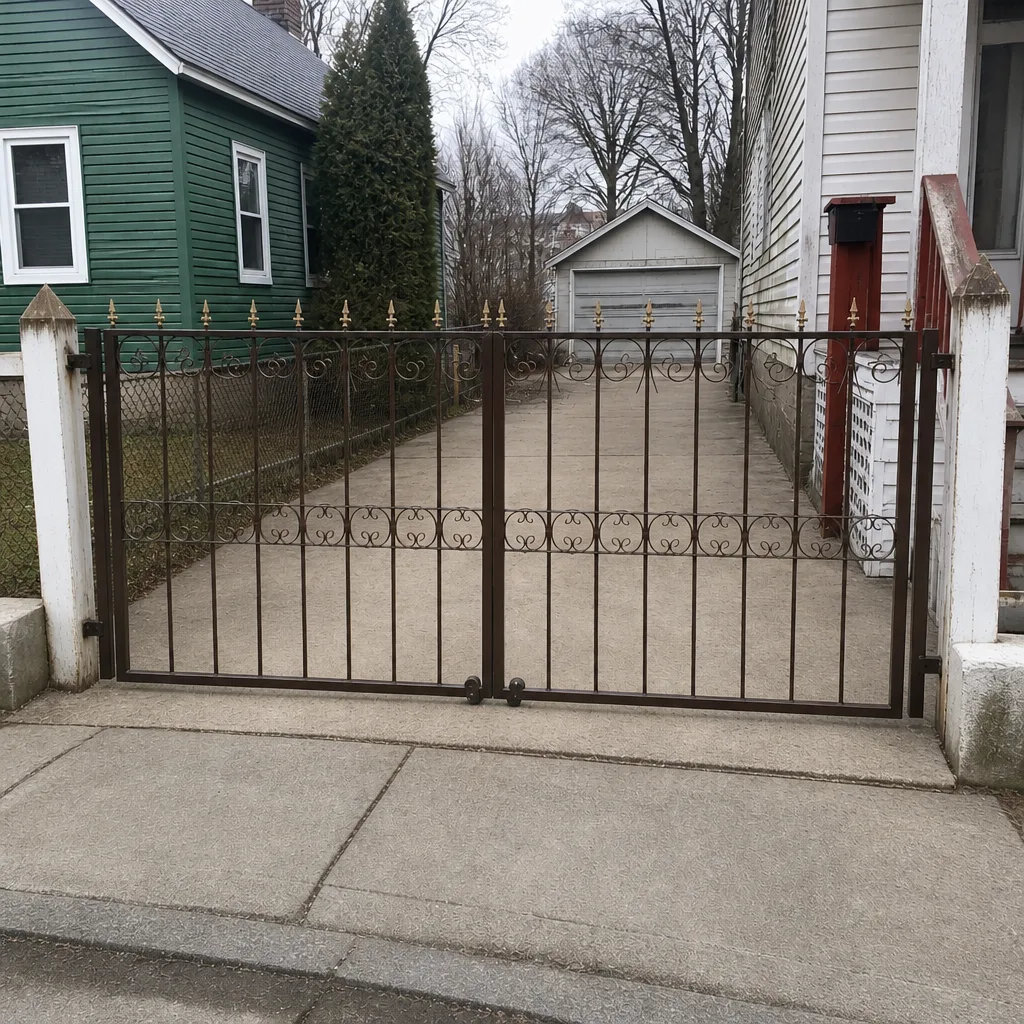
See the difference
 Before
 After
 Before
 After
 Before
 After
When to Call a Professional
Some gate problems are clearly a technician’s job. The motor won’t cycle, the board throws fault codes, the safety edge has failed a test, the battery backup won’t hold under load, or the mechanism binds at certain temperatures. Other situations are ambiguous. The gate works most of the time but intermittently faults. The remote loses pairing. The gate reverses without warning on cold mornings. Those are often the most expensive problems because they get missed. They’re also the ones where a specialist with brand familiarity saves the most money, because the diagnosis is fast and the part is right.
We serve both residential and commercial properties across Syracuse and the surrounding area. Our technicians have up to 8 years of experience, and we work the brand platforms we know. If you’re deciding between repair and replacement, we’ll tell you honestly which one your gate actually needs. Syracuse Gate Repair offers free estimates in Syracuse – call (844) 761-3861.
Frequently Asked Questions
For most Syracuse homeowners, LiftMaster and Linear offer the best balance of cold-weather performance, warranty coverage, and local parts availability. FAAC and BFT are strong choices for larger or commercial applications but typically have longer lead times on specialty parts. The right brand depends on the gate, the cycle count, and how quickly parts can be sourced locally. Call (844) 761-3861 for an exact recommendation – estimates are free.
Typical residential gate operator installations in the Syracuse area run from roughly $1,800 to $4,500 for a standard swing or slide unit, with commercial-grade operators and complex installations running higher. The exact price depends on the gate weight, the operator class, the accessories (keypads, safety edges, vehicle sensors, battery backup), and whether the gate mechanism needs repair at the same time. We quote the price in writing before any work starts, and that written estimate sets the final price. Call (844) 761-3861 for an exact quote – estimates are free.
Most major brands publish operating temperature ranges down to at least -4°F, and several go well below that. In practice, a new operator works well in Syracuse cold if the gate mechanism is properly adjusted for the season and the battery backup is fresh. Cold magnifies weak points on the mechanism, so the operator brand matters less than a well-maintained gate and a correctly sized unit. Call (844) 761-3861 to talk through your specific site – estimates are free.
Yes. Many brands allow warranty work and out-of-warranty repair through any qualified technician, not just the original installer. Some brands are stricter and require authorized dealers for warranty claims, which affects the turnaround time. Even when a claim against the brand’s warranty isn’t possible, the unit itself can almost always be repaired. Call (844) 761-3861 for a diagnosis – estimates are free.
Repair is usually the right call when the failure is in a single component – a control board, a sensor, a receiver, or a battery – and the rest of the unit is in good shape. Replacement makes sense when the unit is obsolete, parts are no longer manufactured, the mechanism is strained by the gate weight, or repeated failures are costing more than a new unit would. A proper diagnosis tells you which situation you’re in. You can read more on our main electric gate repair page. Call (844) 761-3861 for an exact assessment – estimates are free.
Yes, but the electrical work has to run from the nearest power source to the gate first, and that’s a separate scope from the operator install itself. A licensed electrician runs the power to the site; we handle the gate operator, the control wiring, the safety edges, and the mechanism. Some properties use a solar-charged battery system instead of a hardwired run, which is worth discussing if a long power pull isn’t practical. Call (844) 761-3861 to talk through your site – estimates are free.
The Bottom Line
The best gate repair brand for a Syracuse property is the one whose parts your local technician can actually source, whose warranty is honored without a Rochester round-trip, and whose operating range covers an Upstate New York winter. LiftMaster and Linear tend to win on local availability; FAAC and BFT are strong commercial choices with deeper features and longer parts lead times. Whenever you’re deciding between repair and replacement, get a real diagnosis first. Match the operator class to the gate weight and cycle count. Read the warranty on the components, not the headline. Then get the price in writing before any work starts. That process, followed in order, saves real money and avoids the most common mistake we see – replacing what could have been repaired.
If you’re weighing a brand decision or your gate has stopped working and you need a diagnosis, we can help. Syracuse Gate Repair works on nine major gate brands, and we’ll give you a straight answer about repair versus replacement. Call (844) 761-3861 for a free estimate. We answer 24/7. Fast dispatch from 7am to 7pm, Sunday through Friday.
Written by the team at Syracuse Gate Repair.