
Last updated November 15, 2026
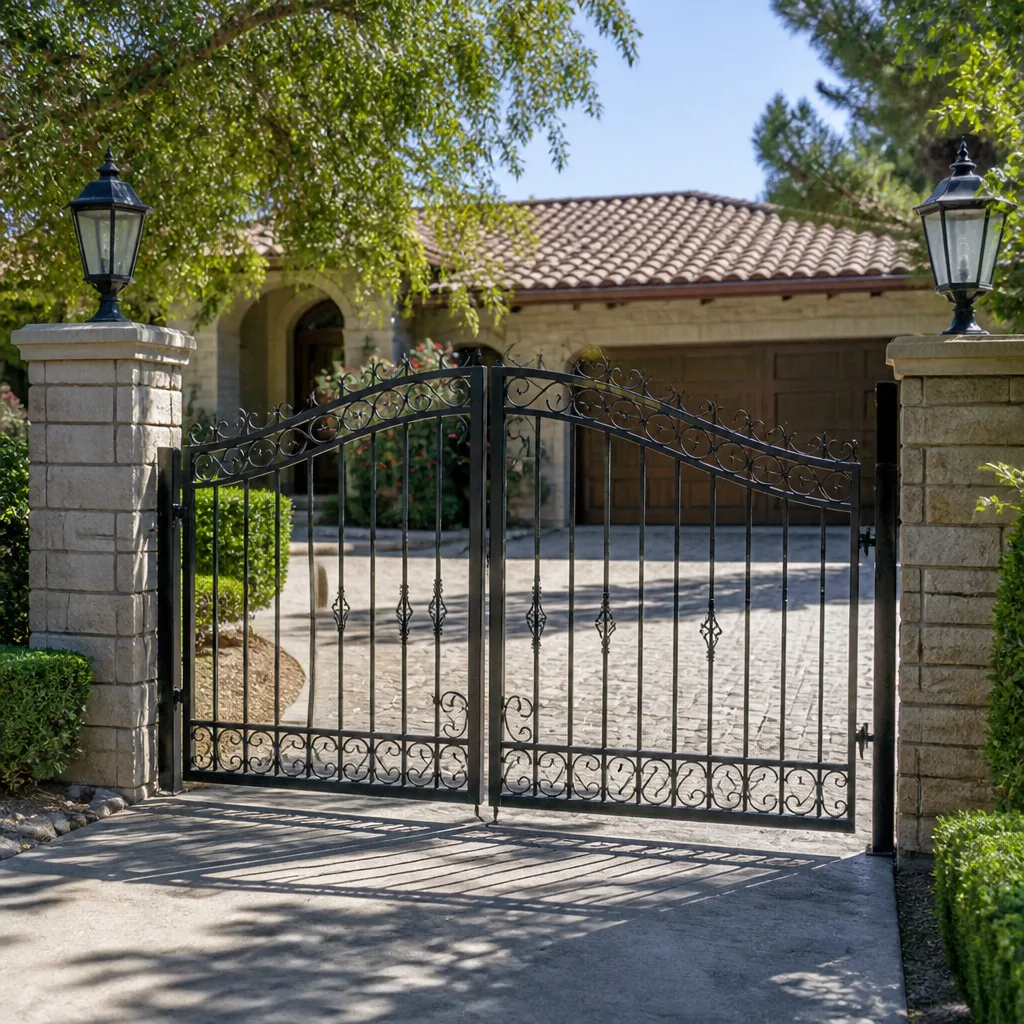 Wrought iron
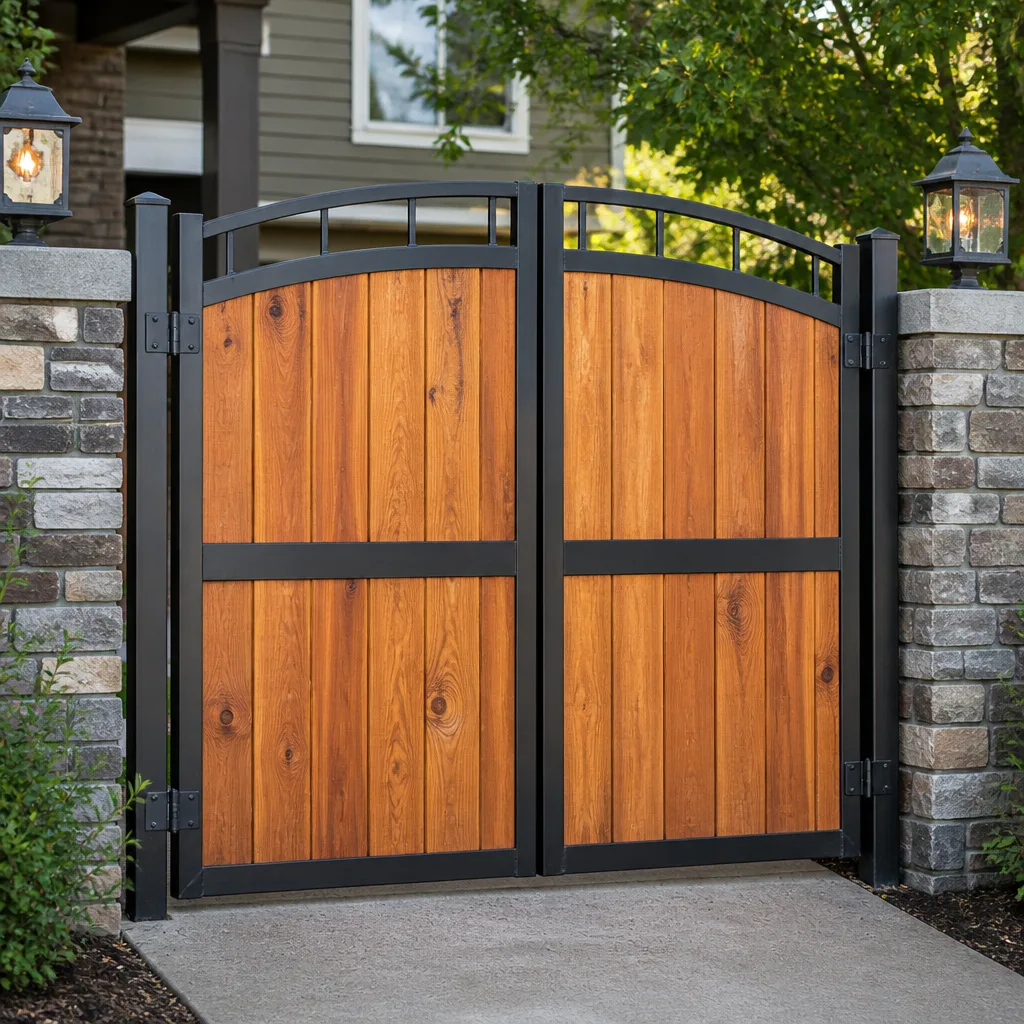 Wood & steel frame
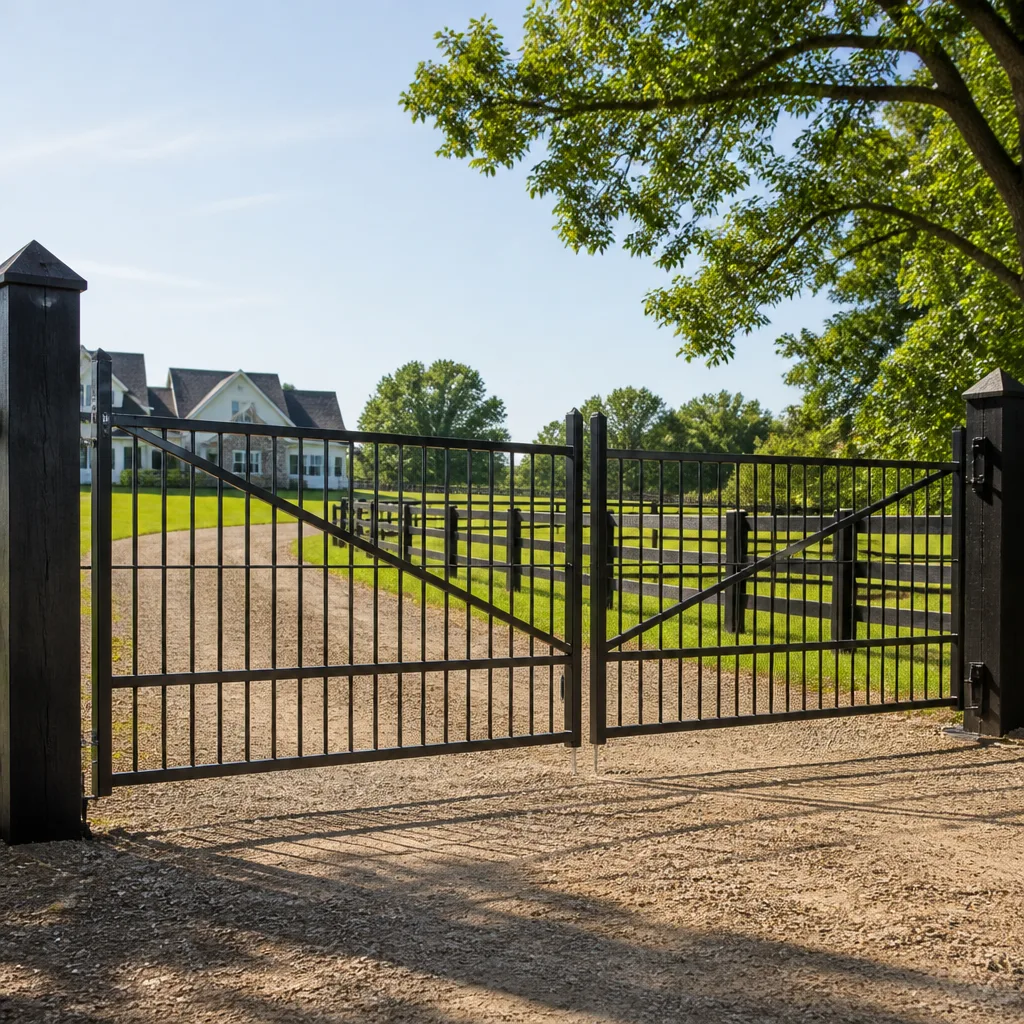 Farm & ranch
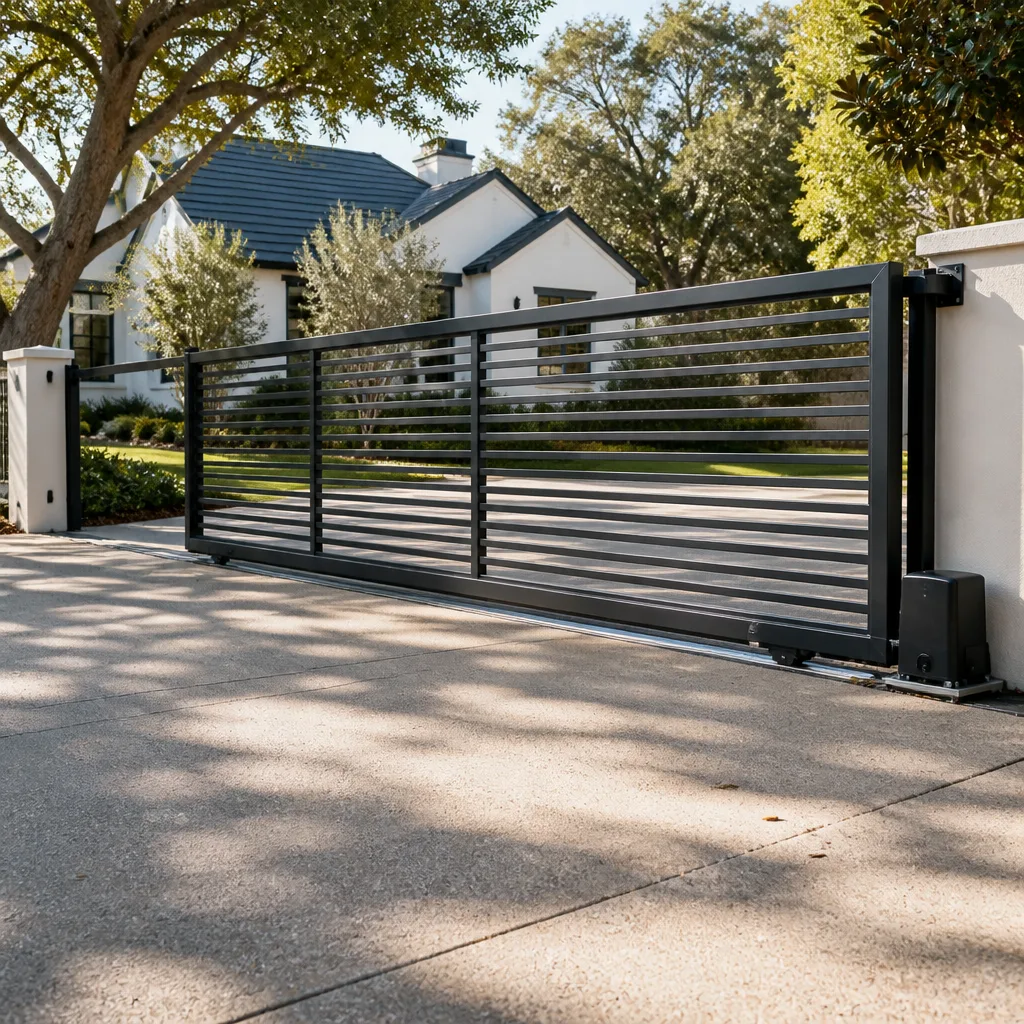 Sliding driveway gates
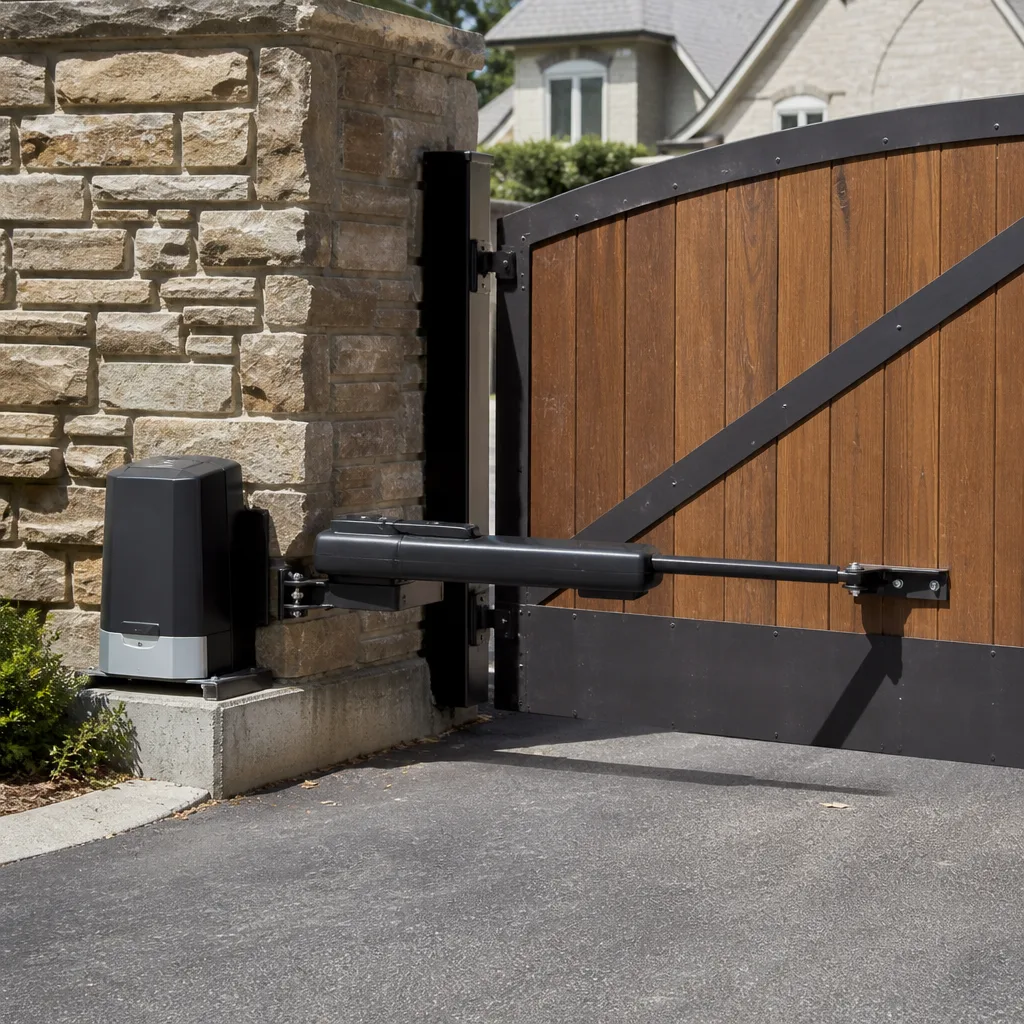 LiftMaster operators
Free on-site gate assessment - hinges, posts, and your LiftMaster or Nice gate operator checked before anything is quoted
The assessment is free and the quote is the invoice.
Get your free estimateThe Complete Guide to Gate Repair in Syracuse
A gate that “just sticks sometimes” is never random. It’s a symptom of a specific mechanical condition that has been progressing for weeks or months before you noticed. By the time a gate feels heavy, drags on the ground, or stops halfway, the underlying wear is usually well advanced. Most failures we see in Syracuse trace back to one of a handful of root causes, and knowing which one you’re facing is what separates a small adjustment from a full replacement. This guide maps every common failure mode to its actual fix, so you can stop guessing and start diagnosing. We’ll cover hinges, posts, frames, operators, and control boards, plus the freeze-thaw cycle that speeds up gate deterioration across Central New York.
Quick Answer
Gate repair in Syracuse usually falls into one of three categories: a simple adjustment, a component repair, or a full replacement, and the right category depends on the physical condition of the frame, hinges, and operator rather than on how the gate looks from the outside. The most common root causes are worn hinges, loosened or heaved posts, frame damage, operator faults, and control-board or sensor failures. A trained technician can tell which one you’re dealing with in a short on-site visit.
Key Takeaways
- Most gate problems come from five root causes: hinges, posts, frames, operators, and control boards.
- Syracuse’s freeze-thaw cycle attacks posts, hinges, and frames first, before the operator ever shows a symptom.
- A gate that drags or sags is usually a mechanical problem, not an electrical one.
- A gate that moves but won’t open, close, or reverse is usually an operator or control problem.
- Some repairs are safe to defer; others create real safety or liability risk and shouldn’t wait.
Styles & brands we work with
- Wrought iron
- Wood & steel frame
- Farm & ranch
- Sliding driveway gates
- LiftMaster operators
Table of Contents
- The Five Root Causes of Gate Failure
- Structural, Hinge, or Operator Fault: How to Tell Them Apart
- Why Syracuse’s Freeze-Thaw Cycle Accelerates Gate Damage
- Adjustment, Repair, or Replacement: Physical Tests for Each
- A Component-by-Component Breakdown
- Electric Gate Repair Is Its Own Discipline
- Which Repairs Are Safe to Defer (and Which Aren’t)
- Common Mistakes to Avoid
The Five Root Causes of Gate Failure
Nearly every gate problem we diagnose in Syracuse comes back to one of five mechanical root causes. Understanding them separately is the first step in reading your own gate correctly.
- Hinge wear. Hinges carry the full weight of the gate leaf every time it swings. As they wear, the gate sags, drags, and puts stress on the operator.
- Post movement. Posts settle, heave, or loosen over time. A post that has moved even slightly throws off the whole geometry of the gate.
- Frame damage. Cracks, bends, and weld failures in the gate frame cause the leaf to lose rigidity and to bind against the posts.
- Operator faults. Motors, gearboxes, limit switches, and drive mechanisms fail or drift out of adjustment.
- Control and sensor faults. Control boards, safety edges, photo eyes, and wiring cause a gate to stop, reverse, or refuse to respond.
The important thing about these five is that they produce overlapping symptoms. A sagging gate can look like a hinge problem when the actual cause is post movement. A gate that stops partway can look like an operator fault when the real culprit is a dragging hinge overloading the motor. That’s why our technicians diagnose before they replace, working from known failure patterns for each brand rather than swapping parts until something works. If you want the dedicated service behind this guide, see Syracuse Gate Repair.
Structural, Hinge, or Operator Fault: How to Tell Them Apart
Three separate problems look almost identical from the driver’s seat: a frame that has failed, hinges that have worn, and an operator that’s failing. They have very different fixes, so telling them apart matters. Here’s how we separate them.
Structural or frame failure
Frame failures show up as visible cracks, bent rails, or welds that have broken. Look at the gate leaf from the side while it’s closed. If the leaf has any visible bow or twist, or if you can see gaps at joints, the frame is suspect. A frame failure usually means the gate hangs unevenly regardless of hinge condition.
Hinge wear
Worn hinges typically show as up-and-down play at the hinge itself. With the gate closed, try lifting the leaf slightly (never put your hands near a moving gate or its pinch points). If the leaf lifts more than a small amount, the hinge is worn. Grease leaking from the hinge, rust staining below the hinge, or a visible gap between the hinge plates are all signs.
Operator faults
Operator faults show up as the motor running but the gate not moving properly, weird noises from the gearbox, the gate stopping at inconsistent points, or the operator failing to reverse. If the gate opens smoothly by hand when the operator is disengaged, the problem is almost always in the operator, not the gate.
For a full look at how we handle brand-specific diagnosis, including systems like DoorKing, Elite, and Mighty Mule, explore our gate repair page.
Why Syracuse’s Freeze-Thaw Cycle Accelerates Gate Damage
Syracuse’s climate is hard on gates, and it’s hard in a specific way. The single biggest accelerant of gate deterioration in Central New York is the freeze-thaw cycle, and it attacks components in a predictable order.
Post footings are the first thing to suffer. When the ground freezes and thaws repeatedly, posts can heave, tilt, or shift. A post that has moved even a small amount changes the angle of the gate leaf and puts stress on every hinge above it. Once a post has moved, the gate starts to drag or bind, the operator has to work harder, and other components begin to fail.
Hinges are second. Freezing temperatures stiffen grease and can cause condensation inside the hinge joint. Rust and corrosion follow, and hinges loosen within seasons rather than years. Latch alignment drifts next, and eventually the operator or control board starts to complain because it’s working against a mechanical problem it can’t compensate for.
Gates near the lake-effect snow belt tend to see the worst of this because the ground stays saturated longer into the spring. We see it in neighborhoods across Syracuse where gate posts are set into soil that stays wet well into April. The fix isn’t to fight the climate. It’s to build, adjust, and maintain with the freeze-thaw cycle in mind, which means checking post stability and hinge play every year rather than waiting for obvious failure.
Adjustment, Repair, or Replacement: Physical Tests for Each
The single most useful question to answer about any gate is which category it belongs to. Here are the physical tests we use.
Test 1: Does the gate move freely by hand?
With the operator disengaged, swing or slide the gate through its full range. If it moves freely and closes cleanly, the mechanism is sound and any problem is likely an adjustment or operator issue. If it binds, drags, or scrapes, the fix is mechanical.
Test 2: Are the posts rigid?
Push firmly on the closed gate near the latch and near the hinge. If the post gives, moves, or the footing shows cracks at ground level, the post needs attention. A gate won’t stay adjusted for long on a loose post.
Test 3: How much play is in the hinges?
Check each hinge joint for visible movement and for signs of rust or grease loss. Hinges with noticeable play are worn and are putting stress on the operator. Replacing hinges is a small repair that heads off expensive damage.
Test 4: Is the frame straight?
Look at the leaf from the side, from above, and from the ground. Any bow, twist, crack, or separation at a joint is a sign the frame itself needs work.
Test 5: Does the operator behave consistently?
Run the gate several times. If it stops at different points, reverses unexpectedly, or makes new sounds, the operator or control system needs diagnosis.
If the gate passes the first four tests and fails the fifth, you’re looking at adjustment or repair. If it fails more than one, the question shifts to whether the gate is worth repairing or is at the point of replacement. That’s the conversation our electric gate repair specialists have on-site once they’ve checked everything.
A Component-by-Component Breakdown
Each component on a gate has a specific job, and each one fails in a recognizable way. Here’s what to watch for.
- Hinges. Support the weight of the leaf and allow it to swing. Failure looks like sag, drag, up-and-down play, rust, or grease leaking from the joint.
- Latches and locks. Hold the gate closed and secure. Failure looks like misalignment, sticking, loose screws, or a latch that no longer engages because the gate has sagged.
- Posts and footings. Anchor the gate and hold its geometry. Failure looks like leaning, movement when pushed, cracks at the base, or a footing that has heaved with frost.
- Frames. Give the leaf rigidity. Failure looks like bowing, twisting, cracks at welds, or separation at a joint.
- Operators. Motor and drive the gate. Failure looks like inconsistent travel, unusual noise, failure to reverse, or a motor that runs but doesn’t move the leaf.
- Control boards and sensors. Coordinate the operator with safety edges, photo eyes, keypads, and remotes. Failure looks like a gate that won’t respond to commands, that reverses for no reason, or that stops partway through a cycle.
Each of these components can be serviced before it fails completely. Hinge replacement, latch adjustment, post stabilization, and frame repair all cost far less than the operator replacements that follow when a mechanical issue is left alone.
Electric Gate Repair Is Its Own Discipline
Electric gate repair is separate work from mechanical gate repair, and it’s where generalists routinely misdiagnose problems. A gate that fails to open looks like an electrical problem but may be a mechanical drag that’s tripping the operator’s safety limit. A gate that reverses unexpectedly may be a misaligned safety edge, a dirty photo eye, or a failing control board. Reading those symptoms correctly takes a specialist who works on gate operators every day.
We work on systems from brands including Ghost Controls, DoorKing, Elite, and Mighty Mule, alongside LiftMaster, FAAC, BFT, Linear, and Viking. Because we work from known schematics and failure patterns for each of those brands, we don’t spend your first appointment reading the manual. Our technicians have up to 8 years of experience on gate systems specifically, not on gates as a side item between unrelated jobs.
The brands matter less than the diagnosis, though. We’re brand-agnostic: we repair what’s on the property, and if a replacement is the right call, we recommend what actually fits your gate, your usage, and your property. We don’t profit from steering you toward a specific brand, and we don’t recommend replacement when a repair will hold.
Safety note: Gate operators run on line voltage, and the control wiring that connects the operator, safety edges, photo eyes, and keypads can be live even when the gate looks off. Never open an operator housing or work on gate wiring yourself. Low-voltage safety circuits can cause a gate to start unexpectedly, and line-voltage components can deliver a serious shock. Diagnosing and repairing gate electrical systems is work for a trained technician. If you see exposed wiring, a damaged control box, or a gate that moves without a command, stop using it and have it looked at.
Which Repairs Are Safe to Defer (and Which Aren’t)
Not every gate problem is urgent. Some repairs can wait a few weeks without getting worse. Others create real safety or liability risk the moment they appear. Here’s how we sort them.
Safe to defer (for a short time)
- Cosmetic rust and paint wear.
- Latch that sticks slightly but still engages fully.
- Grease that has dried on hinge surfaces.
- Noise from a hinge that has no visible play.
- Remote that needs a battery change or re-pairing.
Don’t defer (fix promptly)
- Any gate where safety edges or photo eyes aren’t working. The gate must reverse on contact or obstruction.
- A gate that fails to reverse when it meets resistance.
- A post that has moved even slightly. It will continue to move with freeze-thaw and will take hinges and the operator with it.
- A leaf with visible frame cracks or broken welds. A structural failure can bring the gate down.
- Any gate on a commercial property, where liability exposure from a gate failing or injuring someone is significant.
- A gate operator that runs at inconsistent speeds or stops at random. That behavior often signals control-board failure in progress and can result in the gate stopping in a dangerous position.
- Exposed or damaged wiring on an operator.
If you’re not sure which category your gate is in, that’s the moment to have it looked at. Our Syracuse team gives free estimates, so a technician can tell you quickly whether the fix is adjustment, repair, or replacement. Call (844) 761-3861. We answer 24/7. Fast dispatch from 7am to 7pm, Sunday through Friday.
Common Mistakes to Avoid
- Greasing a worn hinge instead of replacing it. Grease quiets a hinge, but it doesn’t restore the joint. Worn hinges keep getting worse, and the operator pays the price.
- Assuming a dragging gate is an operator problem. Nine times out of ten, the operator is fine and the gate is the problem. Diagnose the mechanical side before considering an operator swap.
- Trying to reset or rewire an operator without knowing the brand. Each brand uses different wiring layouts and safety logic. Guessing at a control board can cost a lot more than the original repair.
- Ignoring a post that has heaved through a Syracuse winter. Posts that have tilted continue to move with every freeze-thaw cycle. The longer it’s left, the more the rest of the gate gets distorted along with it.
- Deferring safety edge or photo eye repairs. A gate must reverse reliably. If a safety device isn’t working, the gate shouldn’t be in service.
- Calling a generalist for a brand-specific problem. Systems from Ghost Controls, DoorKing, Elite, and Mighty Mule behave differently. A generalist uses your appointment time to figure out what they’re looking at. A specialist arrives already knowing the failure patterns.
- Replacing a gate that only needs a frame repair or hinge replacement. If the posts are solid and the operator is sound, most gates can be brought back to full function without a full replacement.
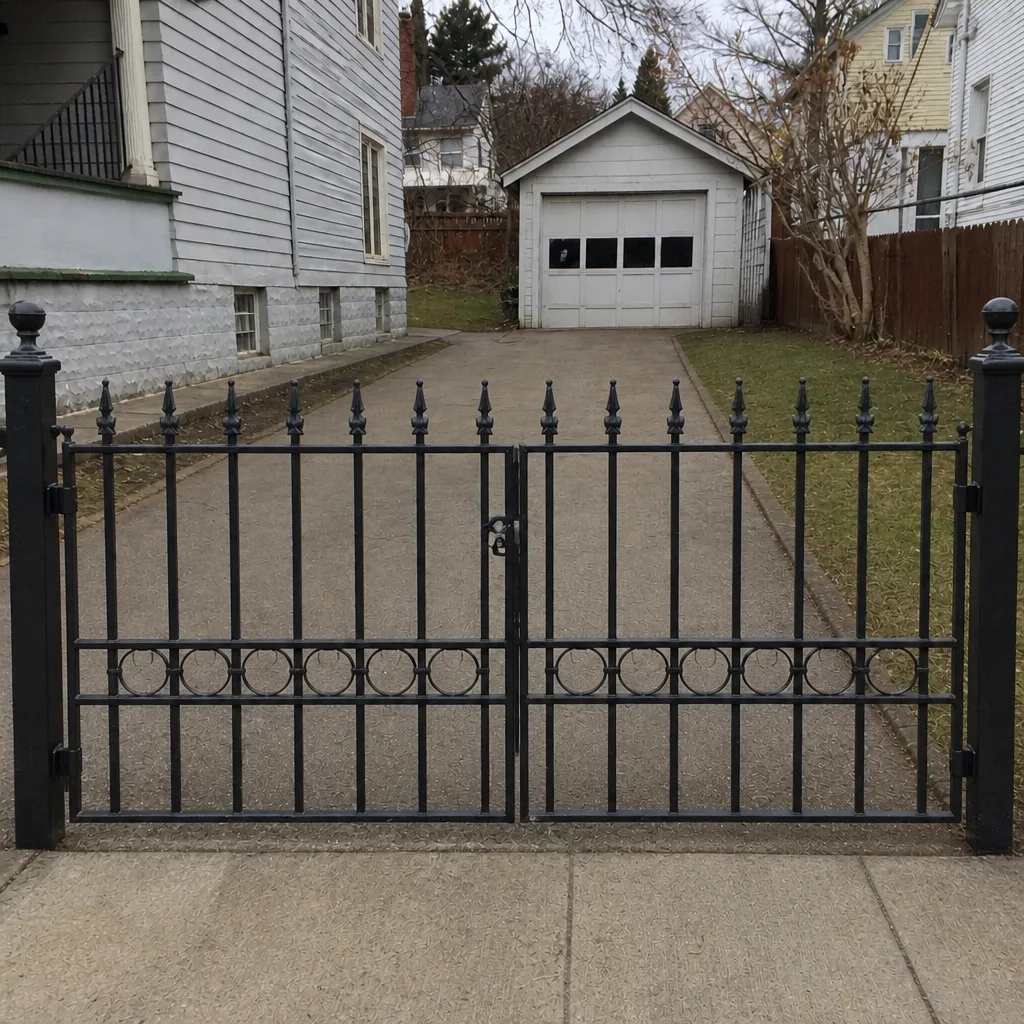
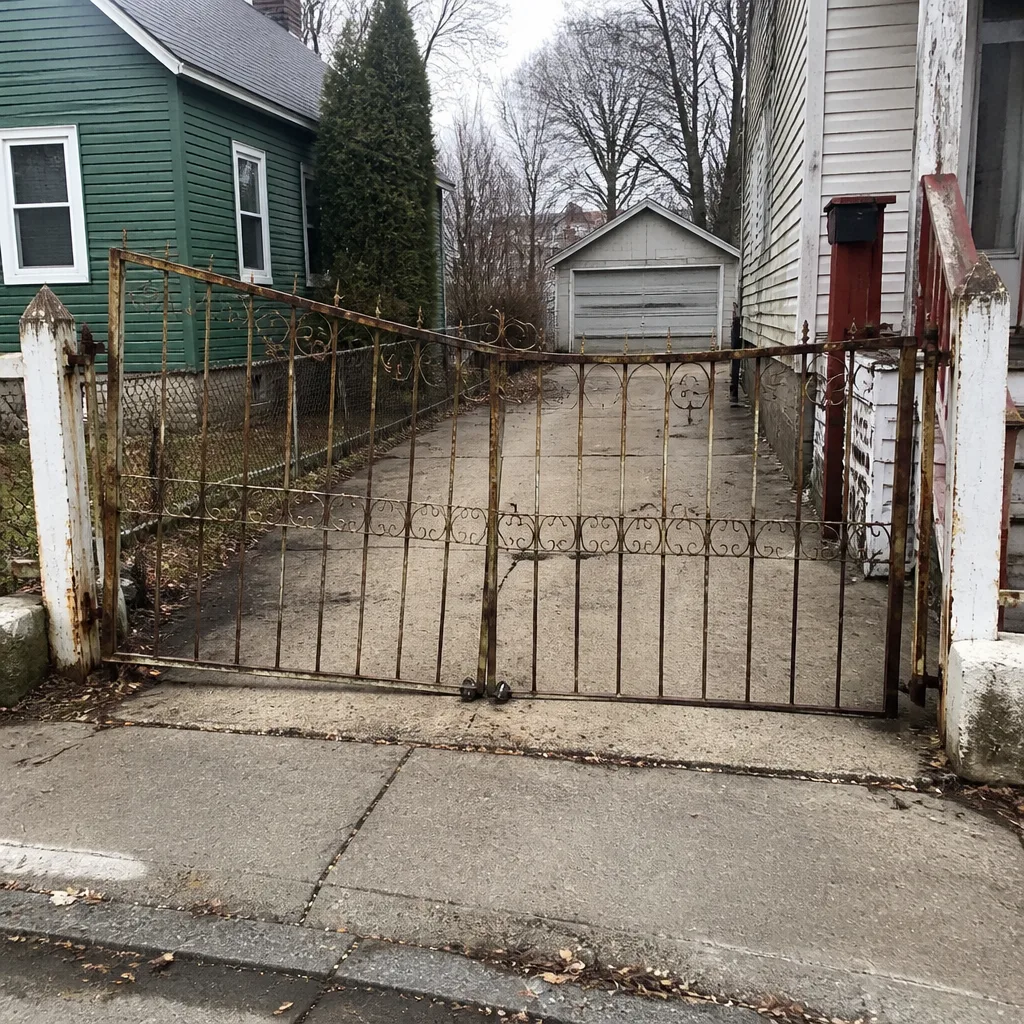
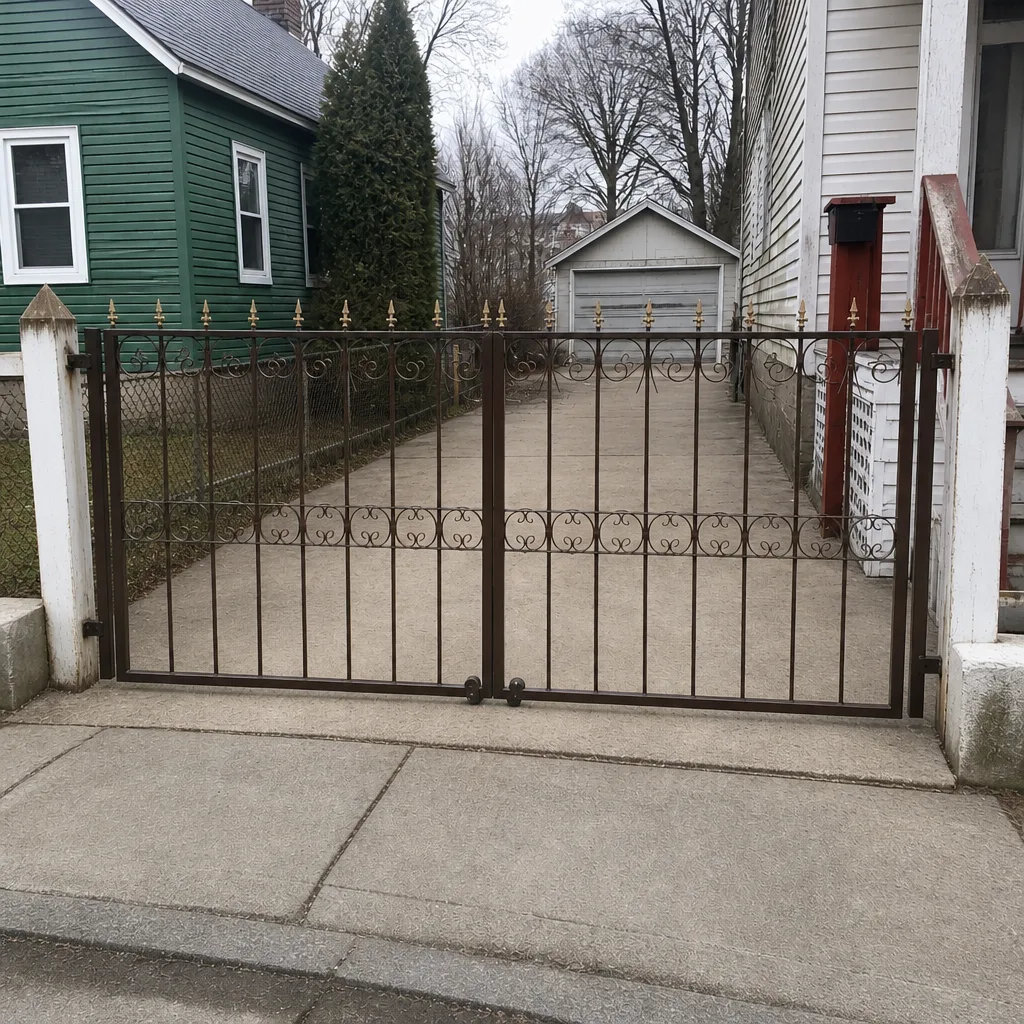
See the difference
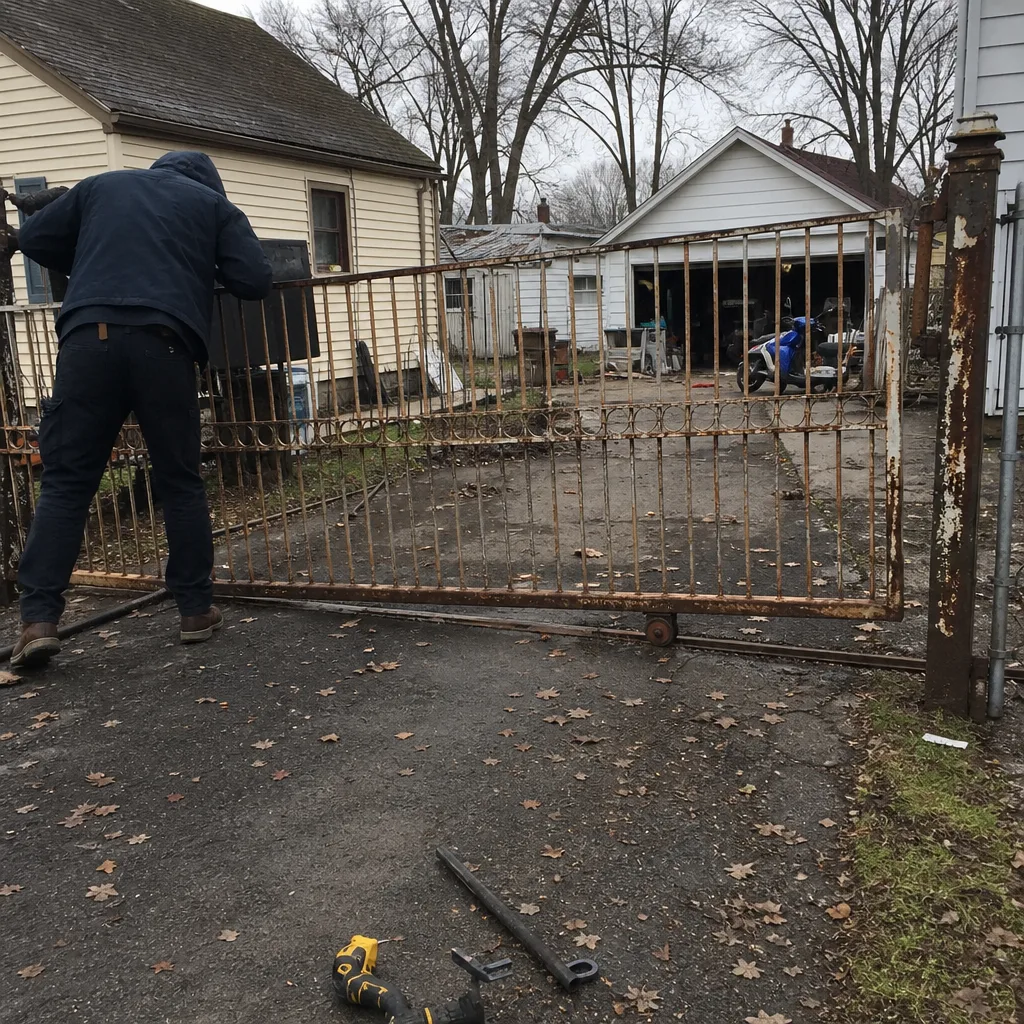 Before
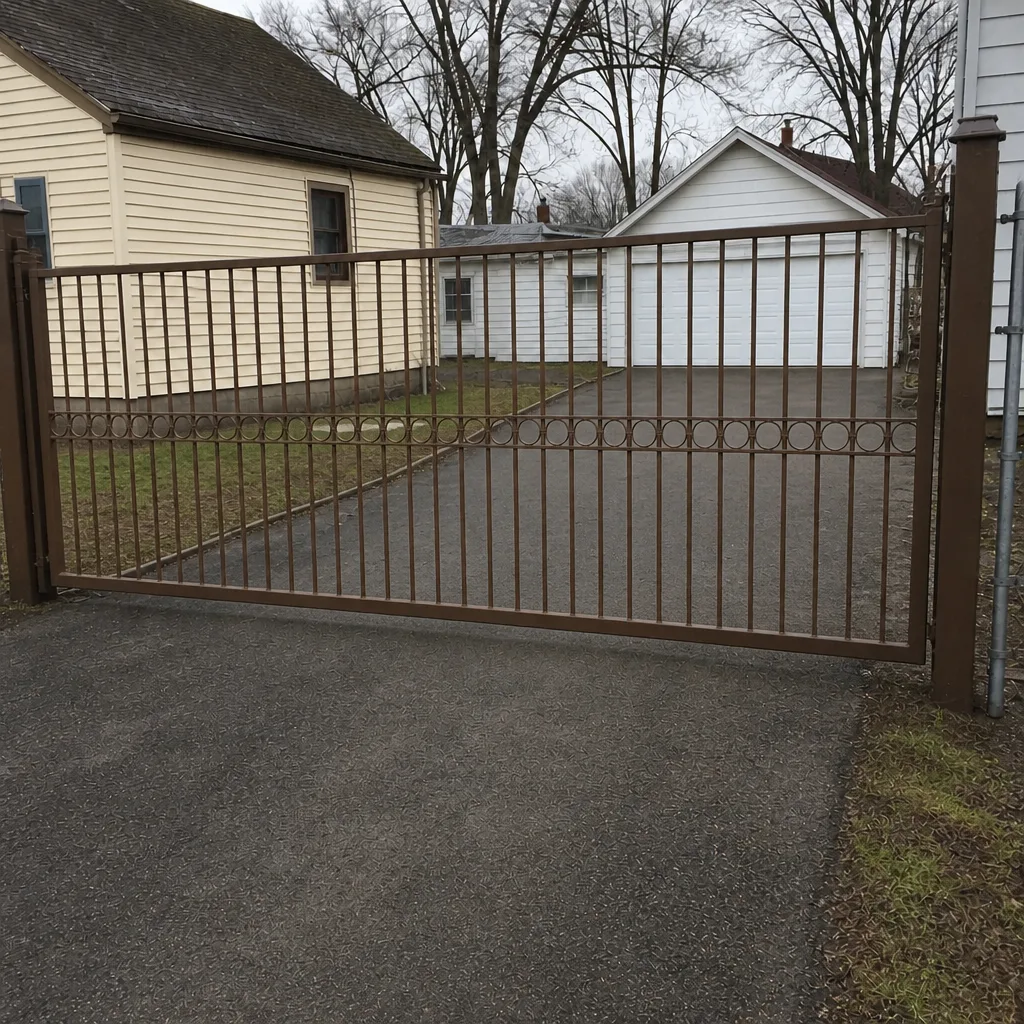 After
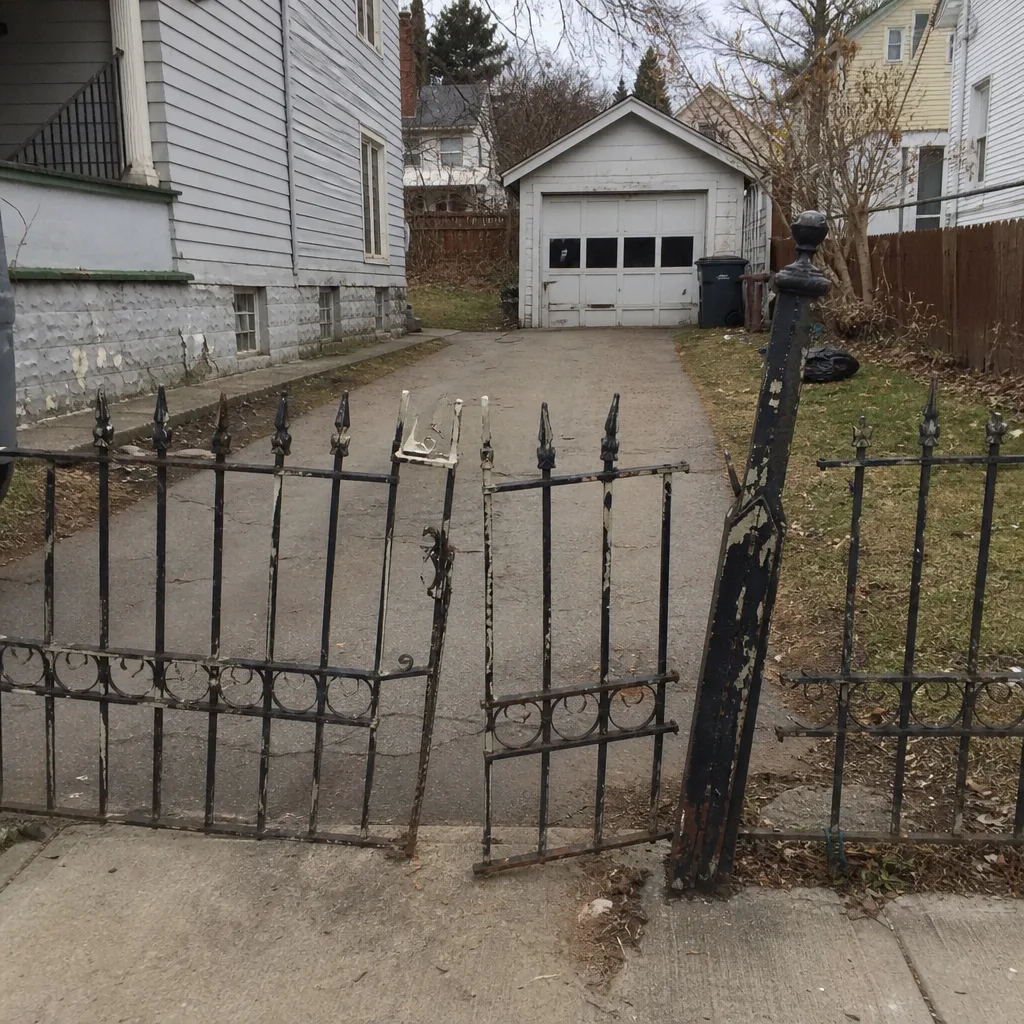 Before
 After
 Before
 After
When to Call a Professional
If your gate won’t move by hand, if the post has shifted, if you see cracks or broken welds in the frame, if the operator behaves inconsistently, or if any safety edge or photo eye isn’t working, call a professional. If a gate has injured someone, become loose on its hinges, or shown wiring damage, stop using it and have it checked before putting it back in service, especially on a commercial property where a failure creates significant liability exposure.
Some problems are safe to watch for a few weeks. Others aren’t worth the risk of waiting. We’re gate specialists rather than generalists, which means the technician who shows up has already worked on your gate’s brand and knows what to look for. Syracuse Gate Repair offers free estimates in Syracuse – call (844) 761-3861. We answer 24/7. Fast dispatch from 7am to 7pm, Sunday through Friday.
Frequently Asked Questions
Gate repair in Syracuse is quoted per job by written estimate, and the price depends on what’s actually failing – a hinge adjustment costs far less than a frame repair or an operator replacement. We give a free estimate before any work starts. Call (844) 761-3861 for an exact quote – estimates are free.
Many electric gate problems can be diagnosed and repaired the same day, especially when the issue is an operator, safety edge, or control board that we already know from the brand. Call (844) 761-3861 to see what’s available. We answer 24/7. Fast dispatch from 7am to 7pm, Sunday through Friday.
If your gate swings or slides freely by hand but won’t respond to the operator, the problem is almost always in the operator, its control board, or its safety circuit. That’s an electrical diagnosis rather than a mechanical one, and it’s worth having a specialist pin down which component is failing rather than replacing the operator outright.
Freeze-thaw cycles move posts and posts drive sag. When the ground around a gate post freezes and thaws repeatedly through a Syracuse winter, the post can shift slightly, and even a small shift throws off the geometry of the gate. The sag usually shows up in the spring after the post has already moved.
We work on LiftMaster, FAAC, BFT, Linear, Viking, Ghost Controls, DoorKing, Elite, and Mighty Mule systems, plus manual gates with mechanical hardware. Our technicians work from the failure patterns and schematics for each brand rather than guessing at your gate’s behavior. Call (844) 761-3861 and let us know the brand when you call.
Repair usually wins when the posts are solid, the frame is straight, and the operator is sound. Replacement usually makes more sense when multiple components are failing at once, when frame damage is significant, or when the gate has reached the end of its service life for the property’s needs. A free on-site estimate will tell you which category your gate is in. Call (844) 761-3861 for a written price.
The Bottom Line
Gate failures in Syracuse almost always trace back to one of the five root causes: hinges, posts, frames, operators, or control boards. The freeze-thaw cycle accelerates the mechanical ones first, which is why a gate that starts dragging usually needs a hinge or post repair rather than an operator replacement. Run the five physical tests in this guide – movement by hand, post rigidity, hinge play, frame straightness, and operator consistency – to know which category you’re dealing with. Some repairs can wait a few weeks. Others, particularly anything involving safety edges, reversal, or structural cracks, shouldn’t. When in doubt, have a specialist diagnose before you replace.
Call Syracuse Gate Repair at (844) 761-3861 for a free estimate. We answer 24/7. Fast dispatch from 7am to 7pm, Sunday through Friday. We work on LiftMaster, FAAC, BFT, Linear, Viking, Ghost Controls, DoorKing, Elite, and Mighty Mule systems, and we handle everything from a stuck swing gate to a full automated system installation. Our technicians have up to 8 years of experience on gate systems specifically. From a small hinge adjustment to a complete replacement, we diagnose before we replace, and we quote the price in writing before any work starts.
Written by the team at Syracuse Gate Repair.