
Last updated November 15, 2026
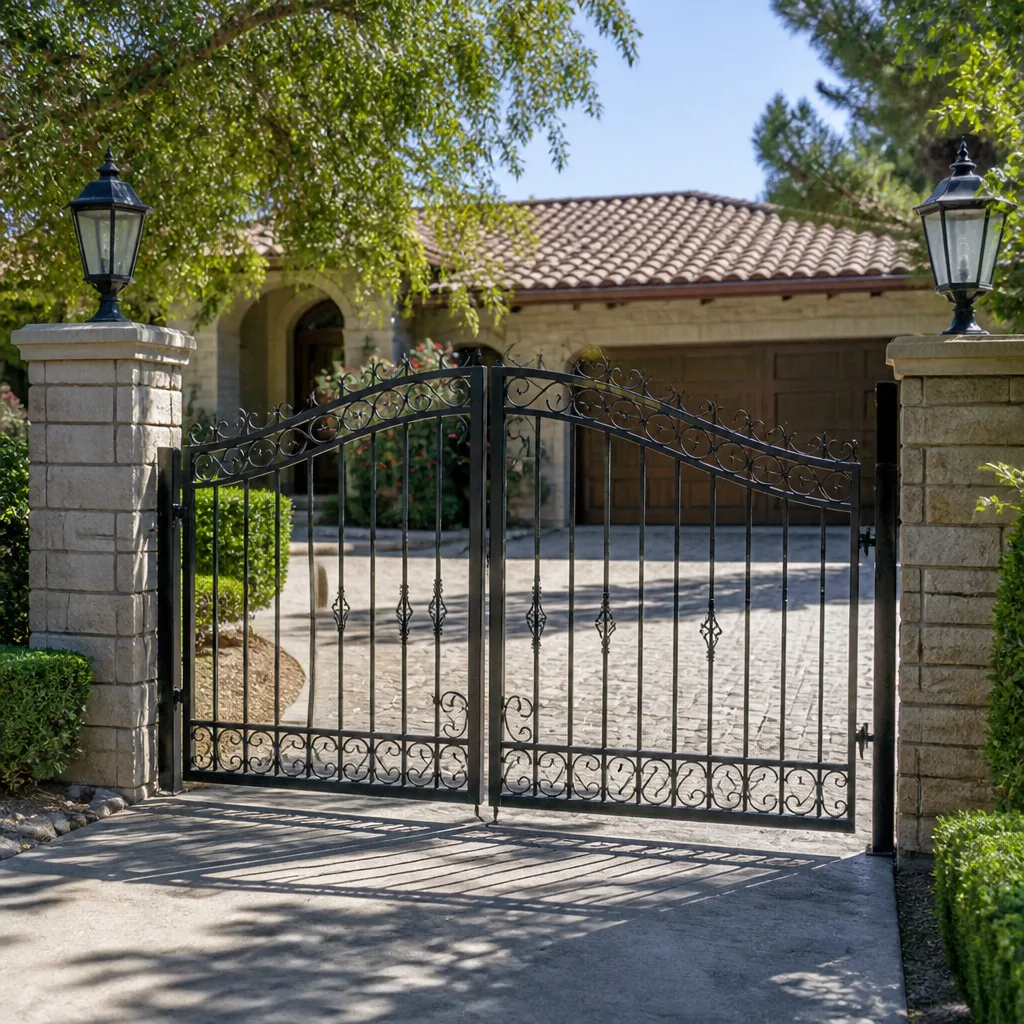 Wrought iron
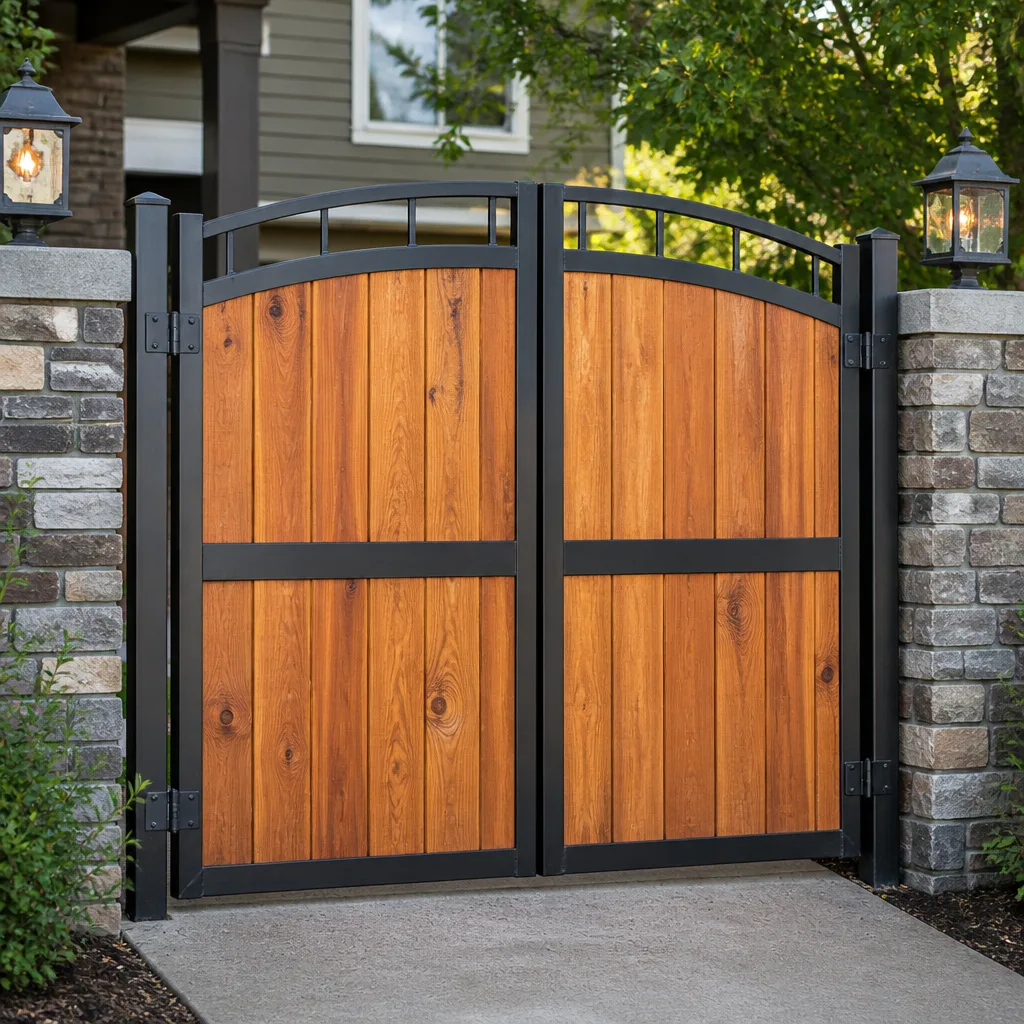 Wood & steel frame
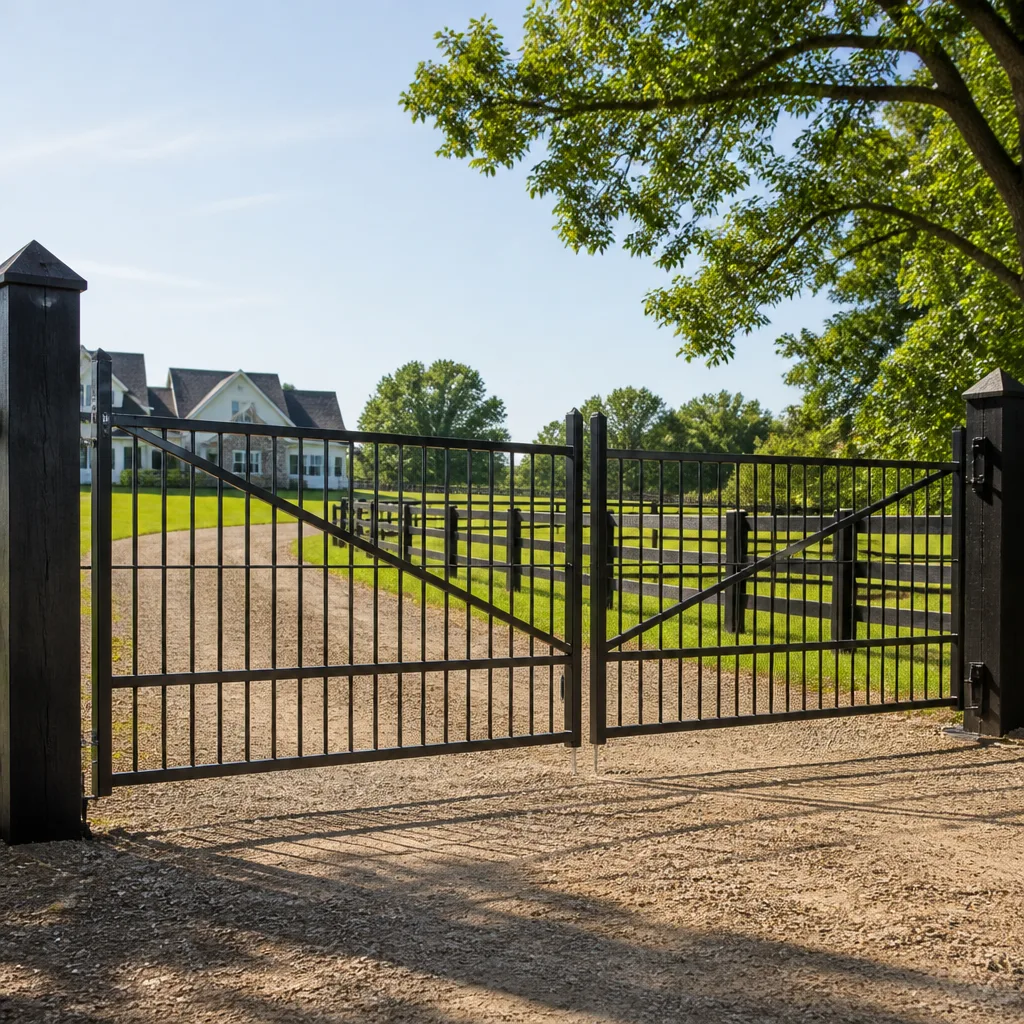 Farm & ranch
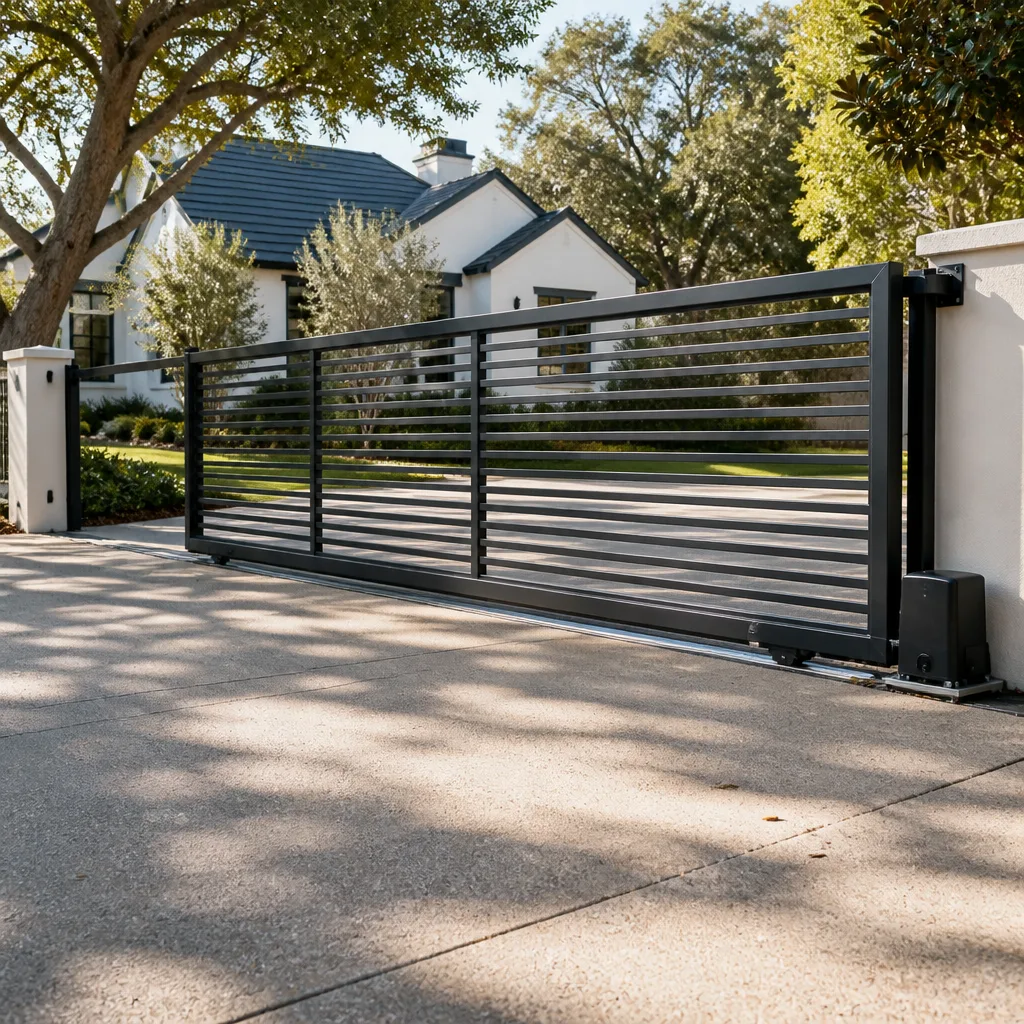 Sliding driveway gates
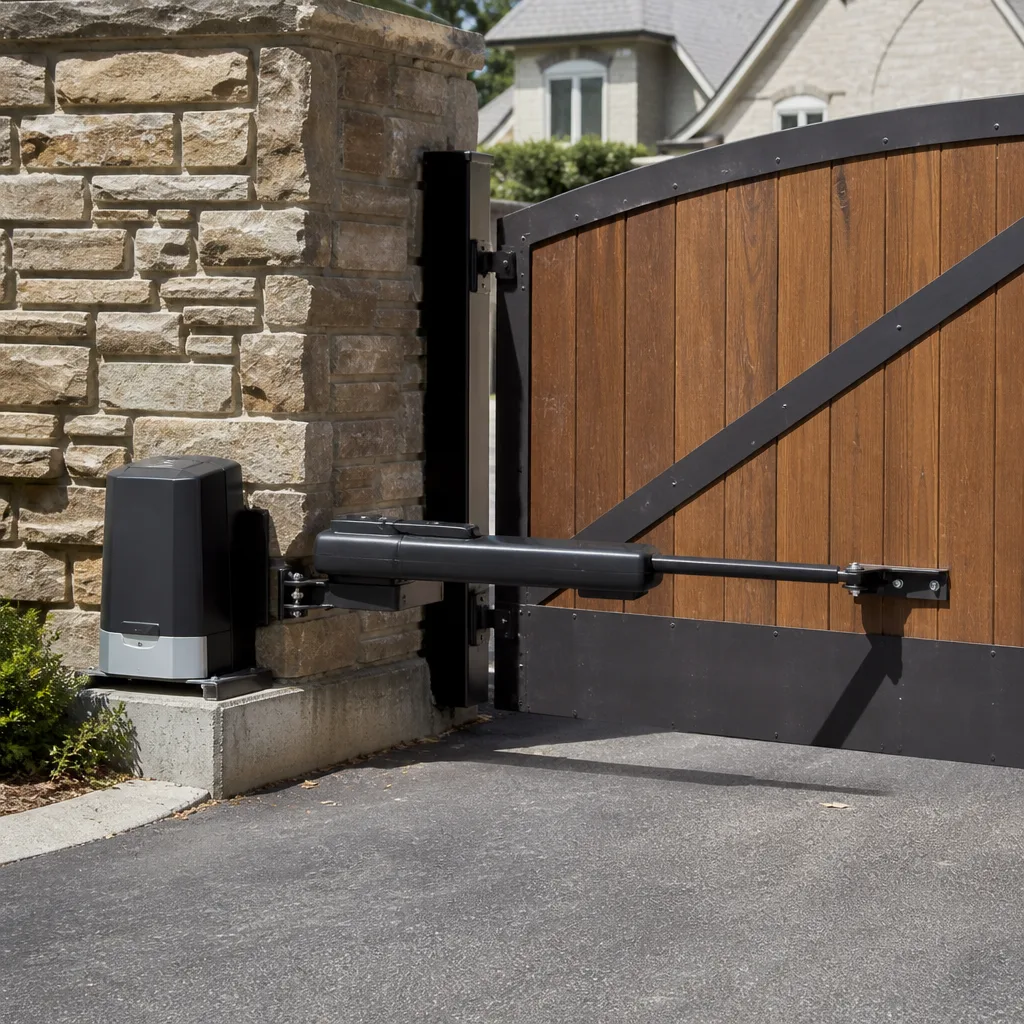 LiftMaster operators
Free on-site gate assessment - hinges, posts, and your LiftMaster or Nice gate operator checked before anything is quoted
The assessment is free and the quote is the invoice.
Get your free estimateDIY vs Professional Gate Repair: The Syracuse Homeowner’s Decision Guide
Adjusting a manual gate hinge is a legitimate DIY job. Reprogramming a Viking or Ghost Controls control board after a power surge is not – not because it’s difficult, but because an incorrect sequence can brick the board and turn a straightforward service call into a full board replacement. Most gate repair advice treats DIY as a question of confidence or skill. That’s the wrong test. The right test is failure mode: some gate problems get cheaper when you handle them yourself, and some get dramatically more expensive with every attempt. This guide draws that line by failure type, so you know exactly where your situation sits before you pick up a wrench. Syracuse homeowners deal with freeze-thaw cycles, road salt spray, and older housing stock that all shape which failures show up and how they behave.
Quick Answer
Manual gate repairs that involve cleaning, lubricating, tightening accessible fasteners, or clearing debris from a track are genuinely DIY-safe. Anything involving the operator, control board, sensors, wiring, or a gate that has dropped or shifted out of alignment needs a professional, because the failure mode compounds and a wrong attempt can turn a small fix into a larger bill. For electric gates in Syracuse, the DIY calculus is almost always professional work.
Styles & brands we work with
- Wrought iron
- Wood & steel frame
- Farm & ranch
- Sliding driveway gates
- LiftMaster operators
Table of Contents
- The Failure Type Test: Where DIY Saves Money and Where It Costs You
- Gate Repairs That Are Genuinely DIY-Safe
- Gate Repairs That Carry Damage or Safety Risk
- The Hidden Cost of Common DIY Mistakes
- What Tools You Actually Need (and the Gaps That Signal Stop)
- Electric vs Manual Gates: Why the DIY Math Is Different
- Syracuse-Specific Factors That Change the Equation
- How to Describe Your Gate Problem for an Accurate Quote
The Failure Type Test: Where DIY Saves Money and Where It Costs You
Every gate failure falls into one of two categories. Cosmetic or adjustment failures respond to basic maintenance and rarely get worse if you work on them carefully. Mechanical or electrical failures are active faults, meaning something is already broken or misaligned and every additional movement or attempt stresses a component that wasn’t designed to absorb it. That’s the dividing line.
We’ve seen the same pattern across Syracuse properties for years. A homeowner notices the gate dragging and reaches for a wrench to lift the hinge. What they don’t know is the hinge pin is already bent from frost heave in the post footing, and cranking the bracket just transfers the load to the next-fastest-weakening point – usually the post anchor or the frame weld. Now instead of one hinge, the repair involves the frame too.
Ask yourself these questions before you touch anything:
- Is the gate visibly out of alignment? If it’s sagging, dragging, or no longer latching without force, a structural cause is already at work. That’s professional territory.
- Does the problem involve the operator, motor, control board, sensor, or wiring? If yes, stop. Electrical and electronic faults are a different discipline entirely.
- Did the problem appear suddenly or gradually? Sudden failures after a storm, power event, or impact usually point to a component that has failed outright. Gradual failures are more likely to be wear-related and might respond to adjustment.
- Is the gate manual or electric? Manual gates give you more safe DIY range. Electric gates give you almost none.
- Would getting this wrong damage a part costing more than the service call? This is the money question. If yes, the answer is professional.
Note what this test is not: it’s not about your mechanical ability. Someone who rebuilds engines can still brick a DoorKing control board by cycling the wrong sequence into it. The failure type decides, not the person.
Gate Repairs That Are Genuinely DIY-Safe
These are the repairs where a careful homeowner with the right tools will not make things worse. All of them are maintenance-level interventions on manual gates, or basic housekeeping on automated ones that doesn’t involve the electronics.
- Cleaning and lubricating hinges on a manual gate. Use a proper gate and hinge lubricant, not WD-40 as a long-term solution. A dry silicone spray or lithium grease applied at the pivot points keeps movement smooth through Syracuse winters.
- Clearing debris from a slide gate track. Leaf litter, ice chunks, and grit build up in the track channel, especially after a storm. Sweeping or scraping it out is safe and solves a high percentage of “gate won’t close” complaints.
- Tightening accessible hinge and bracket bolts. If a bolt has worked loose but the gate isn’t bent out of shape, snugging it back down is fine. Stop the moment you feel the fastener spin rather than grip – that means the thread is stripped and you need backup.
- Adjusting a manual gate latch alignment. Small shimming or repositioning of the latch plate is straightforward.
- Cleaning sensor lenses on an electric gate. Dust, salt spray, and spider webs on the safety sensor eye can cause phantom reversing. Wiping the lens clean with a dry cloth is safe and often solves intermittent issues.
- Keeping the operator housing clear of snow and ice. Don’t let a snowbank bury the operator or the arm, and clear ice off any exposed sensor. This prevents a lot of cold-weather service calls.
- Replacing a worn hinge pin on a light manual gate, if the hinge is fully accessible and removable. This is a mechanical swap, not an adjustment, so do it with the gate propped and stable.
If you’re ever unsure whether a repair sits on this list or the next, call and describe it before you start. For a general overview of the services we cover, see gate repair in Syracuse.
Gate Repairs That Carry Damage or Safety Risk
This category includes jobs where a mistake either damages an expensive component or creates a safety hazard. If your gate problem lands here, no amount of care on your part makes the DIY attempt smart. Two reasons: heavy moving parts and the electrical side of automated systems.
Safety risk repairs. A gate panel – swing or slide – can weigh hundreds of pounds. It’s not like a fence picket. Attempting to remove a hinge, lift a dropped slide gate back onto its track, or straighten a bent frame while the panel is unsupported risks a crushing injury. Automated gates carry a second hazard: if the safety sensors are bypassed or incorrectly wired, the gate can close on a person, pet, or vehicle without reversing.
Damage risk repairs. These are the ones where the repair gets more expensive with every attempt:
- Operator motor and gearbox repairs on any electric gate system
- Control board diagnostics, programming, and replacement on brands like Viking, Ghost Controls, DoorKing, or Elite
- Safety sensor alignment, wiring, and fault tracing
- Any work inside the operator housing
- Straightening or re-welding a bent gate frame or hinge post
- Track repairs on a slide gate that has jumped its track
- Post footing or anchor plate work when the post is loose or frost-heaved
Electric gate repair is its own discipline. It’s not the same skill set as swapping a hinge. It involves reading the board’s fault codes, understanding the current draw characteristics of the motor, and tracing wiring faults through a system that may run hundreds of feet from the control box to the gate. Without the right diagnostic approach, guessing at a control board is how a straightforward sensor issue turns into a board replacement. When in doubt, electric gate repair in Syracuse is where we’d start.
The Hidden Cost of Common DIY Mistakes
The compounding-damage problem is real. Here’s where DIY attempts on gate repairs commonly go from cheap to expensive.
Stripping a hinge bolt. An over-tightened bolt that strips its thread in the frame or gate post means the hardware has to be extracted and either re-tapped or reinforced. Now the fix involves more than a replacement bolt. We see this most often on older manual gates where the original bracket metal has softened with age.
The wrong lubricant in an operator. A chain-drive operator needs the chain lubricant its manufacturer specifies. Packing the operator gears with ordinary grease, or spraying the chain with a sticky lubricant that attracts grit, accelerates wear or clogs the mechanism. Some lubricants can degrade the seals in a motor gearbox over time. Replacing a gearbox is not a small line item compared to the cost of proper lubricant.
Forcing a sagging gate with a bent hinge pin. The pin bends because something else has moved. Forcing the gate back to alignment pushes against that cause. In practice, that means the next-fastest-weakest component goes – usually the hinge bracket or the post anchor. You started with one bent pin and now have a bracket repair or a post footing repair.
Bypassing a safety sensor to get the gate moving. If the sensor is faulty and the homeowner wires it out to allow the gate to close, the gate no longer knows when a person or vehicle is in its path. That’s a serious safety hazard that’s also typically flagged by any later inspection. Never bypass a safety sensor.
Cycling a control board without understanding the reset sequence. On several major brand boards including Viking, Ghost Controls, and Elite, an incorrect reset sequence can put the board into an error state or clear the limit settings entirely. On some boards, a mistimed cycle during a fault condition can damage the output stage. That’s the failure mode where a $180 service call becomes a board replacement.
Replacing a motor without diagnosing the actual fault. The motor is rarely the first component to fail on an electric gate – sensors, limit switches, and control boards are the usual suspects. Swapping a motor on a guess leaves the actual fault in place. The gate still doesn’t work, and you’ve spent money on the wrong part.
For more on what a proper Syracuse Gate Repair visit looks like, see what we cover on the main page.
What Tools You Actually Need (and the Gaps That Signal Stop)
Legitimate DIY gate maintenance requires a specific and modest set of tools. If you have these, you can safely do the maintenance work we listed earlier. If you’re missing several of them, or if the repair requires tools you’d need to borrow, that’s your signal that the job belongs to a technician.
What a homeowner actually needs:
- A quality socket set (3/8″ drive covers most hinge and bracket bolts)
- An adjustable wrench (backup for larger fasteners)
- Screwdriver set including a small flathead for sensor adjustments
- Stiff brush and a leaf rake for track cleaning
- Proper gate lubricant – silicone spray or lithium grease for hinges and latch points
- A soft dry cloth for sensor lenses
- A non-marring mallet for tapping loose hardware back into place
- Penetrating oil for rusted fasteners – spray and leave, don’t force
Tool gaps that signal professional work: a multimeter you don’t know how to use on a live circuit, a torque wrench for structural bolts, a welder, a hydraulic jack rated for the gate panel’s weight, a manufacturer-specific programmer for control boards, a wire tracer for locating a fault in buried sensor wiring. If the repair requires any of these, it’s beyond the DIY category.
The other gap worth naming: knowledge of how your specific system works. If you don’t know what brand your operator is or where the control board is located, you don’t have the context needed for safe diagnosis. That’s what technicians who work on Syracuse gate systems carry into every job.
Electric vs Manual Gates: Why the DIY Math Is Different
A manual gate is a mechanical system. Its failure modes are structural – sagging, dragging, loose hinges, worn pins, alignment drift. Those failures are visible, and some of them respond to adjustment. DIY work on a manual gate stays within the physical parts, and if you get it wrong, the damage is often limited to a hinge or bracket.
An electric gate is a mechanical system plus an electronic control system plus safety sensors plus a wiring run. Its failure modes are much wider:
| System | Common failure | DIY safe? |
|---|---|---|
| Hinges and pivot points | Wear, loosening | Maintenance only |
| Slide track | Debris buildup | Cleaning yes, repair no |
| Safety sensors | Dirt on lens, misalignment | Cleaning yes, realignment no |
| Operator motor | Worn brushes, gearbox wear | No |
| Control board | Surge damage, fault state, lost limits | No |
| Wiring and power run | Corrosion, ground fault, damage | No |
| Remote and receiver | Pairing loss, battery failure | Battery yes, pairing carefully |
The reason electric gate repair is a different discipline is that a single visible symptom usually has multiple possible causes. A gate that won’t close could be a sensor fault, a limit switch issue, a board problem, a motor current fault, or a wiring fault. Reading the actual fault requires a technician who knows the system. That’s why we work from known schematics and known failure patterns for each brand we service – LiftMaster, FAAC, BFT, Linear, Viking, Ghost Controls, DoorKing, Elite, and Mighty Mule – rather than diagnosing from scratch on every call.
The safe DIY zone on an electric gate is very narrow: cleaning, clearing debris, checking the remote battery, and keeping the operator housing free of snow and ice. That’s it. The rest is technician work.
Syracuse-Specific Factors That Change the Equation
Syracuse gate failures have a distinct pattern that homeowners elsewhere don’t see. Understanding the local conditions helps you predict what’s likely to go wrong and where DIY attempts are most likely to cause damage.
Freeze-thaw cycles – Syracuse runs through dozens of freeze-thaw cycles each winter. Water gets into gate post footings, freezes, expands, and shifts the post slightly. Over one season, a post that was solid in October is out of plumb by March. That’s the hidden cause behind most “my gate won’t latch right anymore” complaints in the spring. It’s also why forcing a sagging gate by adjusting the hinge usually fails: the problem is the post, not the hinge.
Road salt and deicer spray. Salt from plowed roads and deicer products carried on vehicle tires reaches gates near driveways and commercial entrances. It accelerates corrosion on hinge pins, track rollers, and the exposed metal of the operator housing. Corroded fasteners strip easier, which makes DIY attempts on old hardware riskier than they look.
Lake-effect snow load. Heavy snow accumulates on slide gate tracks and swing gate arms. Forcing a gate open through packed ice or snow loads the motor and the frame beyond what they were designed to handle. Clear snow before operating the gate, not after.
Aging housing stock and gate hardware. Many Syracuse properties have gates or gate hardware that are older than the operator that drives them. Original post footings from decades ago weren’t built for the weight of a modern steel slide gate. When a footing fails, it’s a professional repair – and delaying it usually means the operator absorbs the load and fails next.
Storm and impact damage. Hail is uncommon here, but fallen branches, wind-blown debris, and vehicle impact are the more common causes of sudden gate failure in Syracuse. Any impact strong enough to bend the frame or throw the gate off its track is a professional repair scenario.
If your gate is over a topographically steep driveway or has been hit hard, we can’t always tell from a phone description whether the post or the gate hardware is the culprit. That’s why we diagnose before we replace, and why a free estimate visit is often the fastest way to know.
How to Describe Your Gate Problem for an Accurate Quote
Better descriptions produce better quotes. If you’ve attempted a DIY fix before calling us, tell us exactly what you did. Nobody’s judging – what matters is that we know which components have already been touched so we can factor that into the diagnosis.
Before you call, gather these details:
- The brand of the operator – LiftMaster, FAAC, BFT, Linear, Viking, Ghost Controls, DoorKing, Elite, or Mighty Mule. The label is usually on the operator housing or on the control box. If you can’t find it, that’s fine – we’ll identify it on-site.
- Manual or electric, and if electric, swing or slide.
- What the gate does – won’t open, won’t close, opens and then reverses, opens partway, makes a grinding or clicking noise, gets stuck at a specific point, moves slowly, smells burnt.
- When it started – gradually over weeks, suddenly after a storm, suddenly after a power outage, after someone hit it, after you adjusted or lubricated something.
- Any error lights or fault codes on the control board, and what they’re doing (blinking pattern, color, count per cycle).
- What you’ve already tried – including whether you re-paired remotes, reset the board, replaced batteries, or adjusted anything mechanically.
For example, “I have a Viking slide operator that stopped in the open position yesterday, and the board has a red light blinking three times” is a description we can work with before we arrive. Compare that to “my gate is broken” – that one means we start from square one on-site.
That said, the phone description only gets us so far. Gate systems fail in ways that hide themselves, especially after a winter of freeze-thaw stress. On-site diagnosis is where the accurate quote actually comes from, and it’s free.
Common Mistakes to Avoid
- Diagnosing from symptom alone. A gate that won’t close isn’t necessarily a close-direction fault. It could be a safety sensor, a limit switch, a control board, or a motor current issue. Guessing at it costs more than a diagnostic visit.
- Using WD-40 as a long-term gate lubricant. Standard WD-40 is a water displacer, not a lasting lubricant. Applied to hinges or an operator chain, it attracts grit and evaporates. Use a proper gate and hinge lubricant or the chain lubricant the manufacturer specifies.
- Forcing a gate through snow or ice. In Syracuse this is the most common self-inflicted damage. The motor was not built to break ice. Clear the gate path first, then operate it.
- Bypassing safety sensors to make the gate close. Wiring out a faulty sensor to allow the gate to operate removes the one component that protects a person from being caught in it. That’s a hard no.
- Replacing the motor when the fault is elsewhere. The motor is rarely the first part to fail on an electric gate. Sensors, limits, and boards fail more often. Replacing a motor on a guess leaves the real fault in place.
- Over-tightening a hinge bolt to fix a wobble. If the bolt wobbles because the thread is worn, tightening it strips the hole. That turns a hinge fix into a bracket or post fix.
- Lifting a heavy gate panel to reseat the rollers without proper support. A drop or a crush from a gate panel is a serious injury. If the panel needs to come off or move, get a technician.
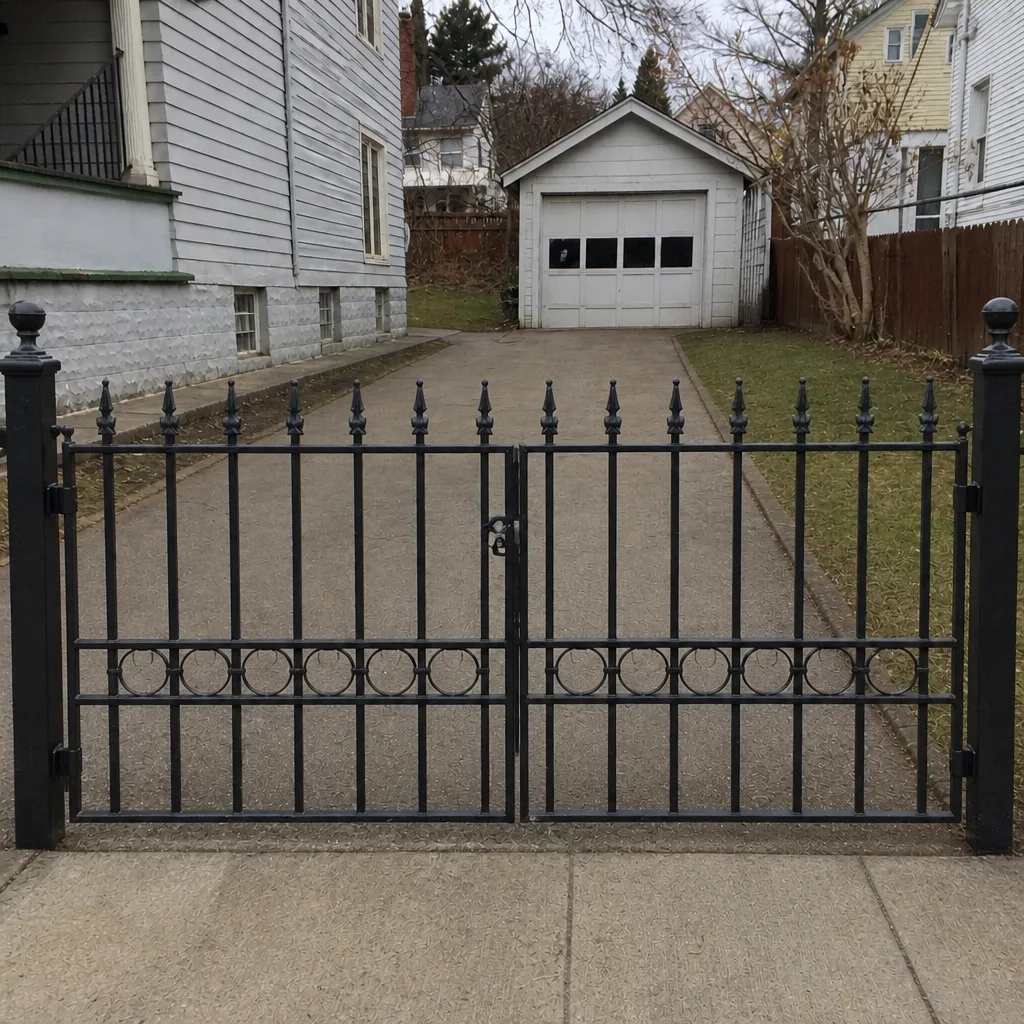
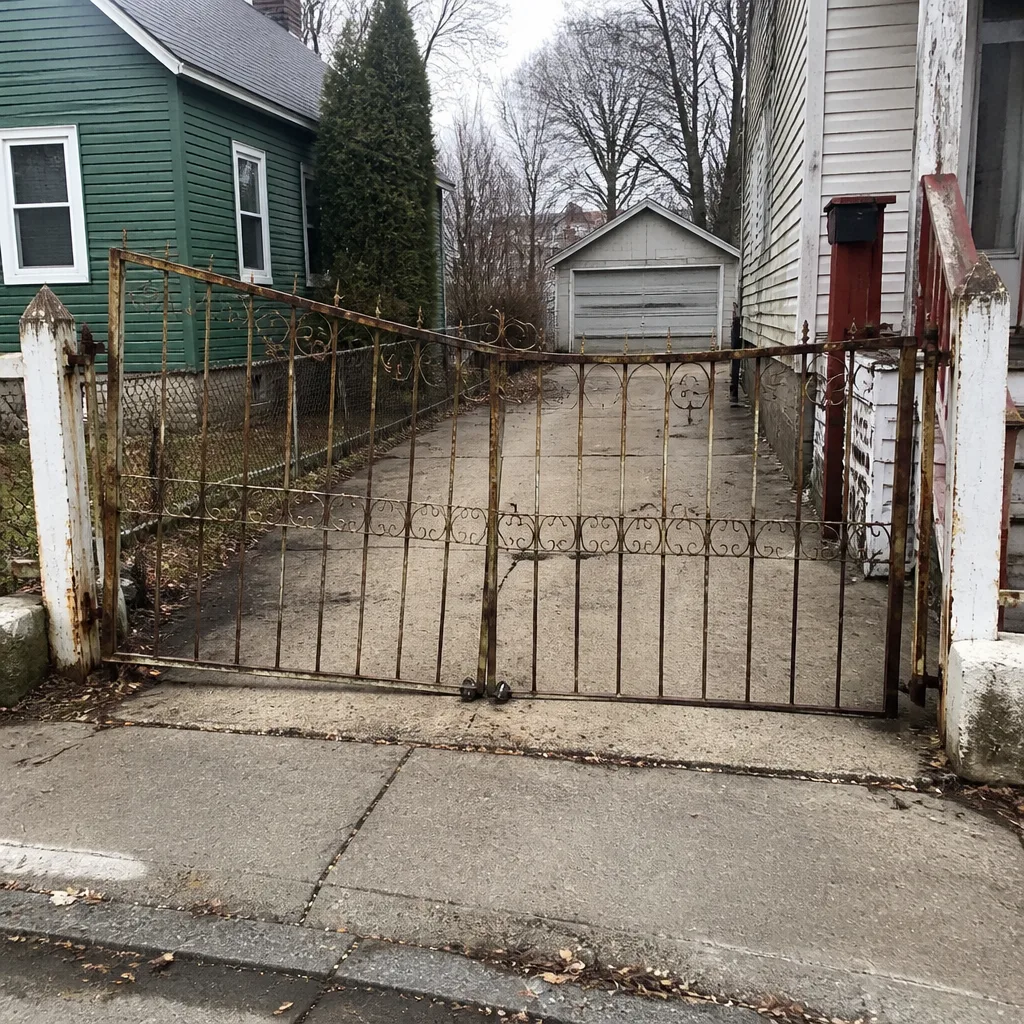
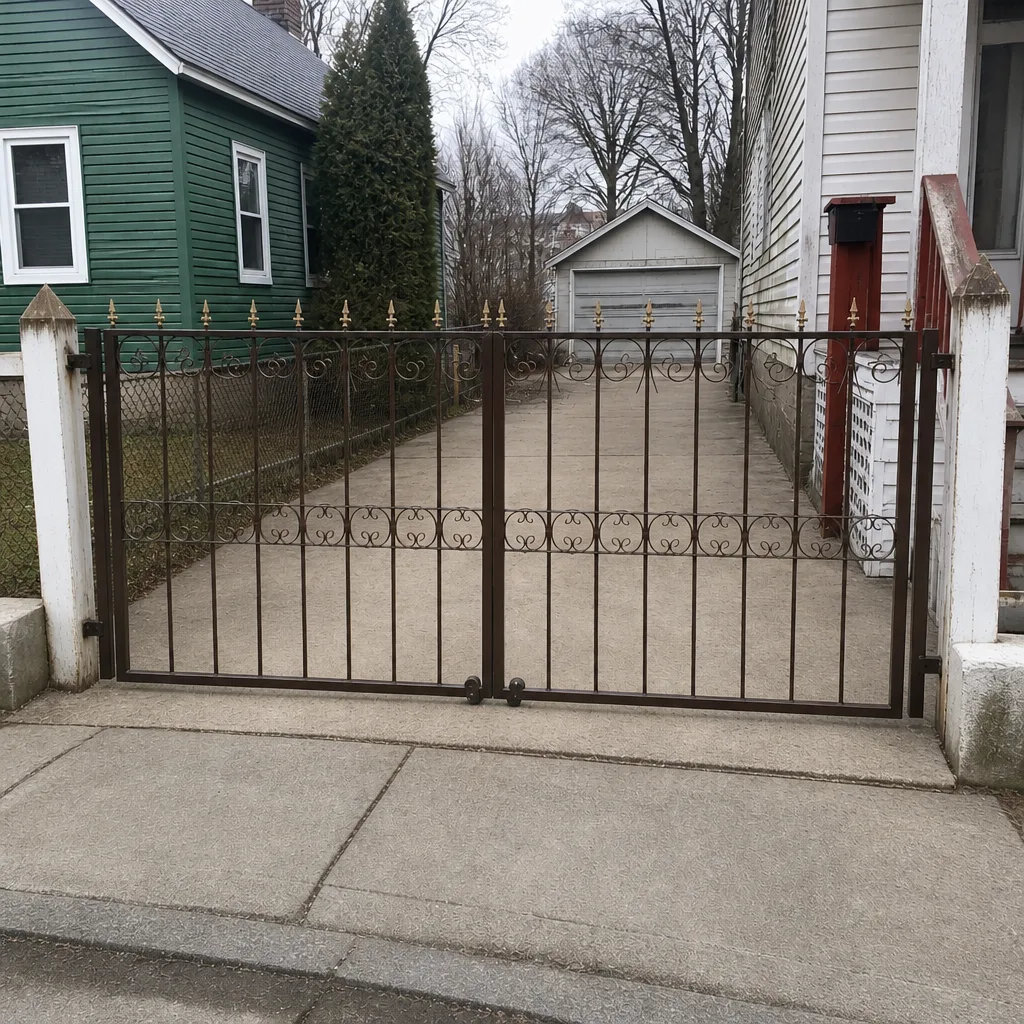
See the difference
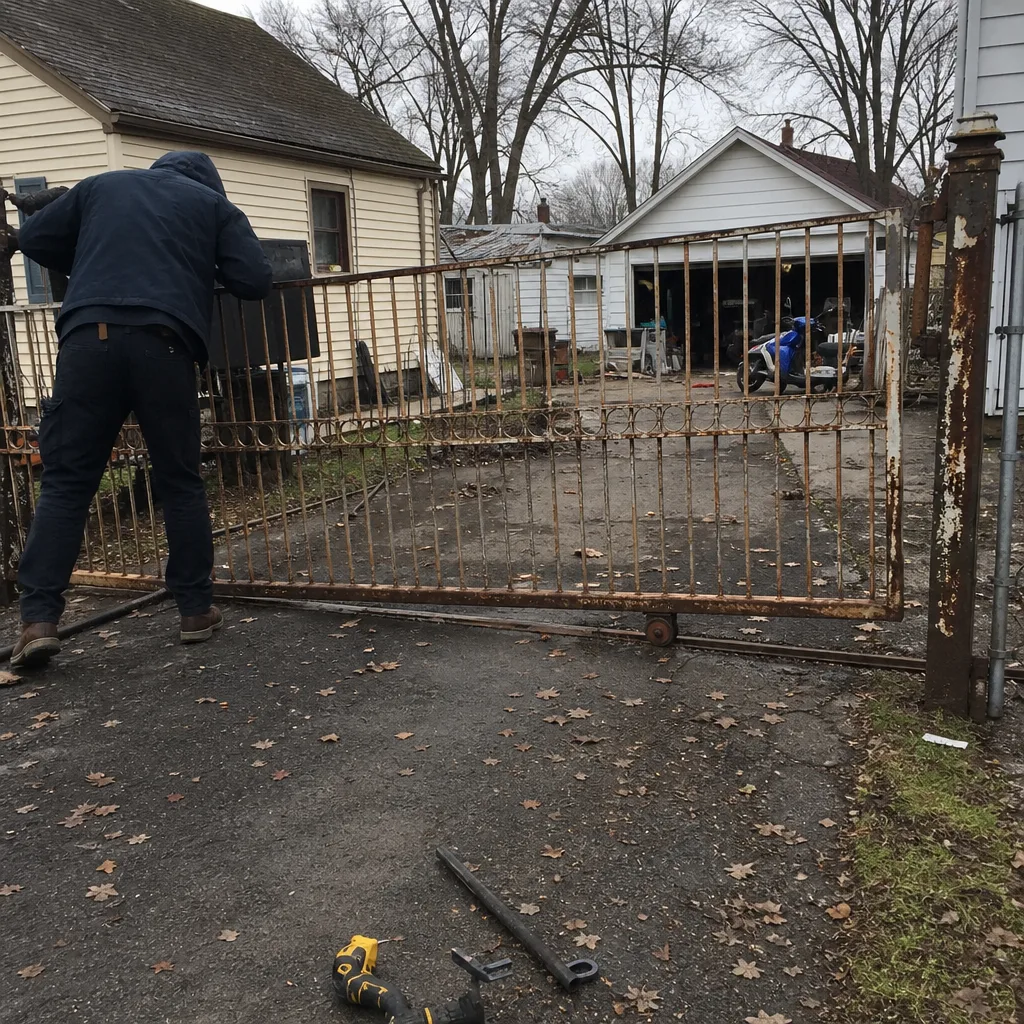 Before
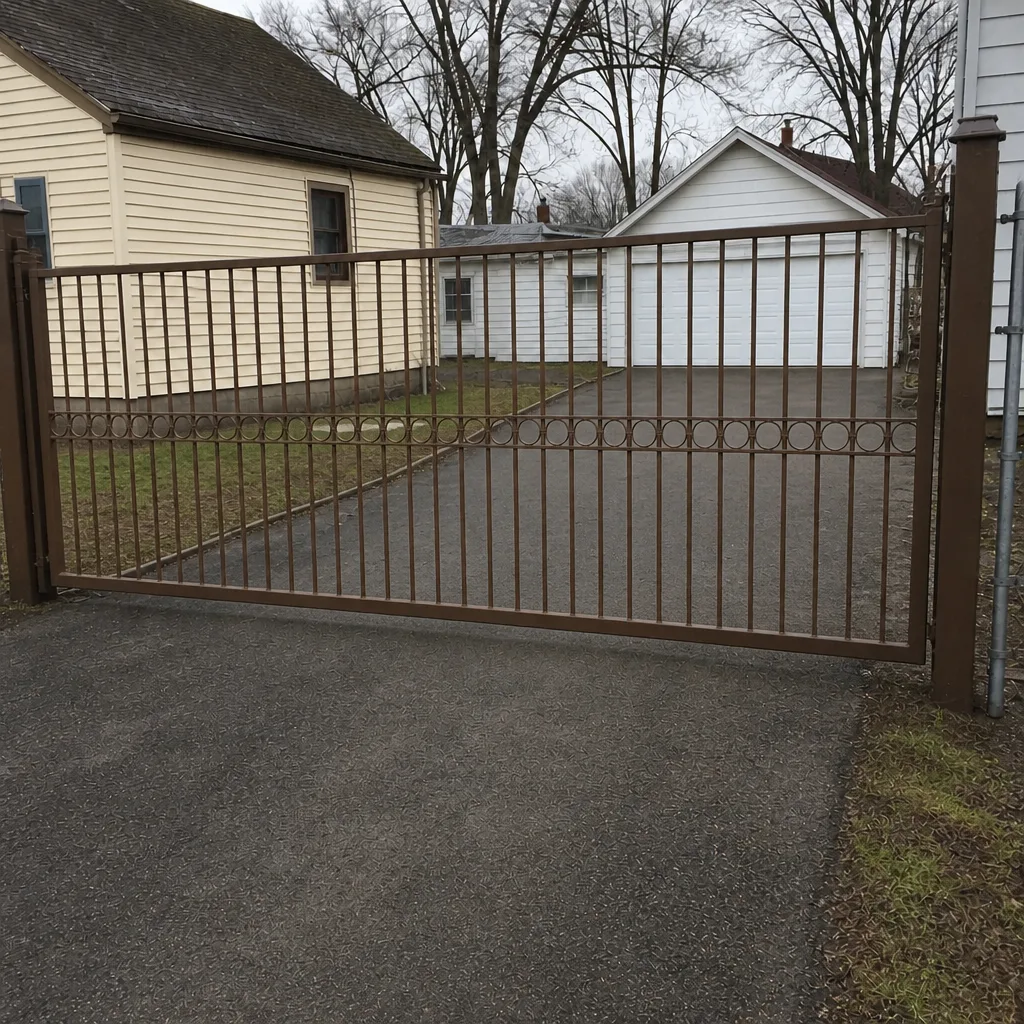 After
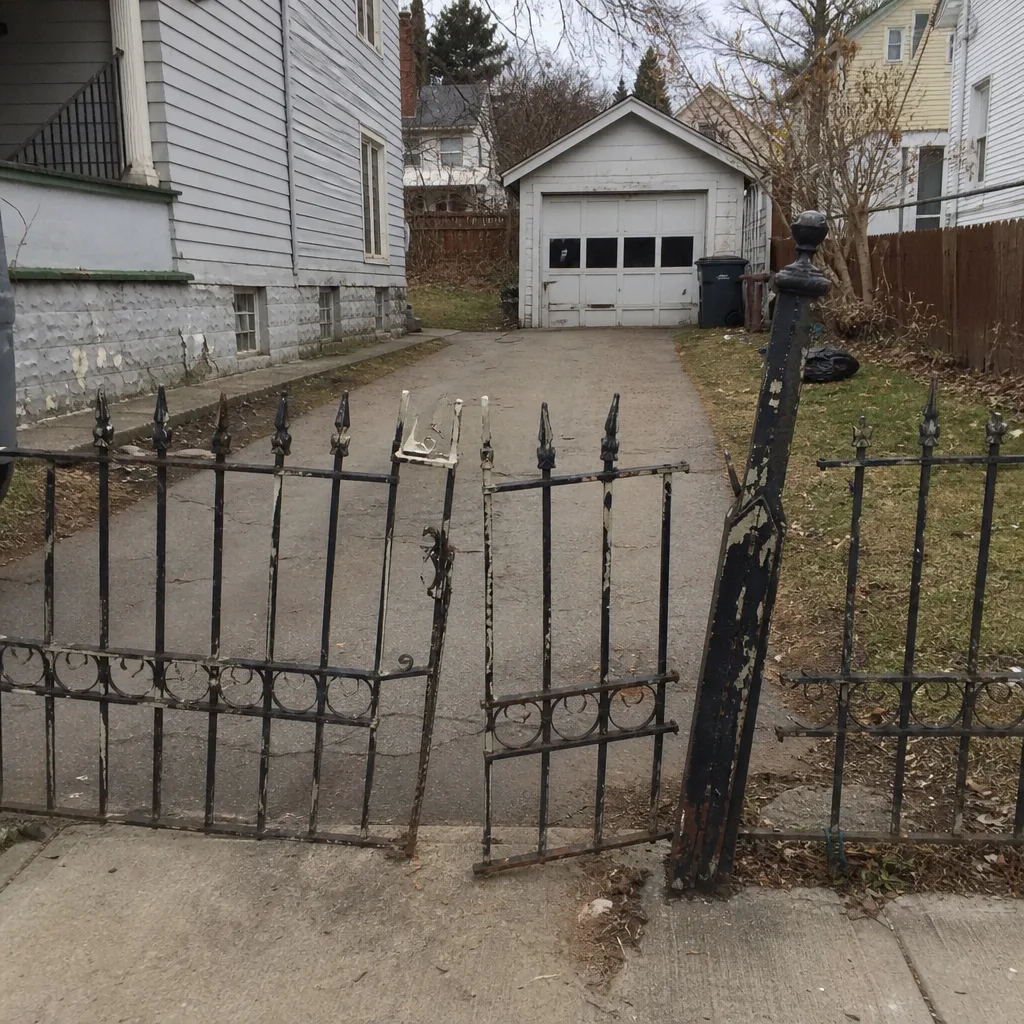 Before
 After
 Before
 After
When to Call a Professional
Call a professional the moment your gate problem lands in any of these categories: the gate sags, drags, or won’t latch; it’s an electric gate and the fault is anything other than dirt on a sensor lens; the operator makes a grinding, clicking, or burning smell; the control board shows a fault code or error light; the gate has been hit or has thrown its track; the post or footing is loose; or you’ve already attempted a fix and the gate is still doing the same thing. Those last two are the ones homeowners most often delay, and delaying them is what turns a manageable repair into a bigger one. Syracuse Gate Repair offers free estimates in Syracuse – call (844) 761-3861. We answer 24/7, with fast dispatch from 7am to 7pm, Sunday through Friday. Our technicians have up to 8 years of experience and work from known schematics on every major gate brand.
Frequently Asked Questions
Only the maintenance-level tasks are DIY-safe on an electric gate – cleaning sensor lenses, clearing debris from a slide track, checking remote batteries, and keeping the operator housing clear of snow and ice. Anything involving the motor, control board, sensors, or wiring needs a technician. Electric gate repair is its own discipline, and a wrong attempt can turn a small fault into a board replacement. Call (844) 761-3861 for a free estimate.
Forcing a gate through snow or ice, and adjusting the hinge when the real problem is a shifted post. In Syracuse both are common in late winter. The first overloads the operator, and the second transfers stress to the next-weakest component, usually the hinge bracket or post anchor. Call us before you start turning bolts and we’ll help you sort out which one you’re dealing with.
In Syracuse, the most common cause of a sagging gate with intact hinges is a shifted or frost-heaved gate post. The freeze-thaw cycle shifts the post slightly each winter, so the gate no longer sits plumb even though the hardware looks fine. Adjusting the hinges won’t fix it and can make it worse. Call (844) 761-3861 for an estimate – we diagnose before we replace.
No – not unless you have the manufacturer’s procedure for your exact model and you understand the sequence. On several brands, including Viking, Ghost Controls, and Elite, an incorrect reset can put the board into a fault state or clear the limit settings entirely. A wrong sequence can also damage the output stage. Leave board work to a technician. Call us for an exact quote – estimates are free.
Probably yes. We service LiftMaster, FAAC, BFT, Linear, Viking, Ghost Controls, DoorKing, Elite, and Mighty Mule, and we work from known schematics and failure patterns for each of those brands rather than guessing. If your operator is one of these, we’ll know how it typically fails before we arrive. Call (844) 761-3861 and tell us the brand.
Give us the brand of the operator, whether it’s manual or electric, swing or slide, what the gate actually does (won’t open, won’t close, reverses, grinds, stalls), when the problem started, any fault lights or blinking codes, and everything you’ve already tried. The more specific the description, the closer the initial estimate. The written quote on-site sets the final price, and estimates are free – call (844) 761-3861.
The Bottom Line
The DIY question isn’t about your skill – it’s about the failure type in front of you. Maintenance-level tasks on manual gates are safe to handle yourself. Anything structural, electrical, or electronic belongs to a technician, because a wrong attempt compounds the damage and the eventual bill. In Syracuse, freeze-thaw stress and road salt make post shifts and corrosion more common than anywhere else, which puts more repairs in the professional column than homeowners expect. When you’re not sure which column your gate is in, describe it to us before you pick up a wrench. Estimates are free, we answer 24/7, and fast dispatch runs 7am to 7pm, Sunday through Friday.
Call (844) 761-3861 for a free estimate. Whether it’s a stuck swing gate, a fault code on a DoorKing board, or a full automated system you’re planning to install, we diagnose before we replace and quote the price in writing before any work starts.
Written by the team at Syracuse Gate Repair.