
Last updated November 15, 2026
 Wrought iron
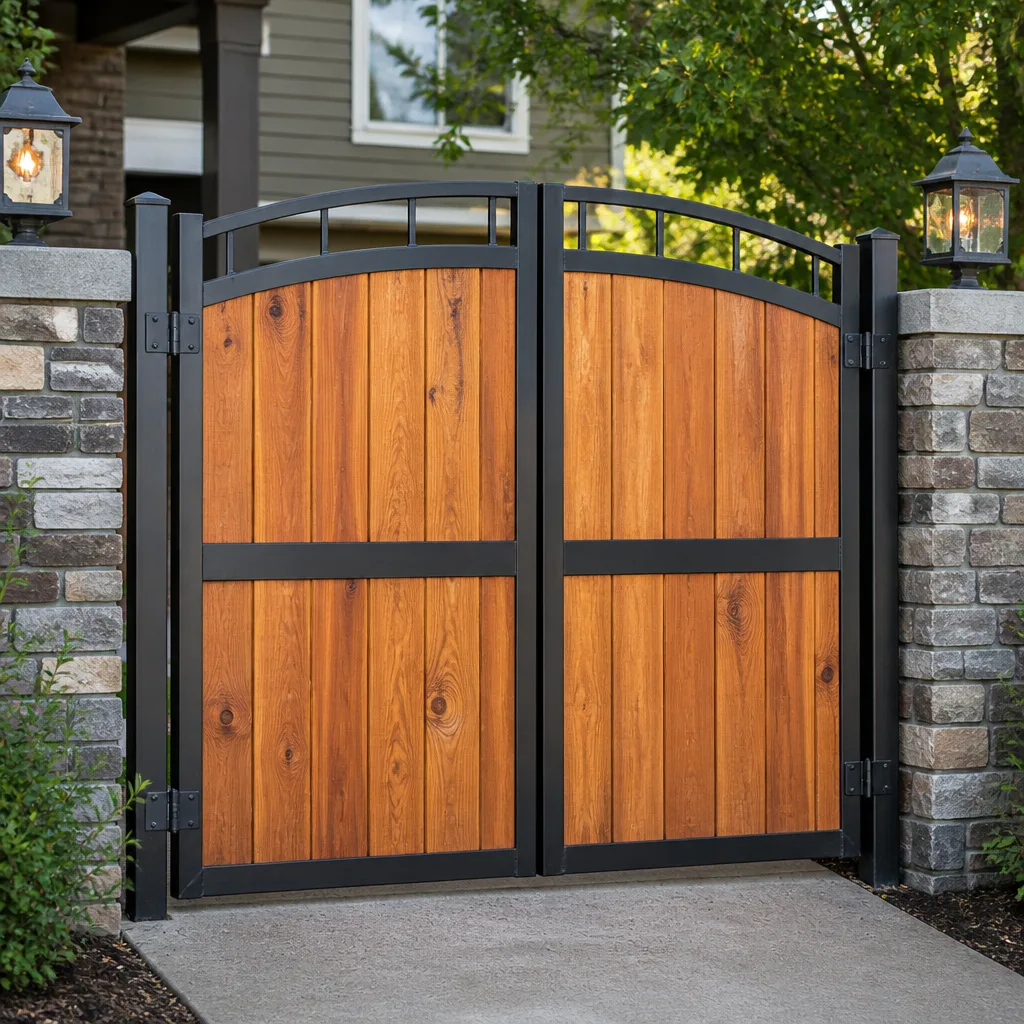 Wood & steel frame
 Farm & ranch
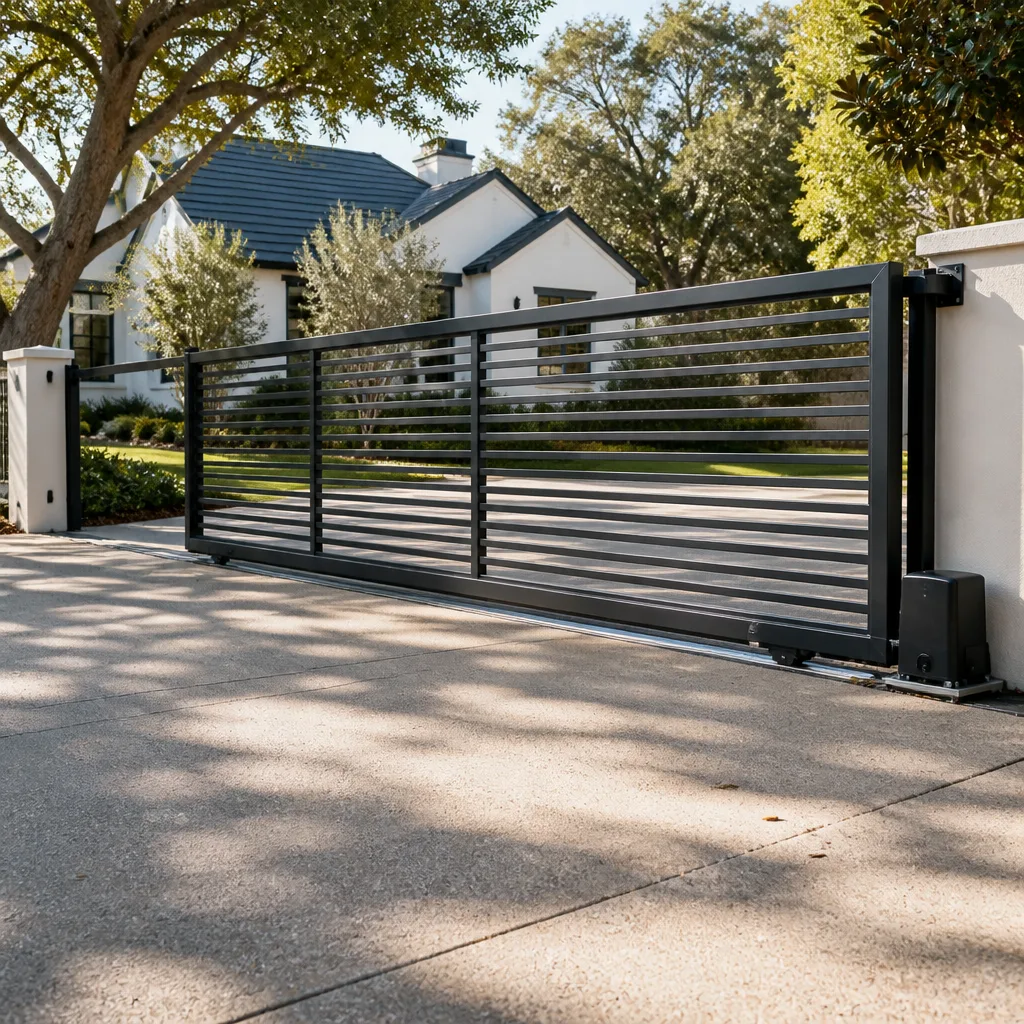 Sliding driveway gates
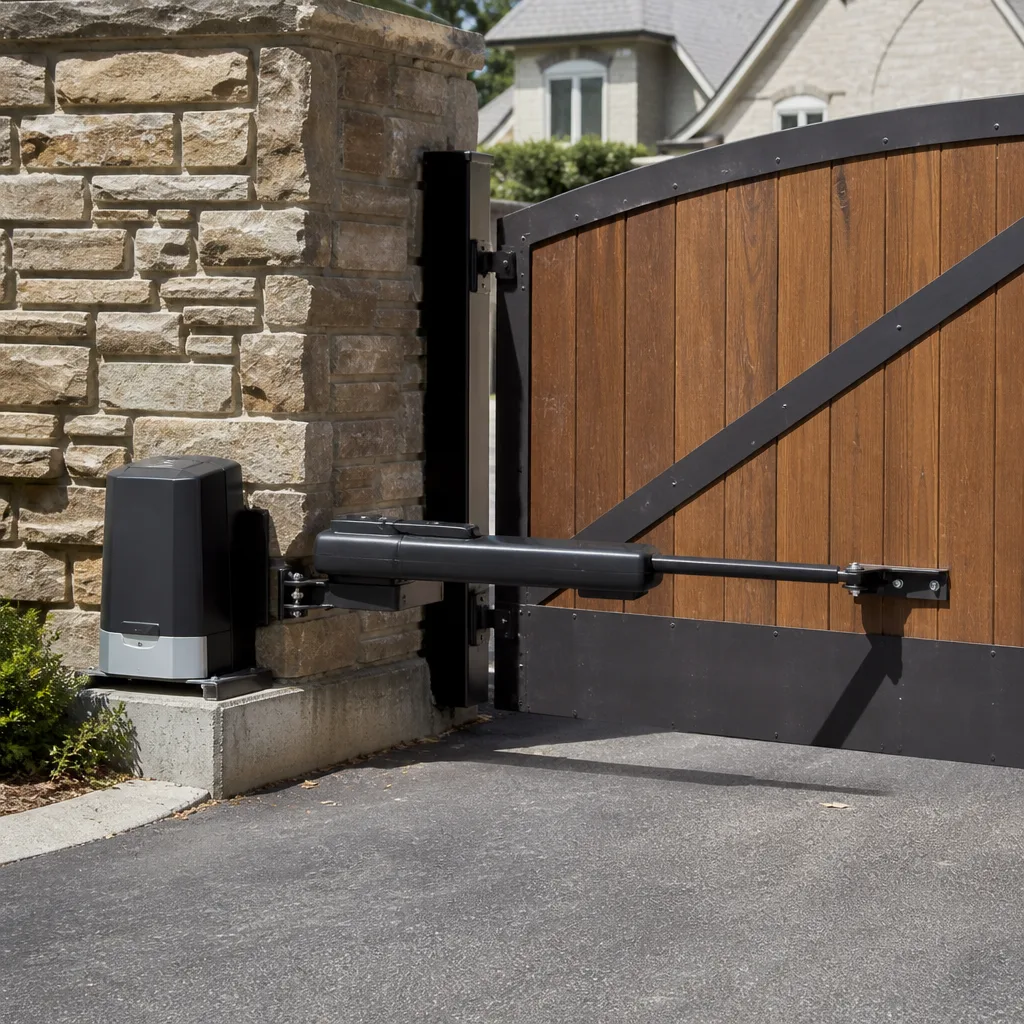 LiftMaster operators
Free on-site gate assessment - hinges, posts, and your LiftMaster or Nice gate operator checked before anything is quoted
The assessment is free and the quote is the invoice.
Get your free estimateSeasonal Gate Repair Care for Syracuse: Year-Round Homeowner’s Guide
The gate that stops working in April rarely broke in April. It broke in February, when frost heaved a post anchor a fraction of an inch and nobody noticed until the latch stopped lining up. Most gate failures in Syracuse are set up months before they show themselves, and the homeowner experiences them as a surprise. This guide connects each of our four mechanically distinct seasons to the specific damage it causes, and tells you what to check and when, so the failure gets caught in the season that starts it rather than the season that reveals it. You’ll learn the pre-freeze prep that matters most, how cold changes the way an electric opener behaves, how to audit frost movement in spring, and where summer heat and sun quietly wear a gate down.
Quick Answer
Seasonal gate care in Syracuse means preparing hardware before the first hard freeze, taking strain off electric openers through the coldest stretch, auditing post and hinge movement as the ground thaws, and watching sun and heat expansion in summer. The point of doing it by season is that most winter and spring breakdowns trace back to a task that was skipped in fall. A short check at the right time of year costs far less than a repair after the gate has failed.
Styles & brands we work with
- Wrought iron
- Wood & steel frame
- Farm & ranch
- Sliding driveway gates
- LiftMaster operators
Table of Contents
- Why Syracuse Gates Fail in a Different Season Than They Break
- Fall: The Pre-Freeze Checklist, Ranked by What Fails Worst
- Winter Operation: How Electric Openers Behave Below 20°F
- Spring: The Frost-Heave Damage Audit
- Summer: UV, Heat Expansion, and Metal Latch Mechanisms
- The Month-by-Month Syracuse Gate Calendar
- Manual and Electric Gates Age on Different Timetables
Why Syracuse Gates Fail in a Different Season Than They Break
Syracuse runs four distinct mechanical seasons on a gate, and each one stresses a different part of the system. The result is a delay between cause and symptom that makes gate repair feel unpredictable when it isn’t. Understanding the delay is the whole logic behind seasonal care.
Fall drives water into every seam, hinge pin, and control enclosure, then the first hard freeze turns that water into an expanding wedge. Winter keeps the ground locked and the metals contracted, so the gate is running on tighter clearances than it was designed for. Spring thaws the soil and releases it unevenly, which is when posts and anchors shift. Summer bakes the wood and vinyl, expands the metal, and dries out lubricant. A gate that’s been neglected through all four doesn’t fail at a random time. It fails on the first season that pushes a marginal part past its limit.
That’s the pattern we see across Syracuse. A homeowner calls in spring certain the opener died overnight, and what actually happened is a post moved two months earlier and the gate has been fighting its own track ever since. The fix is often smaller than the panic suggests, but only if the underlying movement gets found. Our gate repair work starts with that diagnosis rather than with a replacement part.
You can’t stop Syracuse weather. You can get ahead of the sequence, and that’s what the seasonal sections below are for.
Fall: The Pre-Freeze Checklist, Ranked by What Fails Worst
Fall is the season that decides how the rest of the year goes. Get one thing done before the ground freezes and prioritize it: keep water out of the moving parts and the control enclosure. Everything else on this list is secondary to that. Here are the fall tasks ranked by how catastrophic the failure is if you skip them.
- Seal and dry the control enclosure. Moisture that gets into the operator housing before freeze is the single most damaging fall miss. It can take out a control board, and board-level work is real electrical diagnosis, not a swap. Check gaskets, look for cracked covers, and confirm nothing is pooling inside.
- Lubricate hinges, rollers, and the latch mechanism. Dry metal plus cold plus contraction is where seized parts start. A hinge that’s dry going into winter can bind hard enough to stall a swing gate.
- Clear the gate’s travel path. Leaves, debris, and pooled water in the track or under a swing become ice that stops the gate mid-run. Clear it now, not after it freezes.
- Check post and anchor integrity while the ground is still soft. If a post has already begun to move, fall is the window to correct it before frost locks and then heaves it further.
- Test every safety device. Photo eyes, edge sensors, and reversing functions need to work before the cold, when a gate is more likely to stop unexpectedly and the safety system is what prevents a serious accident.
Wood gates get one extra fall task: seal or treat the exposed faces before the wet season, because the freeze-thaw cycle is unforgiving to unprotected wood grain.
Winter Operation: How Electric Openers Behave Below 20°F
Below about 20°F, an electric gate opener doesn’t have a “cold problem” so much as a set of changed conditions it was never set up for. The grease in the gearbox thickens and resists motion. Battery capacity in a DC system drops, so a unit that ran fine at 40°F can struggle at 10°F. Metal contracts, tightening clearances in the track and latch. The opener isn’t failing. It’s working harder than it was tuned to.
The fix is preparation, not brute force. What prevents cold-weather motor strain:
- Correct the force and sensitivity settings before winter. An opener set at its warm-weather thresholds will strain against cold resistance. The right settings balance the mechanism so it isn’t fighting itself, without defeating the safety reversal.
- Replace tired batteries in DC operators ahead of the cold. A weak battery that’s marginal in fall is a no-start in deep winter.
- Keep the travel path clear. Ice and snow jam in the track are the most common reason a gate won’t cycle in Syracuse winter. Clearing the path removes the load the motor is straining against.
- Verify the safety devices work in cold conditions. Photo-eye alignment can shift with snowpack and frost movement, and a misaligned eye that blocks the gate from closing looks like a motor fault when it isn’t.
One safety note here: gate operators carry live voltage and stored mechanical force. Don’t defeat a safety reversal or bypass a force sensor to force a gate through a cold bind. The operator’s wiring and the heavy panels are the genuinely dangerous parts of any gate, and the reversal setting is what keeps a hard-to-move gate from closing on a person. If your gate is straining or reversing unexpectedly in the cold, that’s a technician call, not a setting to force. Our electric gate repair covers motors, boards, sensors, and wiring.
We work across brands on this, and cold behavior differs. A Linear and a Syracuse Gate Repair setup on the same driveway don’t strain identically, which is why we diagnose from the known failure patterns of the specific unit rather than guessing.
Spring: The Frost-Heave Damage Audit
Spring is when the freeze-thaw cycle hands you its bill. Frost heave doesn’t just move a post up; it moves it unevenly, so the gate sits slightly out of alignment and the latch, the track, and the opener all start working against geometry that shifted over the winter. Most of what feels like a sudden spring failure is this. Here’s the audit, and what movement is acceptable versus what needs immediate correction.
What to measure:
- Post plumb and position. A post should stand plumb. Any visible lean, or a post that has clearly shifted position, is a sign frost moved it and it hasn’t settled back.
- Latch alignment. The latch should engage smoothly without the gate being lifted or pushed. A latch that suddenly needs a nudge means the gate and post are no longer meeting where they did.
- Track and clearance. On a sliding gate, check the track for heave and the gate’s run for binding. A gate that drags where it used to glide is telling you the geometry moved.
- Hinge play. Rock each hinge. A little play is normal wear; a hinge that’s loose in the post or visibly sagging is a structural issue, not a lubrication one.
What’s acceptable: minor surface settling, small hinge wear, and cosmetic changes in the ground around the post. Those can often be corrected and monitored.
What needs immediate correction: a post that’s leaning, a gate that no longer latches cleanly, an opener that has started reversing or straining for no clear reason, and any gate that has come off its track or is moving in a way the operator can’t safely control. A gate that’s off its track or swinging free is a crush hazard, and this is the point to stop using it and get it looked at.
Run the audit once the ground has thawed and settled, not during the mud. Our technicians have up to 8 years of experience reading exactly this kind of seasonal movement, and we diagnose before we replace.
Summer: UV, Heat Expansion, and Metal Latch Mechanisms
Summer is the quiet season for gates, which is why the damage it does gets missed. The threats are sun and heat, and they act slowly.
UV on wood and vinyl. Ultraviolet light breaks down wood finishes and degrades vinyl over time. A wood gate left bare through a Syracuse summer dries, greys, and starts to check and crack, and each crack becomes a place for water to sit going into fall. Vinyl holds up better but will fade and can get brittle with prolonged sun exposure. Sealing wood and cleaning vinyl in summer protects the material going into the wet season.
Heat expansion on metal. Metal expands in the heat, and the tight clearances that a gate ran with in winter can bind, or grow loose, as it warms. Latch mechanisms are where this shows most: a latch that worked in spring can need adjustment as the metal moves. Check the latch engagement at the hottest part of the day, when the metal is at its expanded size, rather than in the cool of morning.
Lubricant and moving parts. Heat dries lubricant faster, and a hot gate cycling on dry hinges wears quicker. A summer re-lubrication keeps the moving parts protected for the cold months.
The opener in heat. Control boards and motors run hotter in summer sun, and an enclosure in direct sunlight runs hotter still. Make sure the housing isn’t blocked and the vents (where present) are clear. If an operator starts behaving erratically on hot afternoons and fine in the morning, heat is a likely factor and worth a professional look.
The Month-by-Month Syracuse Gate Calendar
Generic “northern U.S.” gate advice gets Syracuse wrong, because our pattern isn’t the generic one. Our freeze comes with real snow load and a long thaw, and our summer is humid. This calendar follows our actual climate shape rather than averaging it away. Use it to map tasks to the season that protects against the failure, not the season the failure appears.
- Early fall (before first hard freeze): Seal the control enclosure; lubricate hinges, rollers, and latch; clear the travel path; check posts and anchors while the ground is still workable; test all safety devices. Wood gate: seal exposed faces.
- Late fall (as freeze sets in): Confirm settings are adjusted for cold; replace marginal DC batteries; do a final clear of the track and travel path; verify photo-eye alignment.
- Winter: Keep the travel path clear of ice and snow jam; watch for cold strain or unexpected reversing and treat it as a technician issue; do not force or defeat safety settings.
- Early spring (as ground thaws): Run the frost-heave audit once the ground settles; check post plumb, latch alignment, track, and hinge play; correct any post lean and any safe-operation issues immediately.
- Late spring: Re-lubricate after the thaw; re-check latch alignment once the gate has settled into warm weather; address anything the audit flagged.
- Summer: Seal or treat wood; clean vinyl; check latch engagement at peak heat; re-lubricate; check operator housing for heat exposure.
Two of these tasks repeat for a reason: lubrication belongs to both the fall (protecting against cold) and the summer (protecting against heat-drying). A gate that’s lubricated on both ends of the year has much less wear to show for it.
Manual and Electric Gates Age on Different Timetables
A manual gate and an electric gate experience Syracuse’s seasons differently, even on the same property. It’s worth knowing which you have and what each one needs.
Manual gates live and die by hinges, latches, posts, and material condition. Frost movement and UV are their main enemies, and the failures are usually visible: a latch that won’t catch, a hinge that sags, a post that leans, wood that’s drying out. The seasonal tasks above cover most of it.
Electric gates carry all of the manual gate’s mechanical issues plus an entire electrical and control layer that the seasons hit hard. Cold thickens grease and drains batteries. Moisture attacks boards and enclosures. Heat stresses motors and boards. Safety devices misalign with frost and snow. This is why electric gate repair is its own discipline. A generalist who treats a gate like any other motor often misdiagnoses a mechanical alignment problem as a board failure, or the reverse. We diagnose from the specific failure patterns of the unit in front of us, whether that’s a Ghost Controls residential opener, a DoorKing commercial system, or a Viking setup, so the repair actually targets the cause.
The seasonal calendar applies to both types, but electric gates add the cold-weather settings, the battery, and the safety-device checks to every season on the list. If your gate is electric and you’re only doing the mechanical tasks, you’re covering half the system.
Common Mistakes to Avoid
- Skipping the pre-freeze enclosure seal because the gate “works fine.” A gate working in fall tells you nothing about whether moisture is already inside the control housing. The board fails after the freeze, and by then it’s a repair, not prevention.
- Forcing a cold gate through a bind. Defeating a force setting or a safety reversal to push a straining gate through is how a cold-weather motor dies and how a crush hazard gets created. Address the bind, not the safety setting.
- Attributing spring problems to the opener. A gate that suddenly reverses or strains in spring is most likely reacting to a post or track that frost moved, not a failed motor. Diagnosing the wrong layer wastes money and doesn’t fix the gate.
- Ignoring a slight latch misalignment. A latch that needs a nudge is an alignment warning. Left through the season, it becomes a worn latch and a strained operator.
- Treating UV as cosmetic. Sun-cracked and dried wood in summer becomes water-logged, freeze-damaged wood in winter. Summer protection is winter preparation.
- Clearing the track in spring instead of fall. Debris left in the travel path over winter becomes ice that jams the gate. Clear it before freeze, and keep it clear through winter.
- Assuming a generic northern-U.S. calendar fits Syracuse. Our long thaw and real snow load put the frost-audit and the enclosure-seal tasks on a different clock than a mild-winter climate. Follow the season’s actual timing here.
See the difference
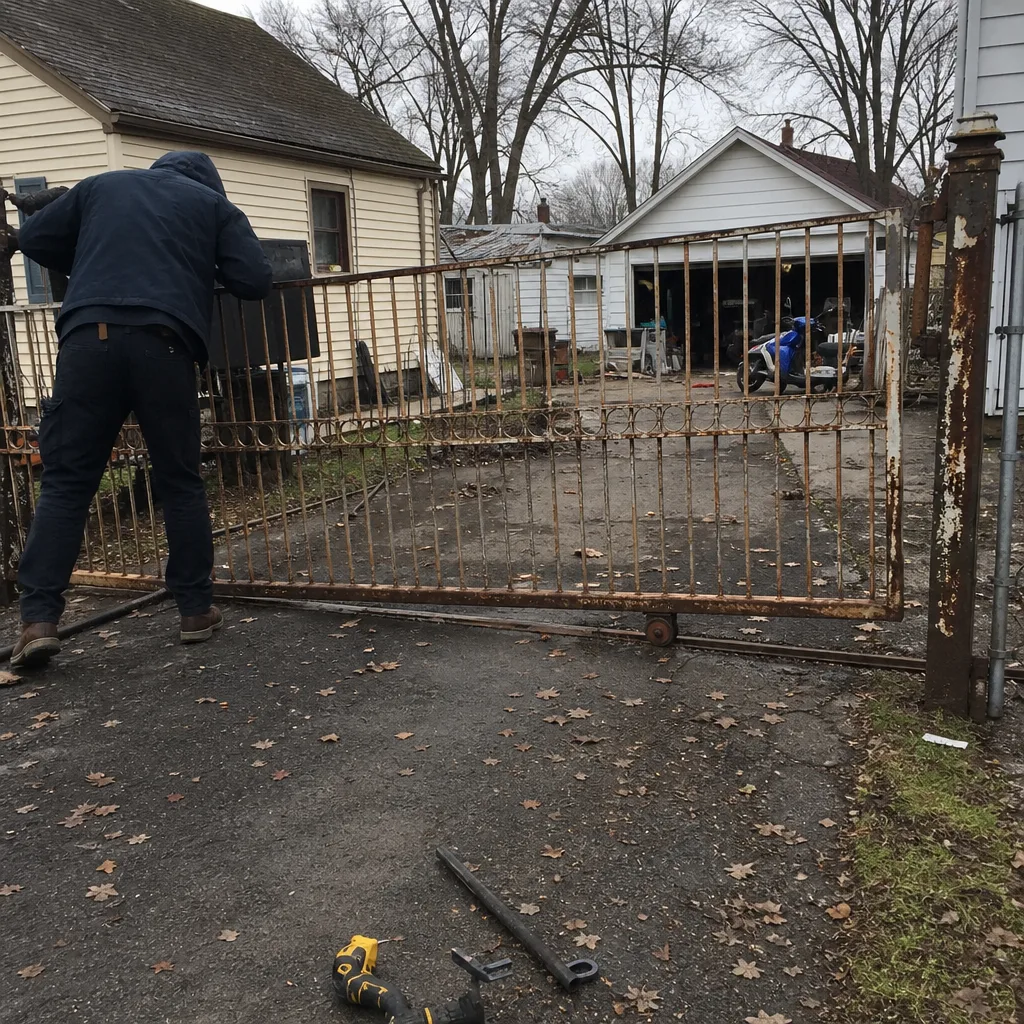 Before
 After
 Before
 After
 Before
 After
When to Call a Professional
Some of this you can handle yourself: clearing the track, sealing wood, watching for changes. But several situations are genuinely a call for a trained professional. If a post is leaning or has shifted, if a gate no longer latches cleanly, if it’s come off its track, or if your opener is straining, reversing, or behaving erratically for no clear seasonal reason, stop operating the gate and get it looked at. These involve stored mechanical force, heavy panels, and, on electric gates, live electrical wiring, and they’re not a DIY job. A gate that’s off its track or moving unpredictably is a crush hazard and shouldn’t be forced. Syracuse Gate Repair offers free estimates in Syracuse: call (844) 761-3861. We answer 24/7. Fast dispatch from 7am to 7pm, Sunday through Friday. The price is quoted and agreed in a written estimate before any work starts. We serve both residential and commercial gates, and our technicians have up to 8 years of experience with the seasonal failures Syracuse gates actually develop.
Frequently Asked Questions
You should complete the main pre-freeze checklist before the first hard freeze, which means handling the enclosure seal, lubrication, travel-path clearing, and post check while the ground is still workable in early fall. Moisture sealed out before freeze is the most important single task, because a wet control board going into winter is the costliest miss. If you’re not sure your settings are right for cold, call (844) 761-3861 for a free estimate.
Cold thickens grease, drains DC batteries, contracts metal, and tightens clearances, so the opener is fighting more resistance below 20°F than it was tuned for. The fix is usually adjusting force and sensitivity settings for cold and replacing tired batteries, not replacing the motor. If your gate reverses unexpectedly in the cold, that can also be a misaligned safety eye or a real bind, so it’s worth a professional diagnosis. Call (844) 761-3861; we answer 24/7.
Check the post for visible lean and watch whether the latch still engages smoothly without lifting or pushing the gate. On a sliding gate, a gate that drags where it used to glide points to track or post movement. Any visible lean or a latch that suddenly needs a nudge means frost moved it and it needs correcting before it strains the opener. If it’s off its track or unsafe to operate, stop using it and call (844) 761-3861.
You can safely handle the simple parts: clearing the travel path, sealing wood, cleaning vinyl, and checking for visible changes. Post alignment, latch correction, opener settings, and any electrical work belong to a trained technician because of stored mechanical force, heavy panels, and live operator wiring. When a task touches the electrical or structural side, call (844) 761-3861 for a free estimate.
Yes. Metal expands in the heat, which can change how a latch engages and how clearances behave, and lubricant dries faster on hot moving parts. Check latch engagement at the hottest part of the day, when the metal is at its expanded size, and re-lubricate in summer. If an opener runs erratically on hot afternoons, heat may be a factor and it’s worth a look. Call (844) 761-3861.
The basic seasonal tasks apply to any gate, but cold behavior and failure patterns differ by unit, which is why we diagnose from the known patterns of the specific system. We work across LiftMaster, FAAC, BFT, Linear, Viking, Ghost Controls, DoorKing, Elite, and Mighty Mule, among the systems we service, and we’re brand-agnostic. We repair what’s there. Call (844) 761-3861 to talk through your system.
The Bottom Line
In Syracuse, gates don’t break in the season they finally fail. They break in the season that started the damage: fall moisture that freezes, winter cold that strains, spring thaw that moves the ground, summer sun that dries and heat that expands. The fix is simpler than the failure. Seal before freeze, adjust settings for cold, audit frost movement in spring, protect materials from summer sun, and lubricate on both ends of the year. Do that and your gate stops surprising you. When a seasonal task is beyond a safe homeowner job, Syracuse Gate Repair is here to diagnose before we replace.
Call (844) 761-3861 for a free estimate. We answer 24/7. Fast dispatch from 7am to 7pm, Sunday through Friday. The price is quoted and agreed in a written estimate before any work starts, and we service both residential and commercial gate systems throughout the area.
Written by the team at Syracuse Gate Repair.